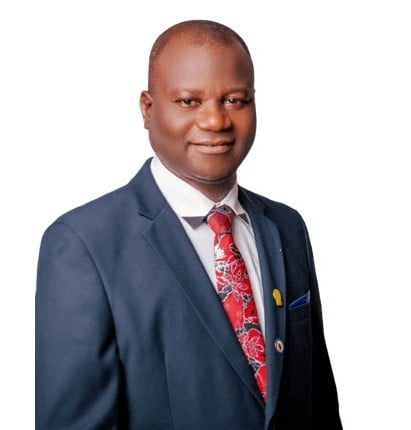





The Strategic Adviser on Malaria Elimination at the Federal Ministry of Health and Social Welfare, Prof. Olugbenga Mokuolu, has said that Nigeria has recorded a significant decline in malaria prevalence, with no state currently classified under high transmission.
He disclosed this during a webinar organised by the PUNCH Media Foundation to commemorate the 2026 World Malaria Day.
The webinar, themed “Malaria in Nigeria: A Shared Fight, A Collective Solution,” brought together experts to highlight the country’s malaria burden and strategies for elimination.
Mokuolu, a Professor of Paediatrics at the University of Ilorin, said recent data from the Malaria Indicator Survey showed a steady national decline in prevalence, describing the trend as encouraging for Nigeria’s malaria control efforts.
“Our figures are showing that malaria is coming down on the national average. Our latest figures from the Malaria Indicator Survey showed an overall malaria prevalence of 15.2 per cent in 2025 compared to 22 per cent in 2021. That is about a 30 per cent reduction from the 2021 figures, and it is something that we are very happy and excited about,” he said.
Mokuolu added that the country had moved away from high transmission levels across all states, noting that any state with a prevalence of 35 per cent or more is classified as high transmission.
“We classify any state with a prevalence greater than or equal to 35 as a high transmission state, and right now, there is no state in Nigeria that has a prevalence of more than 35 per cent.
The current high prevalence is in Ebonyi. Every part of the country is now within low to moderate transmission levels,” Mokuolu stated.
The malaria expert further revealed that several states were already recording very low prevalence rates, citing Lagos with 2.6 per cent and Plateau with 2.8 per cent, while many others have dropped below 10 per cent.
The don further stated that 27 states currently fall within the moderate transmission category, indicating gradual but consistent progress in reducing the disease burden nationwide.
Despite the improvement, Mokuolu stressed that malaria remains a major public health threat, warning against complacency.
“Malaria cannot be referred to as ‘ordinary malaria.’ Malaria can be a killer disease. We are also calling for discipline and rational behaviour around malaria, emphasising that not all fevers are malaria.
“In 2024 alone, according to the 2025 World Malaria Report, Nigeria recorded about 68 million cases and 199,000 deaths. If you are going to convert that into figures in a practical sense, it will have meant that every one hour, about nine persons will have died somewhere of malaria,” he said.
Mokuolu stressed that although prevalence is declining, the disease continues to disproportionately affect vulnerable groups, particularly children under five and pregnant women.
“Malaria can affect anybody; it is important to bear this in mind. But the burden and weight of malaria is felt more by children under five and pregnant women. And that is likely for situations where you have people who have been living in a malaria area for some time,” he added.
Mokuolu also corrected the common misconceptions about the disease, emphasising that malaria is caused by a parasite transmitted through mosquito bites and not by environmental or spiritual factors.
“Malaria is not the result of hard work, walking under the sun or drinking dirty water. It is not caused by spirits. Malaria is caused by a parasite transmitted by mosquitoes,” he said.
Mokuolu urged Nigerians to adopt more disciplined and evidence-based approaches to malaria prevention and treatment, warning that not all fevers should be assumed to be malaria.
“Not every fever is malaria. We must avoid presumptive diagnosis and ensure proper testing and appropriate treatment,” he said.
The professor reiterated that sustained efforts in prevention, early diagnosis, and effective treatment remain critical to consolidating the gains recorded and achieving malaria elimination in Nigeria.
Responding to questions on malaria vaccines, Mokuolu said early evaluations showed the intervention was already making a measurable impact alongside existing control strategies, though access remains limited.
“Some of the initial evaluations that we have done showed that the vaccine made a definite impact on top of the other interventions that we have. But in terms of widespread availability, that’s where it is. You might say, why is it not all over the place? It’s a balance between costs and other drivers. So we are trying to prioritise it according to the malaria burden in the country. Hopefully, this year, we can scale up to many more states,” the Strategic Adviser on Malaria Elimination said.
Addressing concerns about insecticide-treated nets, the professor dismissed claims that the nets cause heat, discomfort, or skin reactions, describing such perceptions as misconceptions.
“Insecticide-treated nets have nothing to do with heat or body rash. These are perceptions that our people have, which we try to correct each time we do a mass campaign and distribution,” he said.
The malaria expert added that the acceptance and consistent use of the nets largely depend on individuals’ perception of risk.
“So basically, depending on your perception of risk, during COVID, if they said a mosquito net is what will prevent you from having COVID, you will use the net, whether it is hot, cold, or dry. Okay, so it’s just a perception of risk that is there. The insecticides used on the nets are well tested for tolerability on the skin, and all of those issues generally. When you collect the pack, we say that you spread it under the sun,” he explained.
On emerging malaria control strategies, Mokuolu said scientific efforts are exploring the use of genetically modified mosquitoes, including the sterile insect technique, as a potential long-term solution.
He noted that studies have been carried out in parts of Africa but faced public resistance due to misconceptions about the term “sterility.”
“Studies have been going on in some regions of Africa, Burkina Faso in particular. But after some time, the government of Burkina Faso interrupted that study. And we’ve had visits to Nigeria, I’ve been privileged to interact with the team, and also to discuss the concerns.
When you say anything about sterility, it is you who knows that it is a mosquito. When our people hear sterility, they can’t make a distinction between mosquito and human male sterility. So you face quite a lot of backlash from public concern and outrage about such studies,” Mokuolu said.
The malaria expert disclosed that Nigeria is already part of ongoing discussions around adopting such innovations, with consultations underway.
The UNILORIN don, however, cautioned that the success of such interventions would depend on several critical factors, including public acceptance.
“How well genetically modified organisms and this type of strategy work is going to be dependent on several factors. The number of mosquitoes that have to be released in order to alter the population of mosquitoes generally, the timing, and the acceptability of the intervention in the first instance. These are all part of the concern. But if somebody wants to know if Nigeria is in the corridor of this conversation, I can give you a categorical yes,” Mokuolu said.
Copyright PUNCH
All rights reserved. This material, and other digital content on this website, may not be reproduced, published, broadcast, rewritten or redistributed in whole or in part without prior express written permission from PUNCH.