


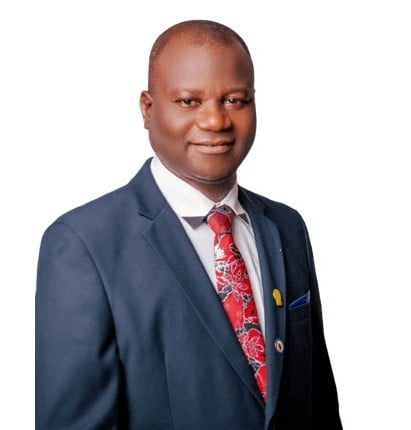
The immediate past National President of the Association of Nigerian Private Medical Practitioners, Dr. Kayode Adesola, has urged Nigerians against downplaying malaria, stressing that the disease remains a major public health threat capable of causing death if not properly treated.
According to him, describing malaria as “ordinary” undermines the seriousness of the disease and contributes to poor health-seeking behaviour among Nigerians.
He stated this on Tuesday at the PUNCH Media Foundation’s Webinar Series themed ‘Malaria in Nigeria: A Shared Fight, A Collective Solution’ in commemoration of the 2026 World Malaria Day and in alignment with the global ‘United Against Malaria’ agenda.
Adesola emphasised that malaria should not be regarded as a minor illness.
“Malaria is not something we should continue to brand as ordinary malaria. Malaria is not ordinary. It can be a killer disease if it’s not properly managed,” he said.
Malaria is a life-threatening but preventable and curable disease caused by Plasmodium parasites, transmitted through the bites of infected female Anopheles mosquitoes, according to the World Health Organisation.
Malaria symptoms include high fever, chills, and flu-like illness. According to the World Malaria Report 2024 by the WHO, Nigeria alone accounts for 27 per cent of global malaria cases and 31 per cent of deaths.
A report by the Society for Family Health further revealed that malaria kills nine Nigerians every hour and accounts for 30 per cent of child deaths and 11 per cent of maternal deaths annually.
It also noted that the disease is responsible for about 110 million clinically diagnosed cases each year.
He further highlighted the importance of early medical intervention, explaining that timely presentation at healthcare facilities improves treatment outcomes.
“And talking about managing malaria, early presentation is important, which gives us a better advantage and better outcome. When you come to the hospital early enough, it’s easier for us to manage. And early presentation strengthens our adherence to treatment and achieving better malaria control,” Adesola said.
He noted that eliminating malaria effectively in Nigeria would require a combination of behavioural change, stronger health systems, and improved policy implementation.
Adesola said, “All this will require a mix of community behaviour change, health systems, and policy enforcement. In Nigeria, where malaria remains highly endemic, solutions must be practical, skillful, and culturally grounded. In terms of increasing early presentation, as we see in the private sector, a lot of people come presenting very late.”
The expert also raised concerns about the persistence of misconceptions among patients, particularly the widespread belief that malaria and typhoid commonly occur together.
He said, “A lot of patients come to the hospital wanting the doctor to believe that they have both typhoid and malaria. And when you try to make them understand that it could be malaria and ask them to just do simple tests, or repeat the test they’ve done before, some of these patients just walk out of your hospital, just because you don’t want to put them on an unnecessary drip.”
According to him, such attitudes often hinder proper diagnosis and lead to inappropriate treatment, thereby worsening health outcomes.
Adesola stressed the need for intensified public awareness campaigns to address these misconceptions and promote appropriate health-seeking behaviour.
“And in the war against malaria, we need a lot of community awareness. And sometimes we need to utilise community, church, mosque leaders, radio, and social media, just to let people know and create awareness around the issue,” he said.
Copyright PUNCH
All rights reserved. This material, and other digital content on this website, may not be reproduced, published, broadcast, rewritten or redistributed in whole or in part without prior express written permission from PUNCH.
Contact: [email protected]