



Super Eagles striker Victor Osimhen was reported in July 2026 to have received a formal tax warning in Turkey, even though Galatasaray pay his income tax under his contract. This explainer sets out what is confirmed, what was only reported, what was never proven, and how Turkish tax rules for footballers explain why the letter reached the Nigerian at all.
The story has resurfaced in different forms since the summer, from a bank letter to bounced cheques to a falling-out with the board. Some of it is solid, some of it rests on a single journalist, and some of it has been denied outright.
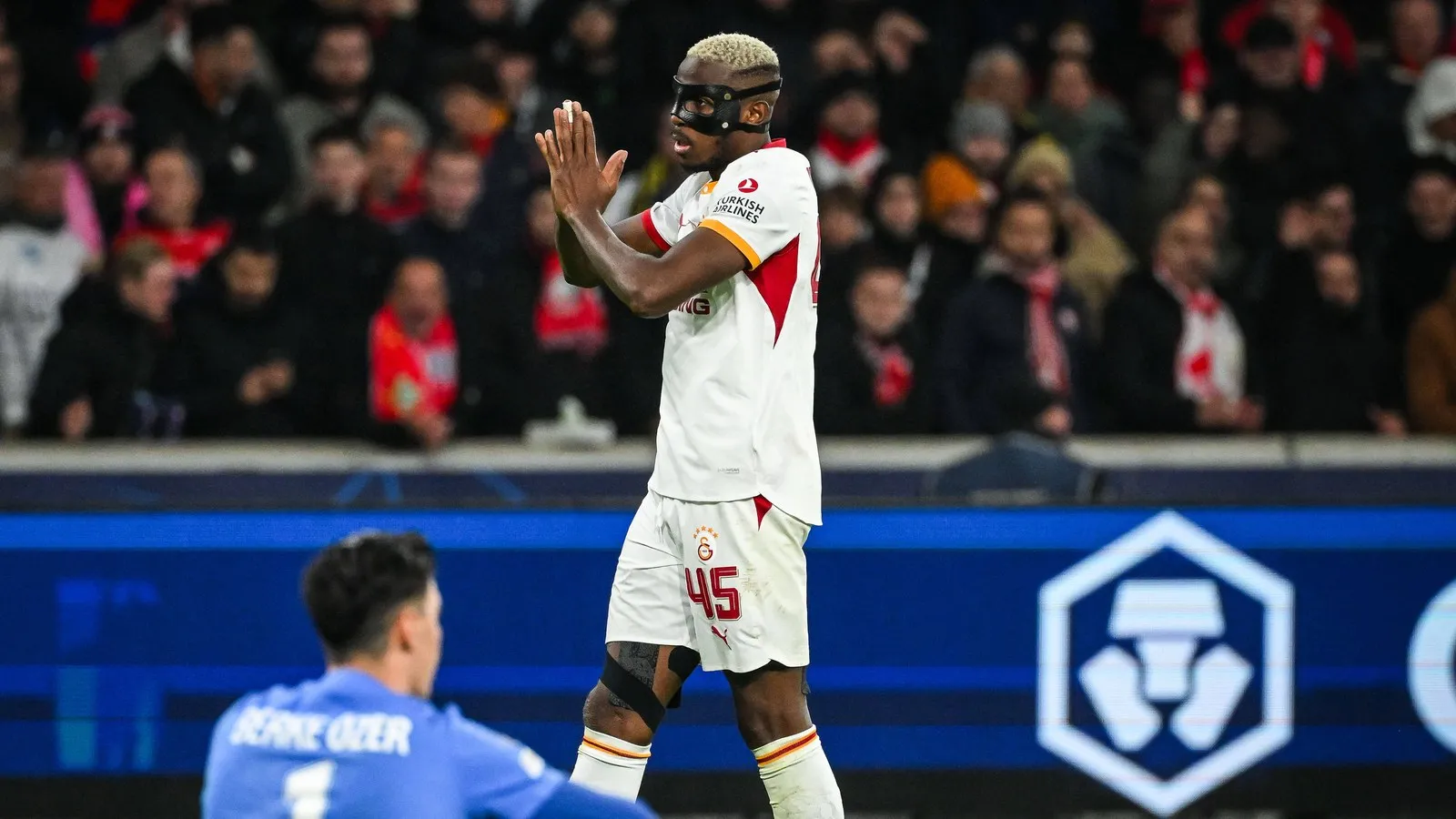
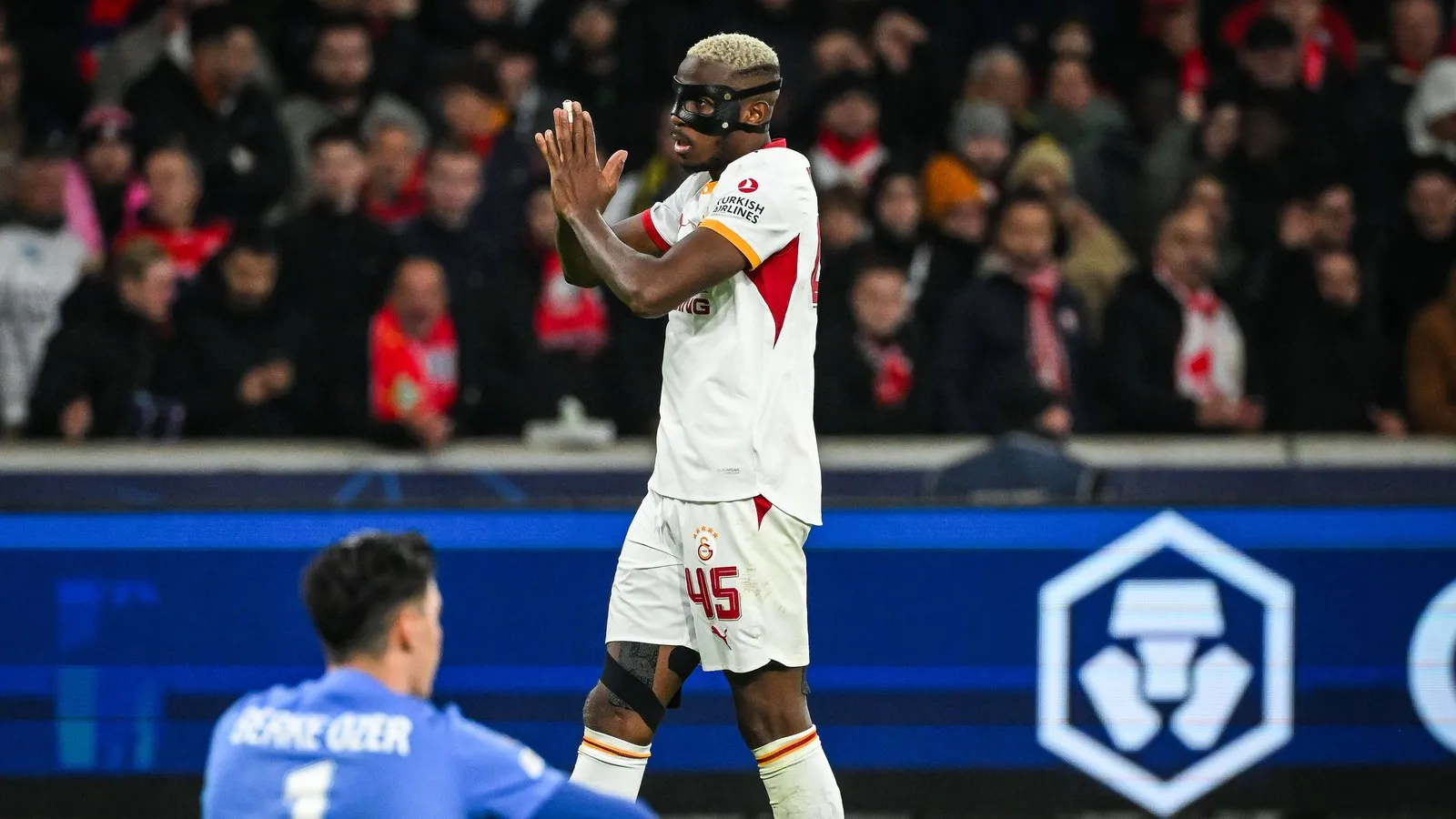
Osimhen, meanwhile, is still a Galatasaray player. He scored the fourth goal in the 4-2 win at Lille on 21 October and now has 17 Champions League goals, the most by any Nigerian, as Soccernet reported this week.
The story in brief: a bank letter, a quick payment, no named source
On the morning of 25 July 2026, Milliyet reported that a bank had sent Osimhen a formal warning notice (an ihtarname) over income tax, and that Galatasaray’s management paid the tax after the player told the club. Soccernet covered that report the same day in Why Victor Osimhen received a bank warning despite €15m Galatasaray salary.
Hürriyet went further. It reported that Galatasaray had not paid the tax on time, although the club was responsible for it under his contract, and that Osimhen was warned his account would be blocked if the payment was not made. In Soccernet’s translation, the warning read: “If you don’t pay, your account will be blocked.” Hürriyet said Osimhen called club executives, the club paid quickly and the crisis was resolved.
Fanatik, in its English edition, reported the same sequence: “Club officials quickly took action, paid the outstanding tax amount and resolved the issue.” It said the delay was “solely due to a technical and administrative issue” and that there was “no dispute between the Nigerian star and the club”.
No outlet named the bank, gave the amount owed or quoted a named Galatasaray official. The club has not published a statement on the tax letter itself.
Why Galatasaray pay Osimhen’s tax in the first place
Osimhen’s wages are agreed net, meaning the figure is what lands in his account after tax. Galatasaray’s own stock exchange filing to KAP, Turkey’s public disclosure platform, dated 31 July 2025, says he signed a four-year contract from the 2025-26 season worth a net €15m guaranteed per season, plus a net €1m loyalty bonus and €5m a season in image rights. The same filing confirms the €75m net fee paid to Napoli.
Because the salary is fixed net, any tax due on it falls on the club in practice. KPMG Turkey notes that most foreign players’ contracts in Turkey are net, and that clubs guarantee the player’s take-home pay and absorb the tax difference.
Turkish law taxes footballers in two layers, according to EY Turkey’s 2026 guide:
- Withholding at source: the club deducts 20% from payments to players in the top league, the Süper Lig, and pays it to the tax office.
- Annual return: a player whose football income in 2026 exceeds ₺5.3m must also file a personal return by the end of March 2027. The part above that threshold is taxed at 40%, and the tax the club already withheld is deducted from the bill.
Why the warning reached Osimhen and not the club
A net contract is a private deal between player and club. It does not change who the tax law treats as the taxpayer. KPMG Turkey’s guide says the duty to file the annual return belongs to the player himself, even when the club has agreed to bear the tax, and warns that relying on the contract and not filing can expose the player to extra tax and penalties.
Until this year there was a second trap. Under the old wording of Provisional Article 72 of Turkey’s Income Tax Law, a player could only deduct tax withheld by his club if the club had actually paid it to the tax office. If the club held the money back, the player could be billed again.
Turkey’s Constitutional Court struck that condition down. Its unanimous ruling of 12 February 2026 (case E.2025/219, decision K.2026/43), published in the Official Gazette on 3 June 2026, found that paying withheld tax is the withholding party’s duty, that the athlete has no control over it, and that making the athlete carry the loss was disproportionate.
Turkish authorities had also been chasing athletes’ tax for some time. Turkish Minute, citing CNBC-e, reported in June 2025 that inspectors had examined nearly 4,600 professional athletes and found more than $134m of undeclared income for 2024, about 3.7bn lira of it linked to footballers.
What is confirmed, what is reported and what is unproven
| Claim | Status | Where it comes from |
|---|---|---|
| Osimhen earns a net €15m a season, plus a €1m loyalty bonus and €5m image rights | Confirmed | Galatasaray’s KAP filing, 31 July 2025 |
| Top-flight footballers in Turkey have 20% withheld at source, with 40% due above the annual threshold | Confirmed | EY and KPMG Turkey tax guides |
| The rule letting the taxman refuse a player credit for tax his club withheld but never paid over has been annulled | Confirmed | Constitutional Court ruling, Official Gazette, 3 June 2026 |
| A bank sent Osimhen a formal tax warning in July 2026 | Reported, not officially confirmed | Milliyet, Hürriyet, Fanatik, Takvim (25 July 2026), no named source |
| Galatasaray paid the outstanding tax and the matter was closed | Reported, not officially confirmed | Same outlets; no club statement |
| Galatasaray gave players cheques that bounced | Denied by the club | Club denial reported by Milliyet, Fanatik and Takvim |
| Osimhen reacted angrily to the board over unmet tax obligations, and other players had similar problems | Single-source claim, not confirmed | Journalist Emre Kaplan, as relayed by Mynet (12 August 2026) |
| The bank’s name and the amount owed | Unknown | Not given by any outlet |
What other outlets have said since July
Takvim reported on 25 July that the payment was completed after the warning letter reached the club, and that management said the cheque claims did not reflect the truth. None of these reports quoted a named club official.
On 2 August, Goal tied the episode to transfer talk, writing: “Rumours of a tax dispute between the player and Galatasaray have surfaced in recent days.” Goal named no source for that line.
On 12 August, Mynet, citing a report by journalist Emre Kaplan, said Osimhen had a problem with the club because it had not met tax obligations it had taken on for him, that he reacted very strongly, and that other players faced similar tax issues. Haberts carried the same claims the same day and noted they had not been officially confirmed by the club.
The tax story also landed after earlier denials about pay. In February 2026, Galatasaray vice-chairman Abdullah Kavukcu rejected reports that Osimhen was owed two months’ wages, telling Sabah, as reported by BusinessDay: “In Europe, player payments are made after three months.” He added: “In other words, we are ahead of Europe.”
One separate story is often mixed in. In August 2025, 12punto, partly crediting Habertürk journalist Rahim Ak, reported that tax inspectors were reviewing VAT on Süper Lig clubs’ transfer payments, with Galatasaray said to face about €15m over the Osimhen deal. That concerns the club’s tax on the transfer fee, not Osimhen’s income tax, and no ministry statement or court ruling was cited.
Analysis: a club’s paperwork problem that briefly became the player’s
On the verified facts, the July letter fits a known weak point in Turkish football rather than a personal tax problem for Osimhen. His pay is net by contract and the club owed the tax. Turkish law still treats the player as the taxpayer whatever the contract says, which would explain how a warning could reach him even though the bill was Galatasaray’s to pay.
The June ruling matters for him and for every Nigerian in the Süper Lig. Under the old rule, tax a club held back from his pay but never sent to the tax office could have been billed to the player again. The Constitutional Court has struck that rule down, which puts the risk back on the clubs, where the court said it belongs.
What remains unproven is the bigger claim of a lasting rift with the board. That rests on one journalist’s account, the club’s only reported position is that the delay was administrative, and Osimhen has since played on and scored in the Champions League. If a fresh letter or a club statement appears, that would change the picture; until then, the safest reading is a short, settled episode.
For Super Eagles fans, the practical point is simple: nothing in the reporting suggests a sanction, a ban or any threat to Osimhen’s availability for club or country. Osimhen will hope the next headlines from Istanbul are about goals, not paperwork.