




Swiss food giant Nestle has acknowledged that it waited days for a health-risk analysis before alerting authorities after detecting a toxin in its baby milk at a Dutch factory.
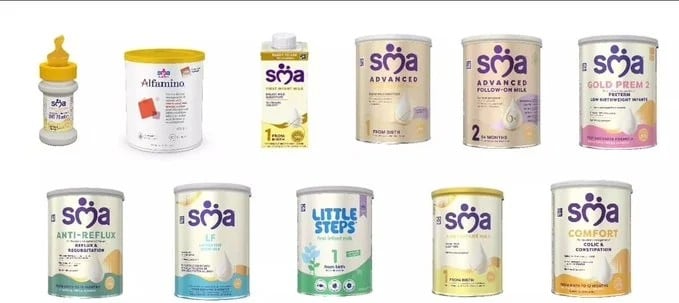
In December 2025, PUNCH Healthwise reports that Nestlé expanded a global recall of several batches of its infant and follow-on formulas, including SMA, BEBA and NAN, across dozens of countries in Europe, Africa, the Americas and Asia, citing the risk of contamination with a toxin that can cause nausea and vomiting.
The food and beverage giant said the recall was prompted by the possible presence of cereulide, a toxin produced by some strains of Bacillus cereus, following the detection of a quality issue in an ingredient supplied by a major vendor.
Nestlé stressed that no illnesses or adverse symptoms linked to the recalled products have been confirmed so far.
Also, PUNCH Healthwise reports that Nestlé Nigeria Plc disclosed that its infant formula sold in Nigeria was not included in the voluntary, precautionary recall announced in some foreign markets.
The National Agency for Food and Drug Administration and Control also clarified that Nestlé’s infant formula products recalled in some countries are not available in Nigeria, assuring parents and caregivers that products approved for the Nigerian market are safe.
French newspaper Le Monde reported Friday that traces of cereulide were found in late November, 10 days before the first recalls of the product, because the company waited for a “health‑risk analysis” before informing regulators.
Nestle said in a statement online that routine checks at its Dutch plant at the end of November 2025 detected “very low levels” of cereulide after new equipment was installed in a factory.
It said there was no maximum limit for cereulide indicated by regulations.
It halted production and launched further tests, which in early December confirmed minute quantities in products that still had not left the warehouse.
Nestle said it informed Dutch, European, and other national authorities on December 10 and began a precautionary recall of all products made since the new equipment was installed — 25 batches across 16 European countries.
The company has said from the start of the affair that the recall stemmed from a “quality issue” and that it had seen no evidence linking its products to illness.
French authorities launched an investigation into the deaths in December and January of two babies who were thought to have drunk possibly contaminated powdered milk.
Nestle said in its statement that “nothing indicates any link between these tragic events in these two instances and the consumption of our products”.
AFP