




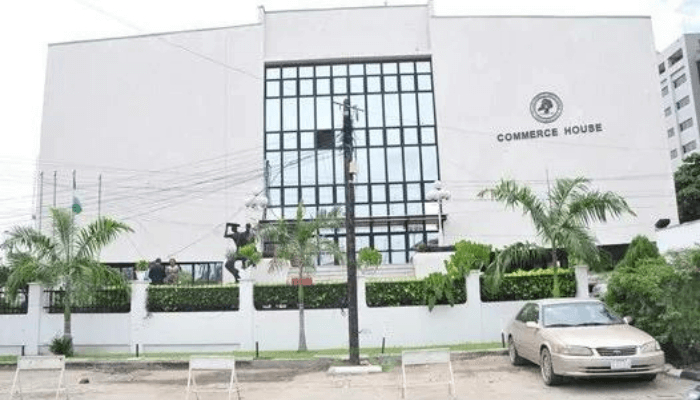


The Lagos Chamber of Commerce and Industry has warned that weak budget implementation and overlapping fiscal cycles are undermining Nigeria’s fiscal credibility, cautioning that the Federal Government’s plan to spend rather than save rising oil revenues threatens long-term sustainability.
Speaking at the second quarterly press conference on the state of the economy in Lagos, the LCCI President, Leye Kupoluyi, said global geopolitical tensions, particularly the US-Israel conflict with Iran, had pushed Brent crude prices to $115 per barrel, far above Nigeria’s budget benchmark.
Kupoluyi said, “Global geopolitical developments, particularly the US-Israel conflict with Iran, have pushed Brent crude prices to $115 per barrel, more than 75 per cent above the budget assumption. While this creates a windfall in oil revenue, the decision to deploy increased funds rather than save for fiscal buffers raises concerns about sustainability and fiscal prudence.”
He warned, “Weak budget implementation and overlapping budgets further undermine fiscal credibility.”
President Bola Tinubu had signed the 2026 Appropriation Act, approving a total expenditure of N68.32tn, up from the initial N58.47tn proposal. The budget is based on an oil price benchmark of $64.85 per barrel and daily production of 1.84 million barrels.
The chamber urged the government to adopt a more disciplined fiscal framework.
Kupoluyi said, “We recommend a disciplined budget process with clear priorities, transparency in debt management, and stronger monitoring mechanisms to ensure that budgetary allocations translate into tangible outcomes.”
On monetary policy, the LCCI commended the Central Bank of Nigeria’s Monetary Policy Committee for cutting the Monetary Policy Rate by 50 basis points to 26.5 per cent, describing it as a cautious step towards easing.
Kupoluyi said, “The decision to reduce the MPR marks a cautious but important transition in Nigeria’s monetary policy trajectory.”
However, the LCCI chief warned that high borrowing costs remain a constraint. Kupoluyi said, “Elevated borrowing costs are stifling investment, particularly for small and medium enterprises that form the backbone of our economy.”
The chamber also raised concerns over inflation, which rose to 15.38 per cent in March 2026, reversing a prolonged disinflation trend, saying, “Rising food and energy prices continue to erode household purchasing power and increase the cost of doing business.”
On the foreign exchange market, the LCCI noted improved stability, with the naira appreciating to about N1,350.79/$ at the official market, supported by reforms and improved liquidity.
Kupoluyi said, “The naira has shown measurable resilience, reflecting growing investor confidence and improved price discovery.”
Despite this, he stressed that sustained stability would require stronger policy coordination, increased foreign exchange inflows, and fiscal discipline.
The chamber also expressed concern over Nigeria’s rising debt profile, which stood at N159.28tn as of 31 December 2025.
Kupoluyi said, “While this remains within moderate thresholds, the trajectory reflects mounting fiscal pressures. We call on the government to consider more realistic measures, such as the debt-to-service and debt-to-revenue ratios, which have both reached uncomfortable levels.”
He warned that past oil windfalls had not translated into lasting fiscal improvements: “The anticipated oil windfall in 2026 offers a positive buffer, but its impact may be limited if not strategically managed.”
The LCCI further highlighted structural challenges affecting the business environment, including poor power supply, weak capital budget releases, and rising telecom infrastructure vandalism.
He added, “When contractors are owed large sums of capital, their operations are stifled, and jobs within their domains are threatened.”
He also called for urgent reforms in the power sector, saying, “Without urgent reforms in the power sector, Nigeria cannot achieve meaningful industrialisation.”
On trade, the chamber welcomed the launch of the National Single Window but stressed the need for full integration and efficiency.
Kupoluyi said, “The system should deliver real-time interoperability among all trade-related government agencies, eliminate duplication, reduce delays, and significantly improve transparency.”
Members of the LCCI leadership, including the LCCI Director-General, Dr Chinyere Almona, Deputy President Olashore Abimbola and other vice presidents, reiterated the call for coordinated policy action to address macroeconomic challenges and improve the business environment.