







Toheeb Omotayo
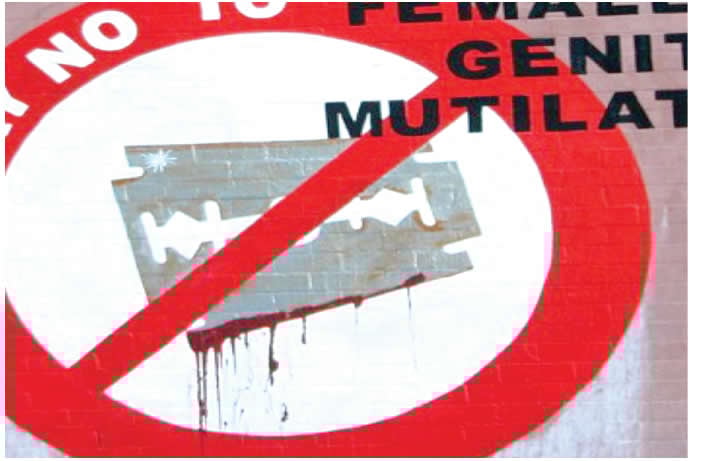
The Kwara State Government has reiterated its commitment to ending Female Genital Mutilation in the state, calling for a coordinated, multi-sectoral strategy as it reviews its 2026–2030 Action Plan on the harmful practice.
In a statement issued on Wednesday by the Press Secretary of the Ministry, Iyanu Lawal, the Commissioner for Women Affairs, Opeyemi Oluwakemi Afolashade, made the call on Tuesday during a stakeholders’ review meeting in Ilorin.
Represented by the Director of Personnel, Finance and Supply, Rasheed Ubandawaki, the commissioner said the state government remained resolute in its determination to eradicate Female Genital Mutilation and other harmful social practices against women and children.“We must adopt a multi-sectoral approach if we are to completely eradicate Female Genital Mutilation in Kwara State.
“This fight cannot be left to government alone; it requires the collaboration of traditional rulers, religious leaders, civil society organisations, law enforcement agencies and community members,” she said.
Afolashade noted that the present administration had demonstrated commitment to ending harmful practices through the implementation of the Violence Against Persons (Prohibition) Act and the Child Rights Law in the state.
“The government has strengthened the enforcement of relevant laws, including the VAPP Act and the Child Rights Law, to protect women and children from all forms of abuse.
“We have also embarked on advocacy visits to first-class traditional rulers across the three senatorial districts to secure their buy-in.
“Champions have been appointed for the eradication of FGM, and we have ensured that the oath of allegiance is signed as part of our strategy to reinforce commitment at all levels,” she added.
Highlighting other measures, the commissioner said the ministry had carried out advocacy visits to schools and religious organisations, engaged the Association of Market Men and Women in Ilorin metropolis, and sensitised FGM practitioners across the state with a view to eliminating the practice.
“Our engagement with market leaders, schools and faith-based organisations is deliberate. We are taking the message to the grassroots to ensure that no girl-child is subjected to this harmful practice,” she declared.
The Commissioner commended members of the Child Rights Implementation Committee and other stakeholders for what she described as their tireless efforts in promoting the welfare of children in the state.
“I urge all stakeholders to make meaningful contributions to the new work plan for 2027–2030. The state will also be convening an FGM Convention in commemoration of the International Day of Zero Tolerance for FGM to further galvanise action,” she said
Also speaking, the Director of Public Health in the Ministry of Health, Oluwatosin Fakayode, represented by Buhari Oladimeji, stressed the need for accurate data to tackle the menace effectively.
He stated, “It is imperative for the state government to conduct a comprehensive survey to identify FGM practitioners across the 16 Local Government Areas. We must maintain up-to-date data on cases of FGM and other harmful social practices to guide our interventions.”
The Director of the National Human Rights Commission in the state, Jumoke Olaoye, said the commission had intensified sensitisation efforts across communities.
Olaoye said, “We have carried out enlightenment campaigns in schools and created awareness on the existence of the VAPP Act in Moro Local Government Area. Traditional rulers have also been sensitised to support the enforcement of laws against FGM.”
The Deputy Director, Gender-based Violence, Ministry of Justice and Chairperson, International Federation of Women Lawyers, Barr. Funke Balogun identified challenges hindering the prosecution of offenders.
“One of the major challenges we face in prosecuting FGM cases is interference from family members on behalf of perpetrators, even after arrests have been made. This weakens the resolve of victims and sometimes frustrates the legal process.”
“We must also address the issue of disengaging practitioners from the trade by encouraging them to take up alternative, productive economic activities instead of harming the girl-child,” Balogun added.
FGM encompasses all procedures that involve the partial or total removal of the female external genitalia, or any other injury to the female genital organs, for non-medical purposes.
It is most commonly performed on girls from infancy up to the age of 15.
Regardless of the form it takes, FGM constitutes a violation of the fundamental human rights of girls and women, including their rights to health, safety and dignity.
Copyright PUNCH
All rights reserved. This material, and other digital content on this website, may not be reproduced, published, broadcast, rewritten, or redistributed in whole or in part without prior express written permission from PUNCH.
Contact: [email protected]


