







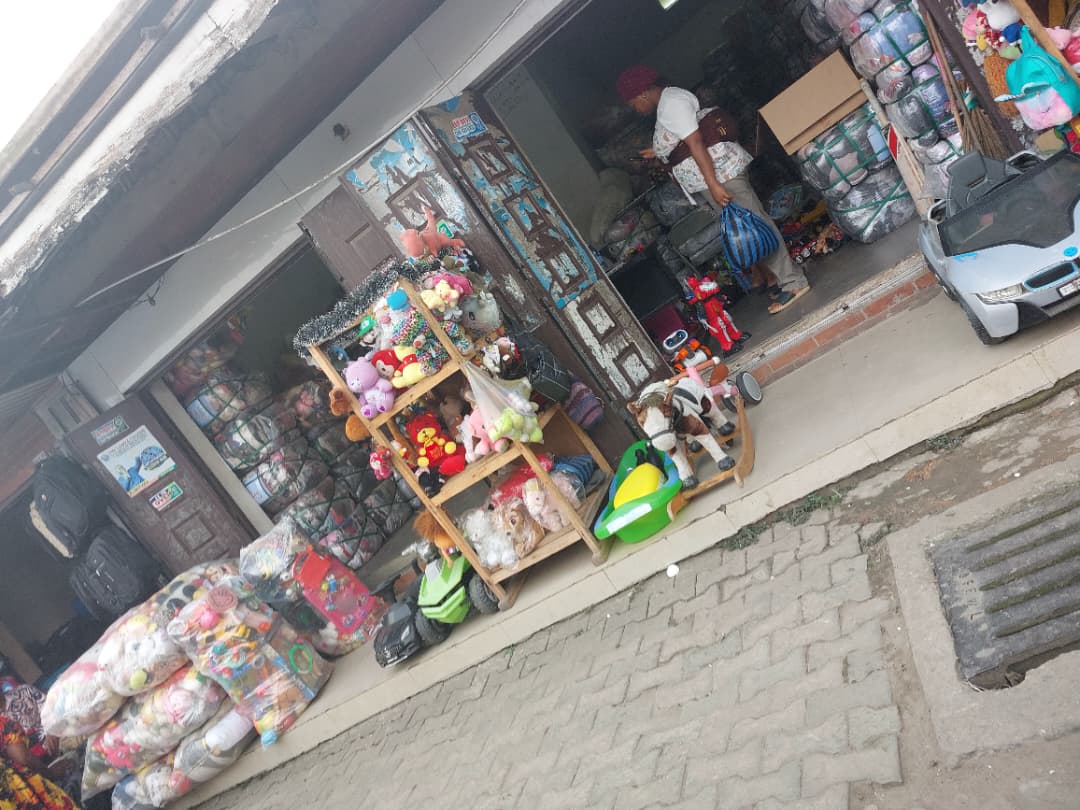
As economic hardship drastically reduces the purchasing power of Nigerian families, many parents have resorted to buying second-hand toys for their children to cut costs. They consider used toys more affordable, especially compared to the price of new ones of similar quality, but are unaware of the toxic chemicals and health hazards linked to these items, which silently expose their babies to infections. IDOWU ABDULLAHI reports
Jumai Adekola still remembers the excitement she felt in December 2024 when she spotted second-hand toys displayed on the ground at the popular Yaba Market in Lagos State.
After haggling over the price with the seller, they agreed on N3,000 for plastic trucks, a stuffed bear, and colourful rattles. For the 32-year-old sales representative, the price was low enough for her tight budget.
With food prices rising and school fees looming next month, the purchase felt like an answered prayer for the single mother of two who had been looking for ways to put a smile on her younger son’s face.
With a satisfying sigh, Adekola headed home to show her son his new possession. Upon sighting the toys, her 14-month-old eagerly reached for them.
Adekola handed the toys to him without any disinfecting measures. After all, the toys did not look dirty, and to her, that was enough.
“I was happy because my baby would finally have something to play with. New toys are expensive, but the toys I bought from Yaba market looked neat and strong, and I never suspected anything,” she recalled to our correspondent.
Five days later, her relief turned to worry. She noticed small reddish spots appeared around her baby’s mouth. At first, Adekola dismissed them as heat rash from the sun.
But the next morning, the spots had changed into blisters stretching toward his fingers, and the child would not stop crying.
“I knew something was wrong when he refused to eat. He just kept scratching and crying. That was when I began to fear. When there were no changes, I took him to the hospital,” she said.
At the hospital, the baby was diagnosed with a viral skin infection.
“The doctor asked me what new things my baby came in contact with recently, and I explained to him that I just bought him some fairly used toys. The doctor told me infections can stay on toys for a long time if they are not properly disinfected.
“I felt guilty immediately and kept blaming myself for putting my baby in that condition. The hospital drugs cost five times the price of the toys I bought. If I had known the risk, I would have waited until I could afford new ones,” she told PUNCH Healthwise.
A breathless night
A simple purchase in August 2025 nearly turned into a medical emergency that left Favour Christopher questioning everything she thought she knew about children’s playthings.
The Customer experience expert had bought a pack of fairly used rubber dinosaurs for her three-year-old daughter, Fortune, who lives with mild asthma.
She wanted something colourful and engaging to keep her daughter occupied indoors, especially on days when dust or weather made outdoor play risky.
Fortune was delighted with the toys and spent hours arranging them across the floor of their living room, inventing imaginary adventures.
But the playtime excitement soon gave way to distress on a chilly night. Within a short while, she began coughing persistently and struggling to breathe.
“At first, I thought it was her usual asthma symptoms. But this one was sudden and much worse. She was gasping, and I became scared,” she told PUNCH Healthwise.
Alerting her husband, Fortune was rushed to a hospital, where doctors stabilised her with a nebuliser.
“The doctor asked us whether she had been exposed to anything with a strong chemical smell. That was when I mentioned the rubber dinosaurs. I told him they looked fine when I saw them.
“The only thing I noticed was a strong, oily smell. I just assumed it was the scent of a warehouse abroad where they were stored. I never knew something that looks fine can still harm a child,” she told PUNCH Healthwise.
Although both children eventually recovered, the incidents left their mothers shaken. Their experiences, though frightening, are not isolated. They are the unintended consequences of an economic choice.
Hidden danger
Across Nigeria, second-hand goods often provide affordable alternatives. For many families, second-hand toys are a practical alternative to expensive new ones displayed in supermarkets.
They are sold in open markets, bus stops, and even online thrift pages.
For several parents, these fairly used toys are a way to give their children a slice of childhood magic without breaking the bank in an economy where the price of a new, branded doll could feed a family for a week.
But while the low price is always worth it at the point of purchase, the toys often mask hidden health risks for children.
Child health experts warn that without proper cleaning, such toys can harbour germs, fungi, and parasites that young children, who often put objects in their mouths, can easily ingest.
Beyond germs and dirt, they explained that some second-hand toys may also carry invisible chemical dangers.
A Consultant Paediatrician at Isolo General Hospital, Ayodele Renner, said that used playthings pose several risks to babies and children.


“One major concern is the possibility of harmful substances, such as lead, in the paint or materials used to produce the toys. Lead exposure is particularly dangerous for children
“Potential health risks include seizures, iron-deficiency anaemia, and neurological problems such as peripheral neuropathy, which may cause unusual sensations in the body.
“The severity of these risks depends on factors such as the toy’s origin, the regulations governing its manufacture, and the amount of harmful substances it contains. However, tracing these details is often difficult with second-hand toys, making risk assessment challenging,” Renner told PUNCH Healthwise.
Childhood killer diseases burden
With the listed dangers, these second-hand toys enter Nigeria, a country already grappling with a high burden of childhood killer diseases.
These killer diseases include preventable infections, with malaria, pneumonia, and diarrhea causing over two-thirds of deaths in children under five.
Others are measles, malnutrition, HIV/AIDS, meningitis, pertussis (whooping cough), tetanus, and diphtheria.
These diseases, which kill nearly 750,000 children annually, are often exacerbated by malnutrition and limited access to healthcare.
According to the 2023–24 Nigeria Demographic and Health Survey, the neonatal mortality rate in Nigeria is 41 deaths per 1,000 live births, with the under-five mortality rate being 102 deaths per 1,000 live births.
The 2025 Nigeria Health Statistics Report released by the Federal Ministry of Health and Social Welfare showed that Nigeria recorded about 20,811 maternal, neonatal, and under-five deaths between January and September 2025.
Neonatal deaths increased from 1,706 in the first quarter of 2025 to 1,900 in the third quarter, while under-five deaths increased from 3,820 in Q1 to 3,672 in Q2 before rising to 4,215 in Q3.
As Nigeria copes with already high childhood killer diseases, unsterilised, germ-contaminated toys can quietly increase disease risks, turning simple playtime into a possible medical emergency.
Driven by necessity
The widespread sale of unsterilised second-hand toys in open markets means some parents may unknowingly bring health risks into their homes.
Findings by PUNCH Healthwise show that rising living costs are pushing many families toward cheaper options, and the second-hand toys trade is largely driven by economic reality and limited local manufacturing of toys in Nigeria.


With some new educational toys priced above N60,000, a N3,000 used alternative remains the only realistic choice for many families.
PUNCH Healthwise investigation reveals that these affordable alternatives are often sold in severely unhygienic environments, where toys are displayed on nylon in a dusty ground or stored in poorly ventilated sacks.
Visits to four major second-hand goods markets in Lagos show a total absence of proper sterilisation protocols before putting the items up for sale.
This lack of sanitation further compounds the health risks for children, who are the primary end-users.
Without professional disinfection, experts say, these toys can serve as vectors for pathogens, introducing bacteria and fungi directly into the hands and mouths of vulnerable toddlers using them as playthings.
These, they added, could exacerbate the country’s already high burden of childhood infections.
The Chief Medical Director, Obafemi Awolowo University Teaching Hospitals Complex, Ile-Ife, Osun State, Prof. John Okeniyi, emphasised the danger posed by toys manufactured before modern safety regulations were enforced.
“Parents must be extremely cautious. Many second-hand toys, particularly those made in the 1970s and 1980s, have been found to contain hazardous chemicals. Some children have even suffered lead poisoning due to old painted toys,” he said.
Different markets, same reality
To understand how these silent vectors reach homes, visits to Aswani Market in Isolo, Katangua Market in Abule‑Egba, the busy stalls of Yaba, and Army Arena Shopping Complex in Oshodi on February 17, 2026, revealed a troubling pattern.
At the Yaba market, used toys were displayed for sale on flexible nylon placed directly on the ground and gathering dust, without any visible hygiene or safety measures.
PUNCH Healthwise observed that some toys had visible stains, faded colours, and worn edges, yet buyers sifted through them freely and touched the items before purchase.
When asked how they ensured safety, a trader simply told our correspondent that the responsibility lies with the buyers.
“When you buy it, you should wash it. After washing and drying it, you then give it to your body. When it gets dirty, you should wash it again,” she told our correspondent, who posed as a customer.


When probed further on how to properly disinfect the toys, she added dismissively, “Just use water and detergent to wash them.”
At Arena, PUNCH Healthwise observed stalls stacked with second-hand toys, many arranged in large bowls, cartons, and some placed directly on the ground.
In a stall located inside Section C of the market, dozens of used toys were displayed on shelves alongside fairly used baby walkers and feeding accessories.
Although the setting appeared more organised, dust coated several items, and no sterilisation equipment or cleaning supplies were visible within the stall.
Posing as a buyer at the stall, the seller said disinfecting the toys would be “a waste of time” because of the volume of the used playthings in her shop.
According to her, customers were mainly concerned about price, not hygiene.
When our correspondent insisted on what to do, she said grudgingly, “Your wife can wash them. They are washable. Since it’s for children, just let your wife wash it before giving them (the children).”
Also, at Aswani and Katangua Markets, toys were stored in sacks and poured onto nylon on the ground and tables for buyers to sort through.
None of the traders provided details about prior cleaning, storage conditions, or how long the items had been in circulation before reaching the market.
Also, none of the sellers observed during the visits to the four markets cleaned or disinfected toys despite several customers handling toys at intervals.
Economic reality against risks
For several mothers, the decision to buy second-hand toys is often about financial reality rather than consideration for their child’s safety.
Some women who spoke with PUNCH Healthwise shared how they were unaware that used toys pose health risks to their children.
A single mother-of-three, Idera Oluwaseyi, admitted that her focus had always been on the price tags because of other pressing financial commitments.
“When I go to the market, I just buy what I can afford between N2,000 and N3,000; I don’t go beyond that price range. I didn’t know that used toys could carry germs to make my children sick,” the 39-year-old trader in Berger told our correspondent.
Also, a 27-year-old hairdresser, Sam Loveth, explained that she had noticed her son frequently ran a temperature and sometimes diarrhea after playing with certain toys, but couldn’t connect it to the unhygienic nature of used toys.


“Most toys I buy for my son are second-hand, and he does play with them a lot. But what I do know is that my son used to have this high fever/temperature and sometimes purged after playing with toys most of the time. So, it could be as a result of touching the toys,” she said.
Meanwhile, Fehintola Aderibigbe, who has previously dealt with her daughter’s severe childhood infections, says she does proper disinfection when she buys used toys.
She explained that, based on the high cost of new ones, she relies on used toys and was well aware of their lack of sterilization.
“When I buy and take them home, I scrub them with boiling water and disinfectant, but even then, I can’t clean the dirt hidden inside where my hands can’t reach,” she said.
Second-hand toys expose babies to infections, others – Experts
Meanwhile, seasoned child health experts have warned that second-hand toys, often sold without prior disinfection, could serve as potential vectors for infectious diseases and may contain toxic chemicals risky to children.
They warned that without proper cleaning, children may be exposed to invisible contaminants through touch or putting the toys in their mouths.
Speaking exclusively to PUNCH Healthwise, a Consultant Paediatrician and Neonatologist, Dr. Meshach Olawuyi, said second-hand toys harbours germs, fungi, or chemical residues, particularly on porous materials like fabric toys or ageing plastic toys.


According to him, the risks vary based on the material.
“First, we have soft, fluffy toys, and then plastic ones. These items can harbor everything from accumulated dust to pathogens, including bacteria, pyrogens, and fungi. Storage is another major concern.
“If toys are stored in areas exposed to aerosols or environmental pollutants, those substances can be absorbed into the material. While plastic toys can also carry these germs and chemicals, they are generally easier to decontaminate than their fabric toys,” he said.
Second-hand toys, he explained, act as a vehicle for infection.
“If a toy was previously used by a child with a viral, bacterial, or fungal infection, those pathogens can easily be transmitted to the next child who handles it. For infants and children under five, the risk is particularly significant because their immune systems are still developing. They are much more susceptible than older children and can easily succumb to infections contracted through contact with contaminated toys,” he said.
He, however, advised parents against buying second-hand toys for their children.
“Ideally, I would advise against buying second-hand toys altogether, especially soft ones like teddy bears. These materials are porous; surface cleaning is often insufficient because germs can be trapped deep within the stuffing. If you must use them, they should be professionally dry-cleaned and treated with a disinfectant spray,” he said.
In an earlier interview, A paediatric surgeon, Prof. Aminu Mohammad, explained that second-hand toys often present many risks, including physical, chemical, microbial, and mechanical hazards.


According to him, toys with small detachable parts, long cords, sharp edges, or exposed stuffing can lead to choking, strangulation, splinters, and other forms of physical injury.
Mohammad, who is the immediate past president of the Medical and Dental Consultants Association of Nigeria, said many of these toys may contain hazardous chemicals such as lead paint, phthalates, cadmium, or bisphenol A, which are known to disrupt child development and cause long-term health problems.
The paediatric surgeon revealed that microbial hazards such as bacteria like Salmonella and E. coli, viruses such as influenza and norovirus, and parasites like lice and mites can thrive on the surface of improperly cleaned toys, particularly plush or fabric ones.
“These biological risks are especially dangerous for infants and toddlers who explore the world by mouthing objects,” he said.
On how to disinfect second-hand toys, Mohammad urged parents to remove batteries if present/corroded and wash them with warm soapy water through thorough scrubbing.
“To disinfect, use a diluted bleach solution with 1 tablespoon (5.25%-8.25% sodium hypochlorite) bleach per gallon of cool water or 4 teaspoons per quart. Soak/wipe for 2+ minutes. Rinse very well with clean water and completely dry. (Best for viruses/bacteria).
“Parents can also use a white vinegar solution. Equal parts vinegar and water. Soak/wipe. Wash in hot water (if fabric allows) with detergent. Dry completely on high heat (kills dust mites).
Meanwhile, a study conducted by researchers at the University of Plymouth and published in Environmental Science and Technology revealed that older, second-hand plastic toys often fail to meet modern safety standards due to the presence of hazardous elements.
Using X-ray fluorescence technology, the researchers analysed 200 used toys, including cars, trains, and puzzles, sourced from nurseries, thrift shops, and homes.
The findings showed that 20 of these toys contained traces of nine restricted hazardous elements, including antimony, barium, bromine, cadmium, chromium, lead, and selenium, with concentrations high enough to fail European safety directives.
The Lead researcher, Dr. Andrew Turner, explained that toys from the 1970s and 1980s, such as vintage Lego bricks, were the most frequent offenders as they were manufactured before rigorous testing was mandatory.
The study specifically identified red, yellow, and black plastics as the worst offenders for chemical leakage.
In a follow-up analysis of 26 toys, nearly 40 percent failed the European Council’s Toy Safety Directive, as they were found to be secreting excessive levels of bromine, cadmium, or lead.
Copyright PUNCH
All rights reserved. This material, and other digital content on this website, may not be reproduced, published, broadcast, rewritten or redistributed in whole or in part without prior express written permission from PUNCH.
Contact: health_wise@punchng.


