

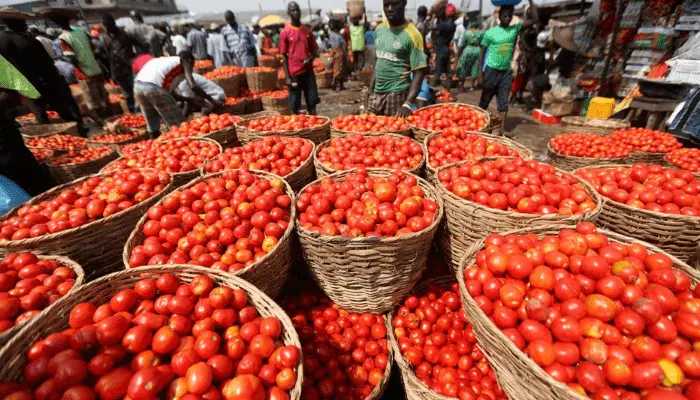

The Tomatoes Growers and Processors Association of Nigeria has assured Nigerians that the current high prices of tomatoes are expected to decline considerably from August as the wet-season harvest reaches the market.
The Kaduna State Chairman of TOPAN, Mr Rabiu Zuntu, gave the assurance in an interview with the News Agency of Nigeria on Sunday.
NAN reports that tomato prices have risen sharply since early May following the end of the dry-season harvest and reduced supply.
A 50kg basket of tomatoes, which sold for between N18,000 and N20,000 in January, now costs between N100,000 and N130,000, depending on the variety.
Similarly, a 25kg crate currently sells for between N50,000 and N70,000 at wholesale markets in Lagos.
Zuntu said the price surge was seasonal and urged Nigerians to remain patient, noting that supplies would improve once farmers commenced harvesting wet-season tomatoes.
“We projected that the increase in tomato prices would last until the end of July, when wet-season harvesting begins.
“From August, prices will begin to decline considerably because fresh supplies will enter the market,” he said.
According to him, the adoption of flood-resistant tomato varieties has enabled many farmers to cultivate during the rainy season, improving prospects for increased production.
“If farmers had not embraced these improved varieties, Nigerians might have had to wait until October or November before prices dropped,” he said.
He attributed the recurring scarcity experienced between May and June to climate change, particularly unpredictable rainfall patterns and extreme heat that limit tomato cultivation in major producing states such as Kaduna and Kano.
Zuntu added that heat-tolerant seed varieties could also help boost production if made readily available to farmers.
He called on the government and private investors to establish more cold-chain storage facilities to reduce post-harvest losses and stabilise prices throughout the year.
“When harvest is abundant, proper cold storage will allow farmers to preserve tomatoes for one or two months instead of watching them spoil.
“That will help bridge the gap between supply and demand and reduce seasonal price fluctuations,” he said.
The TOPAN chairman also urged the government to strengthen support for tomato farmers through regular interventions, including improved seeds, fertilisers and agrochemicals.
According to him, sustained investment in the tomato value chain would encourage farmers to remain in production, improve productivity and ensure more stable supplies for consumers.
He noted that while the current high prices had helped many farmers recover losses incurred during previous production cycles, long-term investment remained necessary to guarantee food security and price stability. (NAN)
