


The FBI says releasing the files could ‘endanger life’ but here’s what’s really at stake
A Freedom of Information Act case filed by an American transparency activist in 2023 has quietly become one of the most politically loaded legal fights involving a sitting Nigerian president.
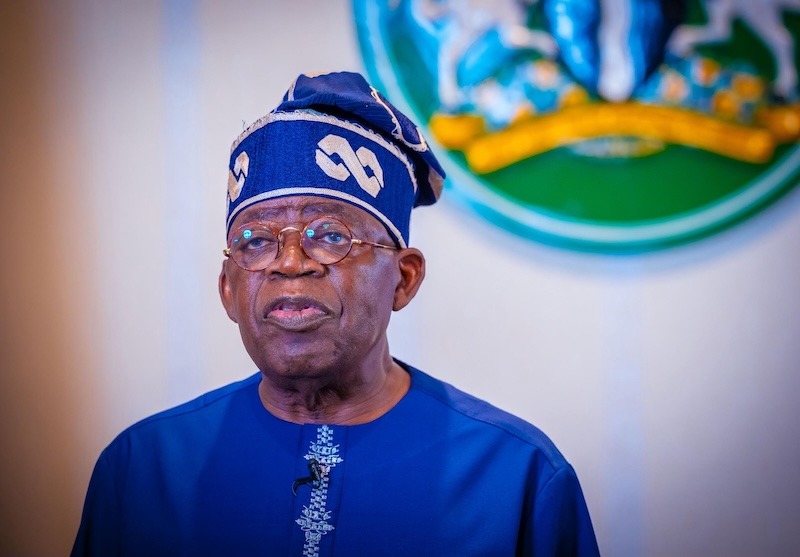
It isn’t a criminal trial and Tinubu isn’t a defendant nut for three years, his lawyers have been formally fighting inside a Washington, D.C. courtroom to keep federal records about him sealed. The FBI also revealed that the records could “endanger life” if released in full.
Where It Starts: Chicago, Late 1980s-1990s
Long before Nigerian politics enters the picture, this is a US federal law-enforcement story. US federal investigators examined a Nigeria-linked heroin trafficking network alleged to have imported white heroin into the US and moved it into Chicago for distribution between roughly 1988 and 1991. In the underlying case record, the individuals named were Bola Ahmed Tinubu, Adegboyega Mueez Akande, and Abiodun Agbele.
In 1993, that investigation led to a civil forfeiture proceeding (United States v. Funds in Account No. 263226700, et al.) with over roughly $460,000 tied to accounts linked to Tinubu.
Civil forfeiture is a legal process aimed at the money itself, not a criminal conviction of a person. No criminal charges followed, and Tinubu has consistently denied any wrongdoing.
This case sat mostly dormant for nearly three decades until a transparency activist decided to dig.
Read Also: NECO Papers Sold Ahead of Exams for ₦3,000, Education Minister Admits
The FOIA Requests (2022-2023)
Enter Aaron Greenspan, founder of the legal-transparency site PlainSite. Between 2022 and 2023, Greenspan filed a dozen FOIA requests with six US agencies, including the FBI, DEA, CIA, IRS, State Department and the Executive Office for US Attorneys, seeking every record connected to the 1990s investigation naming Tinubu.
Nigerian investigative journalist David Hundeyin’s earlier reporting on the 1993 forfeiture record fed into this effort, giving Greenspan a starting map of what to request.
The agencies mostly responded with a “Glomar response.” This is a legal move where an agency refuses to even confirm or deny that records exist. Frustrated, Greenspan escalated internally and then sued all six agencies in federal court on June 12, 2023.
By late 2023, Judge Beryl A. Howell took over the Greenspan federal court case in Washington, D.C.
Tinubu Steps Into The Case
In October 2023, Tinubu’s legal team comprising Christopher Carmichael, Victor Henderson and Oluwole Afolabi formally intervened in the lawsuit as a third party, arguing the government agencies weren’t adequately protecting his privacy.
His filings leaned heavily on FOIA’s privacy exemptions, arguing that even scattered public disclosures (like the 1993 forfeiture record) don’t erase a person’s privacy interest in the rest of an investigative file.
His lawyers pointed to Supreme Court precedent (Reporters Committee) and later cases to argue that being publicly linked to a past investigation doesn’t mean every detail of that investigation becomes public property.
Crucially, Tinubu’s team framed Greenspan’s effort as unusually narrow since Greenspan’s own filings, they argued, show his focus is getting documents with Tinubu’s “name on them,” not general oversight of the agencies.
The 2025 Ruling That Changed Everything
For over a year, the agencies held their Glomar line. Then, in April 2025, Judge Howell ruled decisively against them.
She found the Glomar responses no longer held up, reasoning that the 1993 forfeiture case had already publicly confirmed investigations into Tinubu existed so pretending otherwise wasn’t “logical or plausible.”
The court ordered the Federal Bureau of Investigation (FBI) and Drug Enforcement Administration (DEA) to search for and begin processing any non-exempt, releasable records. The Central Intelligence Agency (CIA), notably, was allowed to keep its Glomar response on national-security grounds.
Nigeria’s presidency responded fast. Special Adviser Bayo Onanuga said there was “nothing new to be revealed,” arguing the underlying FBI and DEA reports had been in the public space for over 30 years and did not indict the president. He added that the president’s lawyers were examining the ruling.
The ruling didn’t set him free. Instead, it forced the agencies to explain, file by file, why every single document should stay secret. That process is what has dragged on into 2026.
In March 2026, former Vice President Atiku Abubakar, now the African Democratic Congress’s 2027 presidential candidate, signed a 12-month, roughly $1.2 million contract with Washington lobbying firm Von Batten-Montague-York.
The firm’s stated objectives include “counterbalancing” the Nigerian government’s lobbying narratives in the US and advancing understanding of Atiku’s “leadership posture and policy vision” among US policymakers.
By July 2026, the firm said it had shared more than 60 pages of DOJ documents and related court materials from the case with Trump administration officials and congressional staff, and had begun actively publicizing court filings in real time on social media, turning a procedural FOIA case into an ongoing political messaging battle ahead of Nigeria’s 2027 vote.
The presidency pushed back hard as Onanuga rejected Atiku’s petitions to US officials and, according to reports, accused Atiku of corruption during his own time as vice president. Onanuga also insisted US authorities had confirmed no pending criminal case exists against Tinubu.
The FBI Says Release Could “Endanger Life”
• FBI’s Request (Aug 20, 2026): The FBI asked the judge for permission to share secret reasons in private, without showing Greenspan or the public, for why it is keeping certain Tinubu records hidden. It claimed revealing these reasons publicly could expose police methods and put lives in danger.
• Court’s Decision: Greenspan tried to block the request, but the judge agreed to review the FBI’s files in private. The judge set August 28, 2026, as the final deadline for all parties to submit their arguments against releasing the records.
• Lobbyist Accusations: A political firm, Von Batten-Montague-York, publicly accused Tinubu’s team of using the FBI’s “safety risk” argument to hide the contents of the files. The Nigerian presidency hasn’t responded to these claims, which remain unproven allegations from a hired lobbying group, not official court findings.
Strip away the legal jargon and three things are objectively true:
• Tinubu has never been criminally charged or convicted in the US in connection with this case.
• A civil forfeiture happened in 1993, and its existence is publicly documented.
• And in 2026, a US court is actively deciding what else from that era becomes public, right as Nigeria heads into its most contested election cycle since 2023.
Whatever comes out of the August 28 deadline won’t decide Nigeria’s 2027 election by itself. However, it will shape a story both sides are desperately trying to control: one side dismisses it as old news being weaponized by political rivals, while the other calls it a victory for public transparency.
Here’s the question we’re putting to you: Should a sitting president’s decades-old, never-prosecuted US legal history be public record simply because he now holds office or does everyone, president or not, retain a right to privacy over investigations that never led to a conviction?
Drop your thoughts in the comments section.