


Here is what this means ahead of 2027 elections
To understand the crisis, you need to understand the Nigeria Democratic Congress’s (NDC) contested origin.
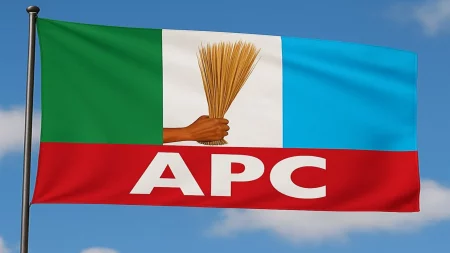
Following a legal battle that began in 2017, the NDC secured registration on February 5, 2026, via a direct Federal High Court order. INEC had initially rejected the application, claiming the NDC’s two-finger logo too closely mirrored the APC’s broom and refusing to let them change it. The NDC sued, won, and forced INEC’s hand.
However, that court victory contained a fatal flaw: unknown to the judge, the Peace Movement Party (PMP) had already submitted that exact same logo to INEC before the NDC even filed its case. Because the PMP was never notified or included in the lawsuit, that legal oversight has now collapsed into a massive judicial earthquake.
On Friday, June 26, 2026, a Federal High Court in Lokoja set aside its December 2025 judgment that had compelled INEC to register the NDC.
Justice Isah Dashen ruled that the original decision was constitutionally defective because a key interested party (the PMP) was excluded and material facts were suppressed during the original proceedings.
Read Also: The Olodo Uprising: How Nigeria Learned to Celebrate Ignorance
This landmark ruling effectively nullifies the NDC’s registration and triggers immediate consequences:
• Registration Voided: INEC must withdraw the NDC’s registration certificate, remove it from official records, and halt its inclusion on upcoming ballot papers.
• The Slate Wiped Clean: The entire case must now start completely fresh, with INEC, the PMP, and the NDC all properly joined as parties.
In plain terms, the court found that the NDC’s legal foundation was built on an incomplete and potentially manipulated process, tearing it down to force a total reset.
The NDC’s legal crisis stems from its choice to prioritize courtroom litigation over conventional registration.
Following INEC’s 2020 deregistration of 74 structurally weak parties, the NDC emerged as a prominent “court-order party,” with its national executives explicitly carrying “court order” annotations on INEC’s website.
Even before the Lokoja ruling, the party faced multi-front compliance battles:
• Dual Membership: National Legal Adviser Reuben Egwuaba was listed in the same role for a rival party, appearing to violate Section 77 of the Electoral Act.
• Procedural Failures: A separate lawsuit alleges the NDC bypassed statutory requirements entirely, failing to pay mandatory administrative fees or complete the official Form EC15A on INEC’s registration portal.
In short, the NDC’s legal foundation was already heavily fractured long before the latest judgment was pronounced.
Is this purely a legal dispute about a logo? Political analysts say no.
In May 2026, broadcast journalist Rufai Oseni noted that the real objective is to keep Peter Obi off the ballot, as he poses the only credible threat to President Tinubu’s re-election. Insiders fear a “political ambush,” where litigation over the NDC’s registration is strategically timed to cause maximum disruption to the opposition.
Furthermore, the African Democratic Congress (ADC) has directly accused the All Progressives Congress-led government of weaponizing the judiciary to clear the field for 2027.
Obi himself has warned that this politicization destroys institutional credibility and has pledged judicial reform. The striking irony remains: Obi is decrying the court’s treatment of the opposition while his own party’s survival hinges entirely on those same courts.
What Does This Mean For Obi’s 2027 Bid?
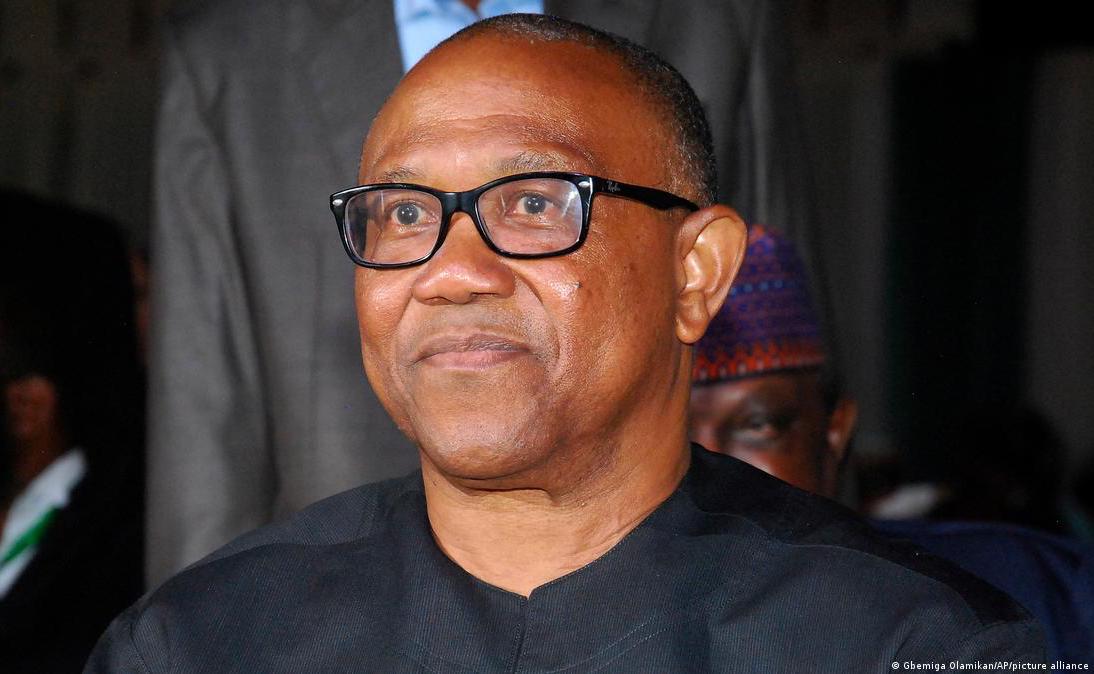
Peter Obi arrived at the NDC with massive political capital, formally declaring for the party alongside Kwankwaso in May 2026 to form a major opposition coalition. To avoid legal vulnerabilities, the NDC’s screening committee proactively cleared Obi’s credentials. However, the party’s own registration has now become his biggest liability.
If higher courts sustain the challenge against the NDC, it will reshape the 2027 presidential race, narrowing it to the APC and whatever alternative platform Obi can find. While the substantive case will now be reheard fresh, the outcome is critical: if the NDC loses, Obi must appeal, pivot to a new party, or sit out the election.
The ultimate irony is that Obi specifically joined the NDC because it promised to be “litigation-free,” but that sanctuary has now become his newest battleground.
If the NDC loses in court and Peter Obi is forced to switch parties again, would you still support him—or has the platform-hopping become a problem? Tell us below.