




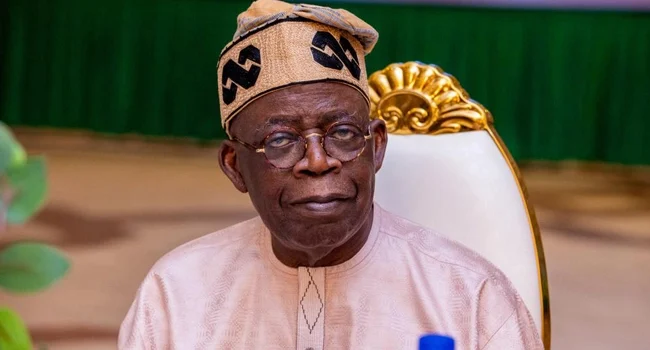


President Bola Tinubu has ordered the redesign and total reconstruction of the Benin-Agbor-Asaba road and other major federal highways across Edo State and adjoining corridors, as the Federal Government moves to tackle worsening road conditions that have disrupted transportation, damaged vehicles and increased the cost of doing business nationwide.
The directive came on Tuesday as the Minister of Works, David Umahi, inspected the troubled Benin-Agbor-Asaba road in Edo State, while the Minister of State for Works, Bello Goronyo, visited the Ifaki-Oye-Kabba and Efon-Iwaraja roads in Ekiti State, where motorists and residents have endured prolonged delays and hardship.
Umahi apologised to commuters and took responsibility for the condition of the Benin-Asaba road, while condemning the concessionaire handling its reconstruction. He ordered steps towards the total reconstruction of the highway, stressing that palliative works would not be sufficient to resolve the problem.
When The PUNCH visited the Benin axis of the Benin-Agbor-Asaba road on Tuesday, it was in a terrible state, though the gridlock of the past two weeks on the road had eased.
Further findings by our correspondents in other parts of the country revealed that federal roads were in dilapidated state.
Some of them are Ibadan-Abeokuta, Lagos-Badagry and Ibadan-Ife-Ilesa in the west; Onitsha-Enugu, Enugu-Abakaliki, Onitsha-Owerri and major federal highways in the east; East-West Road, Warri-Sapele, Benin-Sapele and others in the south south.
Abuja-Kaduna, Abuja-Lokoja, Lokoja-Okene and inter-state routes are also in a bad state in the northern part, as well as Kaduna-Kano, Kano-Katsina, Sokoto-Gusau
Maiduguri-Damaturu, Bauchi-Jos, Gombe-Yola roads and other strategic routes.
Blame game
Umahi, while on an on-the-spot assessment of the Benin-Asaba road following public outcry over its worsening condition, condemned the Benin-Asaba Expressway Concessions Company over what he described as the poor handling of the Benin-Asaba highway.
The expressway was concessioned to BAECC in 2025 for reconstruction and expansion from four to 10 lanes.
The company had, in October last year, said it would complete the 10-lane highway within the stipulated timeframe.
However, Umahi said the concessionaire ought to have been arrested for destroying public property, accusing the company of manipulating the process to secure the contract.
He said, “I commend Governor Monday Okpebholo for his intervention in lots of federal roads across the state. He is not saying this is a federal or state road. I apologise to commuters plying this road. The NDDC is willing to intervene. I am disappointed with the concessionaire. I take full responsibility for their misdeed and destruction of public assets.
“The Ministry of Works does not allow removal of asphalt. We begged them not to remove it. The concessionaire should have been arrested for destroying public property. This road was not like this when it was handed over. I am instructing the ministry to arrest any concessionaire that removes asphalt from existing roads.”
Addressing the Chief Executive Officer of BAECC, Samuel Daramola, Umahi accused the company of manipulating the process to secure the contract and questioned its technical capacity to handle the project.
He said, “You manipulated the process to get the job. You have no knowledge of road construction. You don’t know what you are doing. You have no technical staff or competence.
“The President has directed us to do whatever is possible to fix this road. The law is there and there is overriding public interest. It is also the fault of the government for not finding out the competency of concessionaires. You are learning how to do construction on our road. This is dangerous.
“This is provocation at its highest level. It is a pity when people cannot pass the road. We have competent contractors who we will beg to restore the road. We will be asking CCETC to fix the bad spot in Asaba.
“I am disappointed. The President has directed me to redesign all roads from Kogi to Warri and around Edo State. They are to be done with concrete pavement. We need total reconstruction of this road and not this palliative.”
On his part, the BAECC CEO blamed heavy rainfall and heavy vehicular traffic on the highway for the slow pace of work.
He said the volume of traffic had made it difficult for the company to construct side drains while keeping the road open to motorists.
He said, “We expanded the road to eight lanes. We did palliative work for some months. We are wrestling with weather as much as we want to keep to the scope of work. We expected our palliative work to have been completed long ago.
“We have to choose between doing side drains and combating heavy traffic. We are compelled to open the road when it was not ready. We have to do the work over again. This is a concession road and we are funding this road with our money.
“How do we start with drains when there is heavy traffic? We have tried to engage all parties and communities. We are determined to ensure we complete this road. We have a reputation to maintain.”
The representative of the project consultant, Toyin Akinlapa, said BAECC failed to heed instructions to execute the project according to specifications.
He said, “The concessionaire did not heed our instruction. We told them to first do the drains but they ignored us and that affected the road. The company had some challenges in their technical team.”
The Chairman, House Committee on Works, Akin Alabi, who was part of the inspection team, urged President Bola Tinubu to review the agreement with the concessionaire.
He said, “We should review all such contracts. We cannot afford concessionaires who will give us issues. The people want to see good roads. There must be palliative measures. Let us come up with a solution where people can move.”
Also, Senator Allwell Onyesoh described the condition of the Benin-Asaba highway as despicable.
Governor Monday Okpebholo said the prompt response by President Tinubu demonstrated his concern for the plight of the people, urging residents not to listen to opposition comments on social media.
Commuters, residents groan
Meanwhile, motorists and commuters have continued to count their losses as the deteriorating condition of the Benin-Asaba road disrupts businesses, livelihoods and movement along the route.
A driver who plies the road, who identified himself simply as Chukwudi, said the contractor should have concentrated on one side of the road while leaving the other open to traffic, rather than grading both sides simultaneously.
“Now, the situation is so bad,” he lamented.
A resident, who spoke on condition of anonymity, decried his ordeal on the road.
“It’s been difficult for me because I use this road every day because of the business I do. Imagine sleeping on the road or wasting over five to 12 hours at one spot. It’s unimaginable, I must tell you,” he said.
Businesses suffer
The deteriorating condition of the road, particularly around the bypass, has forced some shops to close, while hawkers have lamented poor sales since rainfall rendered parts of the route almost impassable.
One of the traders at the bypass, Stella, said the bad road had resulted in flooding whenever it rained, making business difficult.
She said she had to wade through the flood to sell her wares and earn money to support her family, while taking care not to fall into the muddy water.
She said, “Generally, business has been very bad, especially on days when it rains. However, I made some money on those days when the gridlock was at a standstill. My appeal goes to the government to ensure the contractor sticks to the terms of engagement.”
Another resident, Chris, said, “I have not been able to do business for a while because transportation is high, and I use commercial motorcycles most of the time due to the gridlock. It’s been difficult. My hope is that the government will come to our aid. It is not enough for the minister to inspect the project; he must ensure the work is done,” he said.
Fuel cost
For motorists travelling between Asaba and Benin, the journey is no longer measured only in kilometres, but in hours spent in traffic, fuel consumed, vehicle repairs, lost business and rising prices. What was once a relatively straightforward trip has become a daily struggle for drivers, traders and passengers who depend on the route.
For Nobel Akanuibiam, a regular driver on the route, the deterioration is clear. He said the journey from Second Junction in Benin City to Summit Junction in Asaba used to take about one-and-a-half hours but now takes up to five hours.
“Before now, travelling from Asaba to Benin, or from Benin to Asaba, was much easier. From the Second Junction in Benin to Summit Junction in Asaba, the journey could take about one and a half hours. Today, that same journey can take up to five hours. That’s about three and a half hours longer than before, simply because the road has deteriorated so badly,” he said.
The longer journey has also increased his fuel expenses. Nobel said he recently spent about ₦45,000 on fuel, compared with the ₦20,000 to ₦25,000 he previously spent.
“Now, when traffic is blocked and you spend three or four extra hours on the road, your fuel consumption increases significantly. What might normally take about 15 litres can become much more because the vehicle is constantly moving slowly, stopping and starting,” he said.
He also complained of frequent vehicle repairs, saying ball joints, shock absorbers and other components now require attention more often.
“Instead of taking the vehicle to the mechanic once a month for routine servicing, you may find yourself going almost every week because of damage caused by the road,” he said.
The delays have also reduced the number of trips drivers can make, while some motorists and passengers spend nights around difficult sections or avoid travelling at night because of security concerns.
For heavy-duty vehicles, the situation is equally costly. A trailer driver, Abre, said the road had increased fuel consumption and operating costs.
“When the road is free, the journey should not take more than about three hours. But because of the bad road and the traffic, we spend much longer on the journey,” he said.
The impact extends beyond motorists to traders and consumers. A fruit seller in Asaba who regularly travels to Onitsha said a journey that used to take about 30 minutes now takes an hour or more.
“When we spend more time on the road, we also spend more money on transportation,” she said.
She said transport costs had risen to about ₦1,500 on a particularly congested day, forcing her to increase the prices of her goods.
“I have had to increase my prices because transportation and other expenses have gone up. When transportation becomes more expensive, everything else becomes more expensive,” she said.
The experiences of the drivers and trader show how the road crisis has become an economic burden. Longer journeys mean higher fuel and maintenance costs for motorists, while traders pass increased transportation expenses on to consumers through higher prices.
The crisis, therefore, extends beyond the road, affecting businesses, livelihoods and household budgets as motorists, traders and consumers continue to bear the cost of deteriorating infrastructure.
Goronyo visits Ekiti
The Minister of State for Works, Bello Goronyo, on Tuesday also visited Ekiti State to inspect the condition of some federal roads and assess the hardship faced by motorists and commuters.
Goronyo visited the Ifaki-Oye-Kabba Road, where road users groaned over a badly damaged section around Oye-Ekiti, leaving articulated vehicles stranded for days. He expressed concern over the hardship caused by the impassable portion.
An articulated vehicle driver, Quasm Abudu, said he had been stuck at a particular spot on the highway for about three days, lamenting the hardship and business opportunities lost while stranded.
A resident of Oye-Ekiti, Bolade Olowo, described the condition of the road as “traumatic and unpalatable,” saying its continued deterioration was crippling socio-economic activities and cutting off communities along the route.
He added that the poor road condition also posed a serious security threat, urging the Federal Government, the state government and other relevant agencies to urgently mobilise resources to fix it.
Olowo said the road links Ifaki, Oye, Ayegbaju, Ilupeju, Itapa and Osin-Ekiti, communities that depend heavily on the route for economic activities and the movement of goods to other parts of the country.
Speaking at the damaged section, where emergency palliative work had commenced to free stranded trucks and restore access, Goronyo reiterated the Federal Government’s commitment to rehabilitating the Ifaki-Oye-Kabba Road.
He described the route, which links the South-West to the northern part of the country, as a critical economic corridor requiring urgent intervention. He disclosed that the rehabilitation contract was awarded to Gamji in 2025.
According to him, the contractor had been mobilised but complained of inadequate funding, prompting the Federal Government to review the funding arrangement to ensure its return to site.
Goronyo said immediate intervention had also commenced through the Federal Road Maintenance Agency, with equipment and materials deployed to the affected section.
“We want to appeal to all the people concerned to be patient with us. We will make sure that we put this road to use very, very soon,” he said.
Appealing to agitated motorists, the minister said the emergency work was expected to make the road passable within 48 hours.
He added that the entrance from the Ifaki end would be blocked to prevent articulated vehicles from using the road until the palliative work was completed.
Goronyo also inspected the Efon-Iwaraja Road, where motorists were forced to turn back and seek alternative routes because of a deep failed section.
He promised immediate remedial work, assuring residents and motorists that the Federal Government would not allow the road to remain impassable.
“I am assuring residents and motorists that the Federal Government will undertake immediate remedial work on the Efon-Iwaraja Road to restore access and ease the hardship being experienced by road users,” he said.
The minister said the interventions were part of President Bola Tinubu’s directive to address critical road failures across the country and ensure the free flow of traffic.
He listed ongoing major road projects by the administration to include the approximately 1,068km Illela-Sokoto-Badagry Highway, the 750km Lagos-Calabar Coastal Highway and the Abuja-Kaduna-Kano Road.
Goronyo said massive investment in road infrastructure was necessary because roads were central to economic activities, security, employment, agriculture and healthcare.
“Roads lead to prosperity,” he said.
Reiterating the government’s determination to complete ongoing projects and use improved road infrastructure to stimulate commerce, industry, employment and food security, Goronyo said the administration was committed to addressing the country’s road infrastructure deficit.
“For the past one week, the Minister of Works, David Umahi; myself; all the directors in the ministry, all the SAs and SSAs of Mr President, we have been crisscrossing the roads across the country.
“We have met a very difficult situation and we are fixing it,” the minister said.
Zaria Road reconstruction
Ongoing reconstruction along the Zaria Road corridor in Kano State has caused traffic congestion, with motorists and commuters experiencing delays along the affected stretch.
The work is being carried out from the Ado Bayero Flyover, popularly known as Gadar Lado, towards Unguwa Uku Motor Park.
The affected section is estimated at about 1.5 kilometres, although the extent may change as construction progresses.
The reconstruction has narrowed the available carriageway, slowing traffic and causing significant build-up, particularly during peak periods.
The development has raised concerns among motorists and commuters who depend on the busy route, which connects several parts of Kano metropolis.
Further details on the project, including its cost, contractor, duration and expected completion date, are yet to be established.


