







The Nigerian Army and the Anambra State Government have paid their final respects to retired Lieutenant General Chikaidibia Isaac Obiakor, the first African to serve as the United Nations Military Adviser for Peacekeeping Operations, describing him as an accomplished officer whose contributions to Nigeria and international peace efforts would remain indelible.
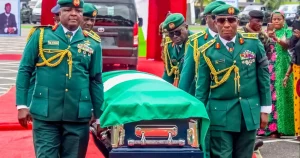
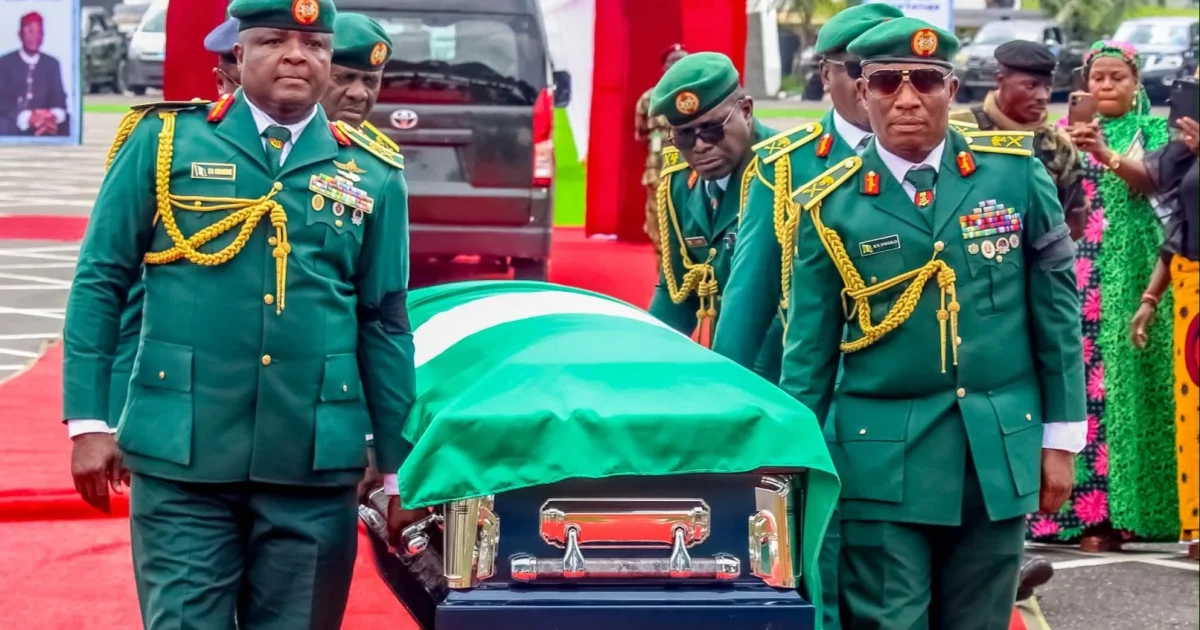
The burial ceremony took place on October 9, 2026, at Alex Ekwueme Square, Awka, Anambra State, with senior military officers, government officials, family members and other dignitaries in attendance.
The ceremony followed a Service of Songs held on October 8 at the late general’s country home, culminating in his burial with full military honours.
Delivering an oration on behalf of the Chief of Army Staff, Lieutenant General Waidi Shaibu, Major General T.E. Gagariga described Obiakor as ‘an exceptional officer whose personality, professionalism and leadership earned him respect across the Armed Forces.’
According to a statement on X issued on Sundays by the Acting Deputy Director, Army Public Relations, 82 Division, Lieutenant Colonel Olabisi Olalekan Ayeni, Shaibu described the late general as “a pleasant, confident, and extraordinary officer whose personality earned him respect and admiration across the Armed Forces.”
The Chief of Army Staff also praised Obiakor’s professional competence, analytical ability and commitment to achieving results, noting that these qualities shaped his leadership and influenced the commands under his supervision.
He described the late officer as articulate, resourceful and creative, adding that his professional qualities fostered a strong work ethic throughout his military career.
Obiakor held several strategic appointments during his service in the Nigerian Army, including Commander of 34 Artillery Brigade, Commander of 32 Field Artillery Brigade, Directing Staff at the National War College, Deputy Commandant of the Headquarters Nigeria Corps of Artillery and School, Chief of Administration, Nigerian Army, Commander of the Headquarters Nigeria Corps of Artillery, and General Officer Commanding 2 Division, Nigerian Army.
Shaibu described his death as a profound loss to his family, the Nigerian Army and the nation.
Also paying tribute, Anambra State Governor, Professor Chukwuma Charles Soludo, described Obiakor as a distinguished son of the state and a role model for younger generations.
Soludo called on young people to draw inspiration from the late general’s career and consider military service as a noble means of contributing to national development.
The governor described Obiakor as “a proud son of Anambra and a role model for the Igbo nation,” urging youths to emulate his example by joining the Armed Forces.
Earlier, during the Service of Songs, the General Officer Commanding 82 Division, Major General O.A. Fadairo, conveyed the condolences of the Chief of Army Staff and the Nigerian Army to the bereaved family.
Fadairo described Obiakor as “a gallant, disciplined, and accomplished General whose legacy will remain indelible.”
The burial attracted serving and retired military officers, government representatives and other prominent personalities from across the country.
Among those in attendance were Governor Soludo; representatives of the Minister of Defence and the Chief of Army Staff; former Chief of Army Staff, Lieutenant General O.A. Ihejirika (rtd.); Corps Commander Artillery, Major General J.O. Adeyemo; Major General O.G. Onubogu; Major General O.A. Fadairo; and the Director-General of the National Youth Service Corps, Brigadier General O.O. Nafiu.
Military traditions were observed during the ceremony, including the presentation of the national flag and military accoutrements to the next of kin, as well as the symbolic presentation of a condolence letter.
The Nigerian Army said the ceremony reflected its commitment to honouring officers who had served the country and to preserving their legacies for future generations.
Obiakor’s burial marked the end of a distinguished military career that included several command and administrative appointments, as well as service in international peacekeeping efforts.


