

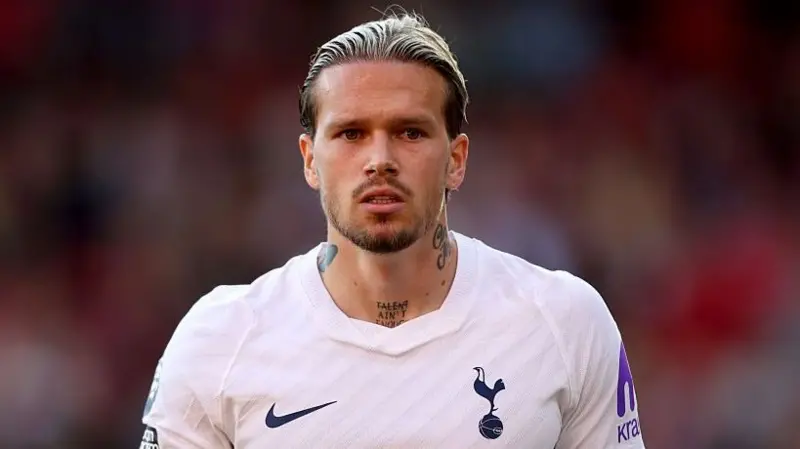

Ukraine football legend Andriy Shevchenko has challenged Mykhailo Mudryk to provide evidence to support his allegations against the Ukrainian Association of Football (UAF) over his doping ban.
Shevchenko, who is president of the UAF, responded after the Tottenham winger accused the football association of contributing to his 20-month absence from football following a positive test for the banned substance meldonium.
Mudryk, who joined Tottenham on a season-long loan from Chelsea, was suspended from November 2024 until July 2026 after testing positive for the substance.
The 25-year-old believes meldonium entered his system while he was on international duty and accused the UAF of mishandling his case, leaking information and delaying his return to football.
As reported by BBC Sport on Thursday, however, Shevchenko strongly rejected the allegations, describing them as a “baseless slander against our people, who do their work honestly and professionally”.
He also made a serious allegation against Mudryk’s representatives, claiming they repeatedly approached the UAF to find an employee willing to accept responsibility for the presence of meldonium in the player’s doping sample.
“His representatives repeatedly approached the UAF with a proposal to find an employee who would falsely take responsibility for the meldonium found in his doping sample,” Shevchenko said.
“The UAF refused, as such a proposal contradicts the principles of our work.”
Shevchenko further maintained that investigations and audits conducted during the case had failed to establish when or where the banned substance entered Mudryk’s system.
He also defended the support provided to the winger during his time with the national team, insisting that officials respected Chelsea’s request not to administer any medication to the player while he was on international duty.
According to Shevchenko, national team head coach Serhiy Rebrov also approved Mudryk’s request to work with two personal specialists during training camps.
“Head coach Serhiy Rebrov also approved for Mykhailo to have two of his personal specialists work with him at the training camps,” he added.
“These were the exact people who monitored his regimen and recovery, and helped him with his daily routine.”
Shevchenko said the UAF completed the necessary checks and provided Mudryk’s representatives with the information they requested while maintaining contact with those handling the case.
He also expressed confidence in the professionalism of the national team staff, insisting that he had no reason to doubt their conduct.
The UAF president challenged Mudryk to produce evidence supporting his accusations and demanded a public apology if he could not substantiate them.
“If Mykhailo has evidence to back up his words, let him provide it. If no such evidence exists, I expect him to publicly retract his accusations and apologise to the people whose honesty and professionalism he has called into question,” Shevchenko said.
BBC Sport reports that it has contacted Mudryk’s representatives for comment.
