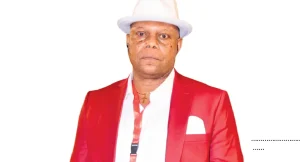


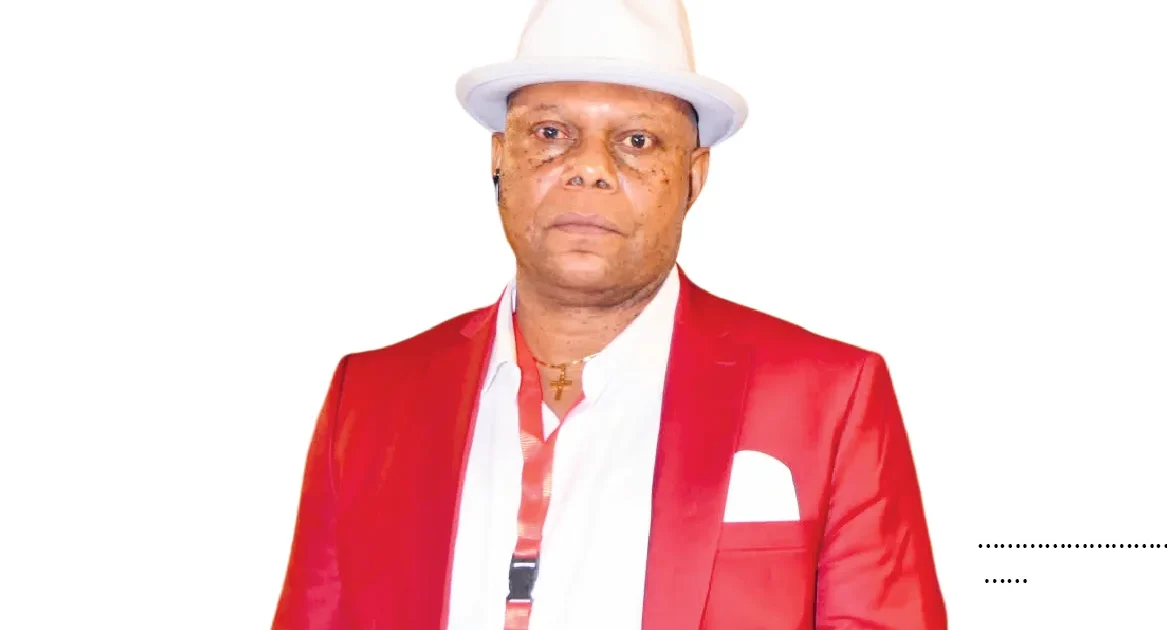


The former National Vice Chairman of the Labour Party in the South-South and National Chairman of the South-South Democratic Movement, Favour Reuben, speaks with DARE AKOGUN on the opposition’s preparations for the 2027 elections and the ex-Rivers State governor, Nyesom Wike-led Rainbow Coalition.
Opposition parties and political groups are discussing a coalition ahead of the 2027 elections. Do you think they are prepared for that?
From what I am seeing on the ground, they are not yet sufficiently organised. Politics is not won by making noise in Abuja or being active on social media. You have to build structures from the polling unit to the ward, local government and state levels. If you want to challenge a political structure that has been built for years, you must also build your own structure.
What exactly do you think the opposition is getting wrong?
The major problem is that many of them are concentrating too much on Abuja. You hear people making statements in Abuja, attacking individuals and talking about coalition, but when you go down to the local government and ward levels, you do not see the same energy. Politics is about numbers and organisation. You need people who are committed to the party in every ward and polling unit. If you do not have that structure, you may have a popular candidate but still struggle during an election.
Are you saying the proposed coalition cannot challenge the APC in 2027?
I am saying that a coalition by itself does not guarantee electoral success. The parties have to bring their structures together and agree on how they are going to operate. They need to determine their leadership, candidates, message and how they will mobilise voters. If they come together late, there could even be confusion among their supporters about the platform they are working with and what the coalition stands for. So, the issue is not simply coming together. The question is: what structure are you bringing together?
By now, the opposition should be building, going to the wards, local governments and communities. They should identify their supporters and understand the issues affecting the people. They should also begin political education and mobilisation. You cannot challenge somebody who has been building a political structure for years when you have spent most of your time on social media.
If you want to win an election, you must be on the ground. The 2023 experience showed what coordinated grassroots mobilisation can achieve. At that time, different groups were working together. We had people moving from one state to another, from one local government to another, and engaging directly with voters.
The African Democratic Congress, Nigeria Democratic Congress, Allied Peoples Movement and other groups have to demonstrate what they have on the ground. I am not saying they cannot build it. They can. But they must show seriousness by establishing structures across the states, local governments, wards and polling units.
They need people who are ready to work. You cannot challenge an established political structure simply by abusing the people in government. You must show the electorate what you are bringing to the table.
But some opposition leaders argue that the popularity of their candidates can compensate for weak structures.
Popularity is important, but it is not enough. A candidate can be popular on television and social media, but elections are ultimately conducted at polling units. Who is there to mobilise the voters? Who knows the people in the communities? Who is monitoring the process? Who is explaining the party’s message? Those are organisational questions. That is why I keep saying opposition parties need to go beyond social media.
Do you think the opposition is currently too focused on attacking President Bola Tinubu?
There is nothing wrong with criticising a government. That is part of democracy. But opposition politics should go beyond criticism. You should tell Nigerians what you will do differently. If you are talking about unemployment, explain how you will create jobs. If you are talking about insecurity, explain your strategy. If you are talking about the economy, tell Nigerians what policies you intend to implement. The opposition needs a clear message that people can understand.
How will you describe the role of the political parties in the proposed coalition?
Political parties must not be treated as vehicles that can simply be picked up when an election is approaching. They have structures, members and interests. If you want a coalition, you must sit down with the parties and agree on the terms. That is one of the reasons I have raised concerns about the Labour Party’s reported involvement in the coalition.
As far as the Labour Party structure I represent in Rivers State is concerned, nobody consulted us. You cannot build a coalition by simply announcing that a political party is part of it.
Does that mean the Labour Party is not part of the coalition, as far as your faction is concerned?
The Labour Party has never been part of the Rainbow Coalition from the beginning, as far as our structure in Rivers State is concerned. Nobody consulted us. No meeting was held with us, and nobody approached us to discuss the coalition. If you want to bring us into a coalition, you must sit down with us. You discuss what our stake will be, who the candidates will be and what we are going to tell our members.
You cannot simply announce that the Labour Party is part of a coalition when nobody has consulted the party structure. For now, the Labour Party structure I represent in Rivers State is not in the coalition.
Some people are already presenting themselves as Labour Party representatives in the coalition. Who are they?
Some of those people came from a labour union background. They are not necessarily people who built or understand the political structure of the Labour Party. After the 2023 election, we had a crisis involving some unionists, and that created factions within the party. My concern is that the political party and the labour union are different structures. A political party has its own constitution, processes and structures. That is why we are saying that if anybody wants the Labour Party to participate in a coalition, the authentic party structure must be consulted.
There are reports that your opposition to the Rainbow Coalition is connected to your strained relationship with Wike?
That is not correct. I have supported Wike politically for a long time. Everybody who knows me knows that. But supporting somebody does not mean I should surrender the political structure I built. I have never worked for Governor Siminalayi Fubara. So, anybody saying that I am part of a Fubara group or that I am working for Fubara should produce the evidence.
Wike remains somebody I respect politically. I have said openly that he is one of the politicians whose political consistency and organisational ability I admire. I also admire President Bola Tinubu’s political sagacity. These are politicians who have demonstrated political organisation over the years.
But admiration does not mean that I will allow anybody to destroy the structure I built. My disagreement with Wike in this matter is that if he wants to work with the Labour Party, he should talk to the people who built the structure. He has always insisted that nobody should tamper with his political structure. So, why should anybody now come and tamper with the structure we built in the Labour Party?
If we agree to work together, we will work together. If we do not agree, we will take our own decision. But there must be consultation.
Will you join the coalition if your group is consulted?
If we are consulted, we will sit down and discuss it. I am not opposed to coalition politics. Given the way Nigeria is structured, there may be circumstances where political parties need to come together around a common objective. But you cannot build a coalition by ignoring the people whose structures you want to use. We have candidates and members across the state. We have people who worked for the Labour Party with their own resources in 2023. You cannot wake up one morning and tell them that they are now part of an arrangement they know nothing about.
Your South-South Democratic Movement says it will support candidates across party lines. Why?
We are looking at candidates rather than party labels. If we see a candidate in the APC who we believe has the qualities we are looking for, we can support that candidate. If we see another candidate in the NDC or ADC, we can also consider that candidate.
We are not saying that one party automatically has all the good candidates. Our responsibility is to examine what the candidates are offering and what they have done. We are currently building our structure and observing the political developments; we are building from the grassroots. In Ogoni, for instance, we have coordinators across the wards and representatives at the unit level. The idea is to have people who understand their communities and can mobilise them when necessary. That is what I mean when I talk about structure; you cannot build a political movement from Abuja alone.
Nigerians should look beyond political parties and examine the candidates and what they are offering. They should participate in the electoral process and protect their votes within the law.
For us, we are not going to announce support for a candidate simply because of the party the person belongs to. We will examine the candidates and make our position known when the time comes. The important thing is that Nigerians should participate. They should vote and ensure that the process is properly monitored. Democracy cannot work if citizens stay away from elections and leave the decision to a small number of people.