


Nigeria has interrupted the transmission of indigenous wild poliovirus, but the continued circulation of vaccine-derived poliovirus remains a concern, leading virology professors have warned, urging the government to strengthen routine immunisation and ensure that no child is left unvaccinated.
The experts said the virus was circulating among children who had not received polio vaccines or had not been fully immunised, leaving them vulnerable to infection and transmission.
They identified poor routine immunisation, parental resistance, fake finger-marking by some vaccinators, insecurity and poor sanitation as factors contributing to the continued circulation of the virus.
The virologists stressed that although Nigeria was declared free of wild poliovirus in August 2020, the country must sustain vaccination efforts and address gaps in access to immunisation to stop the spread of circulating vaccine-derived poliovirus.
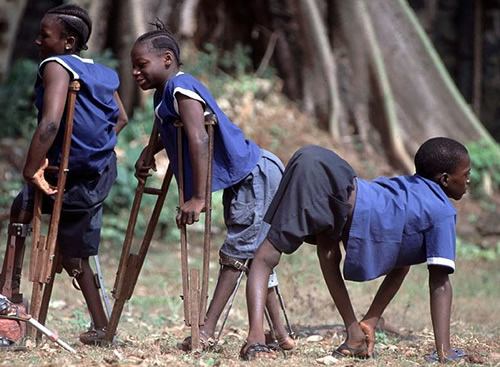
They also warned that polio could impair children’s physical development and affect the country’s future workforce and economy if transmission was not completely interrupted.
Nigeria was declared free of wild poliovirus when the World Health Organisation African Region received its certification in August 2020.
However, the WHO in September stated that circulating variant poliovirus remains a public health threat, especially in communities where too many children have missed vaccination.
The agency called for continued surveillance to detect the virus quickly and guide a timely response.
Last week, PUNCH Healthwise reported that the Niger State government has detected five polio cases in four Local Government Areas of the state.
The state immunisation officer, Abubakar Kpantu, said, “The virus was detected in the state. We found three from humans and two from environmental sampling in four local governments, and a lot of strategies have been put in place to curtail the spread of the disease.”
Commenting on the matter, a renowned Professor of Virology and former Regional Virologist and Coordinator for the WHO Africa Region, Prof Oyewale Tomori, said the polio cases currently being recorded in Nigeria were caused by circulating vaccine-derived poliovirus rather than indigenous wild poliovirus.


Tomori said the continued circulation of the virus reflected gaps in the country’s immunisation programme, especially the number of children who had received no doses or had not completed their vaccinations.
He explained that the virus could continue circulating among children who had not been fully vaccinated and be passed on to other susceptible children.
The virologist said the way to stop the transmission was to ensure that every child received the appropriate polio vaccines.
“You got to vaccinate your children. Make sure that no child is left behind. Make sure that you vaccinate your children,” he said.
Tomori also stressed the importance of ensuring that vaccines remained potent before they were administered to children.
The professor explained that power failures and inadequate cold-chain facilities could affect vaccine potency, meaning a child might receive a vaccine without developing the expected immunity.
He said parents might not be able to determine whether a vaccine had been properly stored and preserved, making it important for health workers to ensure that vaccines remained effective.
Also, a Professor of Medical Virology at the University of Ilorin, Prof Olatunji Kolawole, said Nigeria had made significant progress in polio eradication, recalling that the country was declared free of wild poliovirus in August 2020.


Kolawole, a pioneer National Coordinator of the Poliovirus Laboratory Containment for Nigeria, said the country had moved from recording hundreds of thousands of wild poliovirus cases in the 1980s to interrupting indigenous transmission.
He, however, said circulating variant poliovirus remained a challenge, with 36 cases reported in Nigeria in 2026.
The virologist said several factors were responsible for the continued circulation, including poor routine immunisation, resistance from parents and gaps in reaching communities affected by insecurity.
He also raised concerns about cases of fake finger-marking by some polio vaccinators, who, instead of administering vaccines, marked children’s fingers to give the impression that they had been vaccinated.
The professor said the practice was a serious concern because it left children unprotected while creating the appearance that immunisation activities had been completed.
He, however, said the government had taken the issue seriously and that there had been improvements in addressing it.
Kolawole said insecurity had also made it difficult for vaccination teams to reach some communities, leaving children in hard-to-reach areas without access to immunisation.
He further identified poor sanitation and hygiene as factors that could promote the spread of the virus, citing findings from environmental surveillance that detected the virus in wastewater.
The virologist said open defecation into streams and rivers could contribute to the spread of the virus through water systems connecting communities.
He called for improved water and sanitation facilities, as well as stronger collaboration among federal, state and local governments to address the factors sustaining transmission.
Kolawole warned that the consequences of polio extended beyond the affected children, as the disease could impair the country’s future workforce and economic productivity.
He said children under five were particularly important to the country’s future and that disability arising from polio could affect their ability to contribute fully to society as they grew older.
He said the resulting reduction in the productive workforce could have implications for the country’s gross domestic product and wider economy.
Kolawole urged the government and other stakeholders not to relax efforts until all forms of poliovirus transmission had been eliminated.
He also disclosed that the World Health Organisation’s Strategic Advisory Group of Experts on Immunisation had recommended the introduction of a third dose of inactivated polio vaccine to strengthen protection for children.
He said countries had been advised to implement the additional dose as part of efforts to improve children’s immunity and respond more effectively to outbreaks of circulating vaccine-derived poliovirus.
Copyright PUNCH
All rights reserved. This material, and other digital content on this website, may not be reproduced, published, broadcast, rewritten or redistributed in whole or in part without prior express written permission from PUNCH.
Contact: health_wise@punchng.