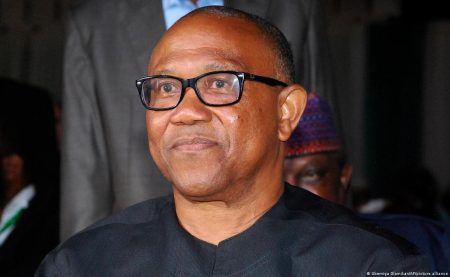




Chairman of the House of Representatives Committee on Foreign Affairs, Rt. Hon. Busayo Oluwole Oke, has cautioned state governments, including Osun State, against any attempt to undermine the Supreme Court’s judgments on Local Government autonomy, insisting that the rulings are final, binding and not subject to political negotiation.
Oke, who represents Obokun–Oriade Federal Constituency of Osun State, said compliance with the apex court’s decisions is a constitutional obligation for all arms and levels of government.
In a statement in Abuja on Friday titled “Local Government Autonomy and the Rule of Law: Why States Must Comply, Not Confront,” the lawmaker stressed that Nigeria’s democracy is anchored on the supremacy of the Constitution and the authority of the judiciary.
He noted that recent Supreme Court pronouncements on the administration and financial autonomy of Local Governments had triggered renewed debates nationwide, but warned that personal, legislative or executive preferences cannot override constitutional mandates.
“Under Section 235 of the 1999 Constitution, the Supreme Court is the final court of the land. Its decisions are not advisory or optional; they represent the authoritative interpretation of the Constitution itself,” Oke said.
The lawmaker warned that no State House of Assembly, including Osun’s, has the constitutional competence to enact laws that dilute, circumvent or contradict Supreme Court judgments on Local Government autonomy, describing such efforts as unconstitutional, null and void.
“This is not about politics; it is about constitutional order,” he declared, adding that while legislatures are empowered to make laws, they cannot reopen disputes that have been conclusively settled by the apex court through statutory manoeuvres.
According to him, even the National Assembly lacks the power to reverse a Supreme Court judgment through ordinary legislation. “The only lawful pathway to altering such outcomes, where necessary, is through a constitutional amendment that is transparently carried out and applied prospectively,” he explained.
Oke, a former Chairman of the House Committee on Public Accounts, however, clarified that compliance with the court’s rulings does not render state governments irrelevant, adding that states still retain broad authority to enact laws that strengthen Local Government democracy without infringing on their autonomy.
He identified lawful areas of state intervention, including ensuring regular and credible Local Government elections, promoting transparency and independent audits, enhancing administrative coordination without financial control, and supporting capacity building and effective service delivery at the grassroots.
“What states cannot do is reintroduce control through renamed joint accounts, caretaker committees or executive gatekeeping disguised as oversight,” he cautioned.
The lawmaker called for cooperation rather than confrontation between state governments and Local Governments, urging inter-governmental collaboration through memoranda of understanding, joint planning frameworks and technical support mechanisms that respect the independence of elected councils.
He also advised stakeholders to channel concerns about fiscal federalism and revenue allocation through national dialogue and constitutional advocacy, rather than unilateral state actions.
“Until such amendments are lawfully enacted, the Supreme Court’s interpretation remains binding,” Oke said, adding that Local Government autonomy was designed to deepen democracy and bring governance closer to the people.
“Compliance is not weakness; it is fidelity to constitutional governance and a commitment to Nigeria’s democratic future,” he concluded.