

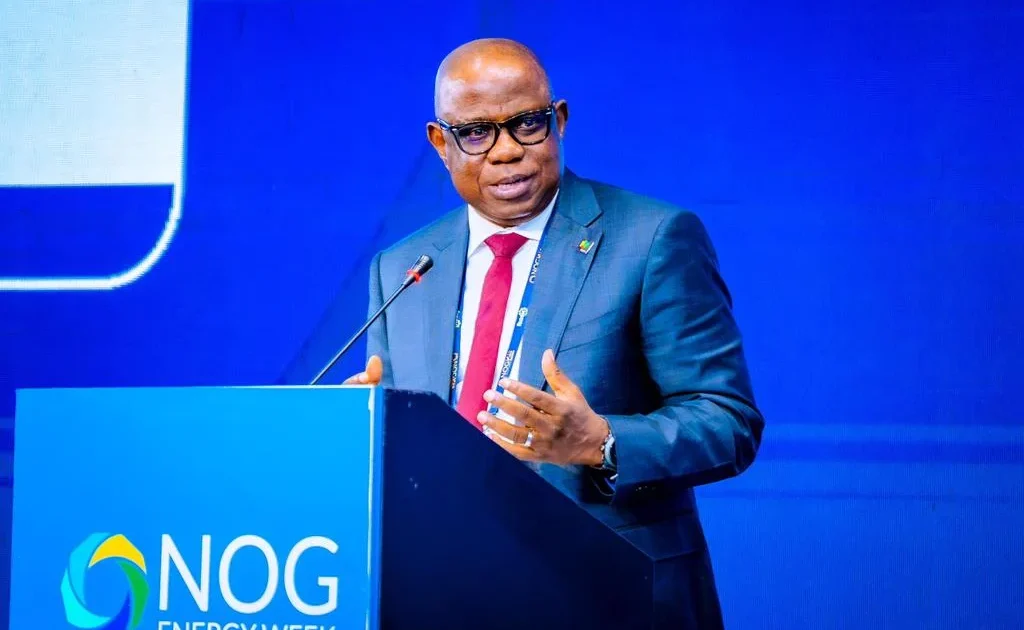

The Nigerian National Petroleum Company Limited has ruled out further rehabilitation of its state-owned refineries without a clear path to profitability, saying it will only work with technical equity partners prepared to have a stake in the performance of the facilities.
The NNPC Group Chief Executive Officer, Bayo Ojulari, disclosed this on Tuesday in Abuja during a question-and-answer session at a media parley to announce the company’s 2025 audited financial results, achievements and strategic vision.
Nigeria’s three state-owned refineries in Port Harcourt, Warri and Kaduna have consumed hundreds of billions of naira in rehabilitation and maintenance spending over the years but have struggled to deliver sustained commercial production and profitability.
Ojulari said NNPC had learnt from previous rehabilitation arrangements, under which contractors were paid for rehabilitation, operations and maintenance without having a direct stake in the commercial performance of the facilities.
“What we have learned from the past rehabilitations of the refineries was multiple. But I’ll remind you again of the two of them that I’ve always talked about.
“One was that the model we have used before meant that we were incentivising people who work on the refinery, and there was no skin in the game. We pay for contractors, we pay for financing, we structure and pay for O&M, everything we pay for. Right? And then none of those parties that were working with us had a stake in the performance of the refinery after their work,” he said.
According to the GCEO, NNPC has also stopped using crude oil to fund rehabilitation arrangements that do not deliver positive commercial outcomes.
“It’s very simple. How do we pay? We pay with our crude. We were paying for the refinery repairs with crude oil. Last year we stopped that.
“Part of the revenue you have seen in 2025 was part of the leakages that we stopped. It was the money going in that was not bringing net positive outcomes.
“Right? So we’ve reduced that waste. Going forward, our structure is: whoever is coming with us, we have to work together to make sure that the refinery can make money. And until we find a pathway for it to make money, we’re not going to go,” Ojulari stated.
He said the new approach was designed to ensure that the Port Harcourt and Warri refineries, and eventually the Kaduna refinery, returned to sustainable and profitable operations rather than simply being restored to operation.
“Today, through our technical equity partnership model, we have made significant progress with our prospective partners. They have carried out a three-month intrusive on-site due diligence with over 34 of their top engineers, and we are now looking at concluding that report, and the objective remains the same.
“What we want going forward is to have a refinery that is self-sustaining, that is profitable, and is sustainable. And that’s what we’re looking for. We believe that in the not-too-distant future, we’ll be able to define that pathway forward,” he said.
Ojulari, however, warned that efforts to reposition the refineries could face resistance from interests that would prefer to acquire the facilities as scrap.
“There are those who are prepared to buy these refineries as scrap, right? And they already prepared their plans, right? So, we need to watch out. So, if you come in with a formidable solution that is credible, you are actually going against some people who would like to do all sorts of stuff,” he said.
The GCEO said NNPC had subjected prospective Chinese partners to a lengthy selection process, adding that the company initially considered more than 50 possibilities before narrowing the field to about 20.
“Before we got to them, we started with over 50 possibilities, narrowed to about 20. It took us about nine months to come into that position.
“And by the way, by the time we got to that position, apart from the fact that they were the only ones that showed true credibility aligned with our strategy, everybody else wanted us to give them either food before they can come and participate in a refinery.
“Some would like us to sign a 10-year O&M. They were the only ones so far that aligned with that. We haven’t signed the final with them, but they’re the only ones that aligned with our strategy and our vision, which is to build something that is self-sustaining and be ready to put in their own stake inside, not to just get a contract while we’re paying them,” he said.
On the technology to be deployed, Ojulari said the due diligence had shown that simply implementing some of the earlier rehabilitation plans could leave the refineries technologically behind for another five to 10 years.
“One of the discoveries … is that the current plan that we have, the quick fix we had before, and some of the plan we have, by the time we are done with it, the refinery will be around another five, eight years or ten years behind technology,” he said.
He said the prospective Chinese partners had deployed more than 33 senior engineers to work with NNPC’s technical teams for more than three months without charging the national oil company.
Ojulari also said an NNPC delegation that visited China observed petrochemical facilities operating above their original design capacities.
“What we discovered during our visit is that these guys were running at 120 per cent of design capacity.
“You know what that means? That means you’ve designed something, you have now optimised the bottleneck and included other things to make it perform more than its nameplate capacity. Those are the things we saw. We were stunned,” he said.
He said NNPC wanted the refineries to return with technology capable of competing with modern facilities rather than merely restoring old configurations.
“We’re very cautiously optimistic that some of those best practices we saw with our eyes, not read in the books, that we can replicate them when we put these refineries back.
“And I like your comment, we have to be at a standard where we can compete effectively in terms of quality or beat existing refinery standards. And we have to be looking forward, not just today,” he said.
On the Chinese partnership, Ojulari stressed that no final agreement had been signed.
He said the parties had only signed a memorandum of understanding allowing the prospective partners to conduct due diligence, adding that commercial and technical negotiations would follow after the report.
“We have not signed a final agreement yet. We believe that once they’ve finished the report of their study, they will then come back to us with a proposal. Following that proposal, we will go into negotiation, both commercial and technical. If we converge, then we can say they have made a decision,” he said.
He said there were strong indications of interest in the Port Harcourt and Warri refineries, while work on Kaduna had yet to commence under the same model.
On the planned listing of NNPC Limited, Ojulari said the company had yet to set a date for its Initial Public Offering, stressing that the immediate focus was to make the national oil company ready for the market.
“Our journey to be listed is about the whole company. The refinery is just one. But just also bear in mind that we cannot just determine a date for IPO on our own.
“Ours is to be ready. That’s what’s so different and very important. … So, we don’t have a date, but we are working hard to make sure we are ready as soon as we can. That’s what we are doing. And once we are able to get the date advised, we’ll definitely be able to share that.”
He said NNPC was restructuring businesses that were not profitable to ensure that every unit had a pathway towards generating value.
“Any of our businesses that are not profitable, we are restructuring them as we speak. And after restructuring, we restructure them so that we can see each business unit must have a positive output.
“It doesn’t matter if that business requires investment that will deliver value later. That’s fine, right? But it cannot be a situation where you can look 10 years, you can’t see any pathway towards profitability,” he said.
The NNPC boss said the company’s wider ambition was to become a globally competitive energy company capable of attracting capital rather than continually seeking funding.
“In that world, you have to be the best. Capital should be looking for you, not you looking for capital,” Ojulari said.
He added that stronger financial performance, transparency and accountability were improving NNPC’s relationship with banks and other potential investors.
“I can tell you that, just within this last one year, our finance team under our GCFO have established more banking relationships than we’ve done in the previous 10 years.
“We now have a clear line of sight to short-term revolving loans over three months. We’re working on the medium-term revolving loans and long-term revolving loans. So the credibility we’re getting from the banks is showing.
“And we’re beginning to see the results of the transparency and accountability.
“Because once we are transparent, people feel that they can invest. The capital is coming through. We’re seeing proposals coming. And this is just the beginning.”
