



Inside the ₦5.6 trillion industry Nigerians can’t stop feeding in 2026.
Sports betting in Nigeria has grown far beyond a casual habit. Today, betting websites are among the most visited in the country, forming a multi-trillion-naira industry that serves as a job, an addiction, or both for millions of people.
In June 2026, SportyBet alone recorded nearly 49 million visits, more than the combined traffic of Bet9ja and 1xBet.
Here is the full June 2026 traffic picture:
• SportyBet — 48.84M visits
• Bet9ja — 12.92M visits
• 1xBet — 12.82M visits
• BetKing — 9.61M visits
• Stake — 4.56M visits
• MSport — 3.78M visits
• Betway — 2.96M
• BC.Game — 1.01M visits
Nigeria’s active betting population in 2026 is estimated at roughly 60 million people, with daily stakes exceeding ₦10 billion, making it Africa’s largest betting market.
A recent 2026 investigation noted thayt an estimated 60 million Nigerians are now engaged with gambling. That’s close to a quarter of the country placing bets on any given day in 2026. The rest of this carousel asks why and what’s built to keep them there.
A 2026 report by TheCable highlight a troubling shift: sports betting has become a daily necessity.
• The Players: A 24-year-old explained that what started as occasional fun during big matches turned into a daily habit: “Sometimes I win, but most times I lose and still try again.”
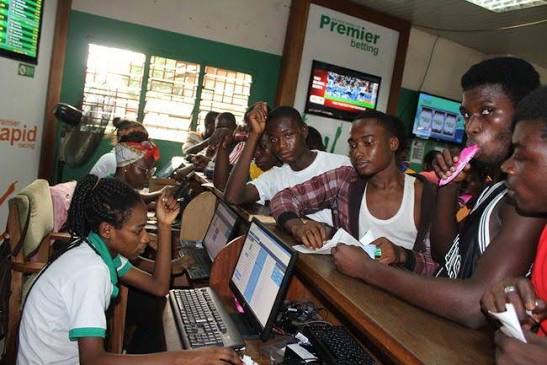
• The Operators: A betting shop manager confirmed the constant rush: “From morning till night, people are staking. Some now depend on it as income,” adding that constant losses trap people in a cycle.
Another investigation from June 2026 revealed that economic hardship is driving this trend. With over half of Nigeria’s population living in poverty, people are desperate for extra money and betting feels like the easiest, fastest way out.
This survival tactic gets people through the door but aggressive, targeted advertising is what keeps them trapped.
A 2026 academic investigation into Nigerian gambling advertisements found a consistent, deliberate pattern across the industry.
Gambling advertisements frequently depict gambling as a thrilling and safe endeavour that guarantees immediate riches. Young men and women are shown effortlessly winning substantial amounts of money, reinforcing the misconception that gambling offers an easy solution to financial difficulties.
The same 2026 study found that a considerable number of the advertisements neglect to address the substantial risks associated with betting, including the possibility of addiction and severe financial loss.
Read More: How Many Nigerians Are Making Millions From The “Iron Condemn” Scrap Industry And The Need For Regulation
Researchers concluded this pattern of deceptive communication is partly driven by aggressive marketing strategies employed by betting companies as a deliberate growth tactic.
The advertising, essentially, functions as the business model.
What’s Actually Engineered Into The Apps
Beyond the adverts themselves, the products Nigerians are betting on in 2026 are built around continuous engagement rather than one-off transactions.
Live, in-play betting means a football match never reaches a natural pause without another decision being surfaced to the user. Instant cash-out prompts and real-time odds shifts are designed to keep attention locked to the screen for the full 90 minutes and beyond.
This is a core reason the research on Nigerian gambling advertising specifically flags misleading communication and deceptive messaging as a recurring trend across the sector rather than an occasional lapse.
This is because the messaging and the product design are built by the same commercial incentive: more time on the app, more stakes placed, more frequent re-engagement after a loss.
A June 2026 investigation by Africa Health Report into Nigeria’s betting sector identified a growing and specific concern: AI-driven platforms and social-media promotion are being used to reach underage and financially vulnerable users more precisely than traditional advertising ever could.
The investigation’s framing is described a pipeline running “from algorithms to addiction,” where AI-powered betting products and aggressive online promotion are actively fuelling underage sports betting and a mental health crisis among young Nigerians.
The same reporting notes that Nigeria currently has no official centralised government statistics to track mental health challenges and suicides linked to sports betting, even as this AI-driven promotion continues to scale.
That absence of centralised data is a direct policy gap this carousel keeps returning to, because you cannot regulate what you are not measuring.
Who Is Being Targeted?
The same investigation that documented AI-driven betting promotion found this targeting is not random.
Underage and student-aged users are specifically exposed to influencer-style promotion and algorithmically optimised betting content designed to normalise staking as an everyday activity rather than an occasional risk.
Researchers see this as part of a growing global trend. A March 2026 study found that sports betting among young adults has exploded worldwide, driven by online access, heavy advertising, and its deep connection to sports culture.
Nigerian students fit right into this pattern as they are constantly online, struggling financially, and routinely targeted by aggressive ads and app designs built to keep them betting.
Nigeria currently has no official government system to track the mental health issues or suicides caused by gambling.
Because official tracking is missing, independent studies and health workers are filling in the blanks:
• Severe Consequences: One study found that 12.5% of surveyed bettors experienced serious harm, often slipping into depression, heavy debt, or crime to cover their losses.
• Rising Addiction: Health professionals warn that youth addiction is spiking, and government regulations are failing to keep up with the rapid spread.
Without centralized tracking, Nigeria only sees a fraction of the damage, making it impossible to measure the full national crisis.
How Big Is This?
Here is where the industry stands financially in 2026. Nigeria’s gambling market is now estimated at roughly ₦5.6 trillion, driven primarily by the online and mobile segment.
This growth is reflected in January 2026 industry data showing total gross gaming revenue globally grew 3.4 percent year-on-year to $6.74 billion, with the fastest-growing segment being iGaming, up 21 percent.
In Nigeria specifically, sports betting makes up around 75 percent of all wagers placed, with an estimated 60 million bettors and daily stakes exceeding ₦10 billion.
Industry analysis published in July 2026 projects the sector’s annual contribution growing from roughly $2 billion toward $5 billion by 2027, confirming this is one of the largest and fastest-growing consumer sectors in the Nigerian economy right now.
2026 carries a specific accelerant that previous years didn’t: the first-ever 48-team FIFA World Cup, featuring a record ten African nations.
Industry analysis published this year notes that Africa’s gaming market is worth roughly $17.6 billion a year and growing at about 17 percent annually. This is faster than any other region on earth with football accounting for the overwhelming majority of wagers placed on the continent.
In Nigeria specifically, this 2026 tournament season is landing on top of an already-massive base: an estimated 60 million people betting, with daily stakes exceeding ₦10 billion. For a population where, per this year’s reporting, over half live below the poverty line, a tournament-length surge in betting activity in 2026 carries real, immediate financial exposure at national scale.
As of 2026, Nigeria’s gaming regulation sits at the state level rather than under one national authority.
Over twenty Nigerian states formed the Federation of State Gaming Regulators of Nigeria (FSGRN) and created a single shared license called the Universal Reciprocity Certificate (URC).
Instead of applying for licenses in more than 20 separate states, a betting company can now use one URC to operate across all member states.
However, this fix is limited. The URC only applies to online activities like sports betting, casinos, lotteries, and contests. It does not cover physical betting shops, and it has no legal power in states that never joined the federation.
There is currently no single national body in 2026 setting uniform advertising limits or bettor-protection standards for every Nigerian, regardless of which state they live in. This means a Lagos bettor and a Kano bettor are, in effect, protected by different rulebooks.
Nigeria cleared up key gambling rules with a new Tax Act that took effect on January 1, 2026:
• Taxes on Betting: Betting companies still pay full taxes on their profits, but players no longer have to pay VAT on the money they stake. This fixed a confusing rule that had operators unsure if VAT applied to bets.
• Resumed Fees: Temporary fee discounts for betting operators have ended, meaning full renewal fees and regulatory charges are back.
While government tax revenue from gambling is growing quickly in 2026, there is still no matching system or funding to protect players from gambling harm.
To be fair, sports betting in Nigeria is legal and regulated. Before getting a license, companies must pass strict background checks. They must also follow rules on financial reporting, responsible gambling, and anti-money laundering under continuous government oversight.
The industry also provides major economic support and directly employs tens of thousands of Nigerians in tech, customer support, marketing, and retail, while also boosting local media, sports, and payment apps.
As industry experts note, the focus should be on regulating it more intelligently, rather than an outright ban.
Nigeria’s betting market is already worth ₦5.6 trillion and is projected to hit $5 billion by 2027, with this year’s World Cup expected to push volumes even higher. But growth in the industry doesn’t mean growth in protection for the people placing the bets.
Behind the ads and jackpot promises, debt, addiction, and predatory targeting of young Nigerians are rising just as fast as the money.
Before you or someone you know places a bet:
• It’s a risk, not a strategy: Odds are structured to favour the house over time. No amount of “smart betting” changes that math.
• Know the warning signs: Chasing losses, borrowing to bet, or hiding it from family are signs it’s already becoming a problem, not a habit.
• Talk to someone: If betting is affecting your money, relationships, or mental health, reach out to a trusted person or a professional. It’s more common than the industry lets on.
With over 20 state regulators and no national system tracking gambling harm, who should be responsible for protecting young bettors: state governments, the federal government, or the betting companies themselves?