


• Makinde alleges FCT minister promised to ‘hold PDP’ for Tinubu
• Accuses INEC of bias as PDP stakeholders decry alleged deregistration plot
• ‘Why electoral commission rejected request to recognise Turaki-led NWC’
• Civil group alleges plot to arrest opposition figures, warns of democratic strain
• Accord Party dismisses factional crisis claims, affirms unity ahead of elections
A series of explosive allegations and institutional disputes yesterday painted a troubling picture of Nigeria’s pre-2027 landscape, with opposition leaders warning that internal sabotage, electoral mistrust and creeping authoritarianism now pose a greater threat than electoral defeat itself.
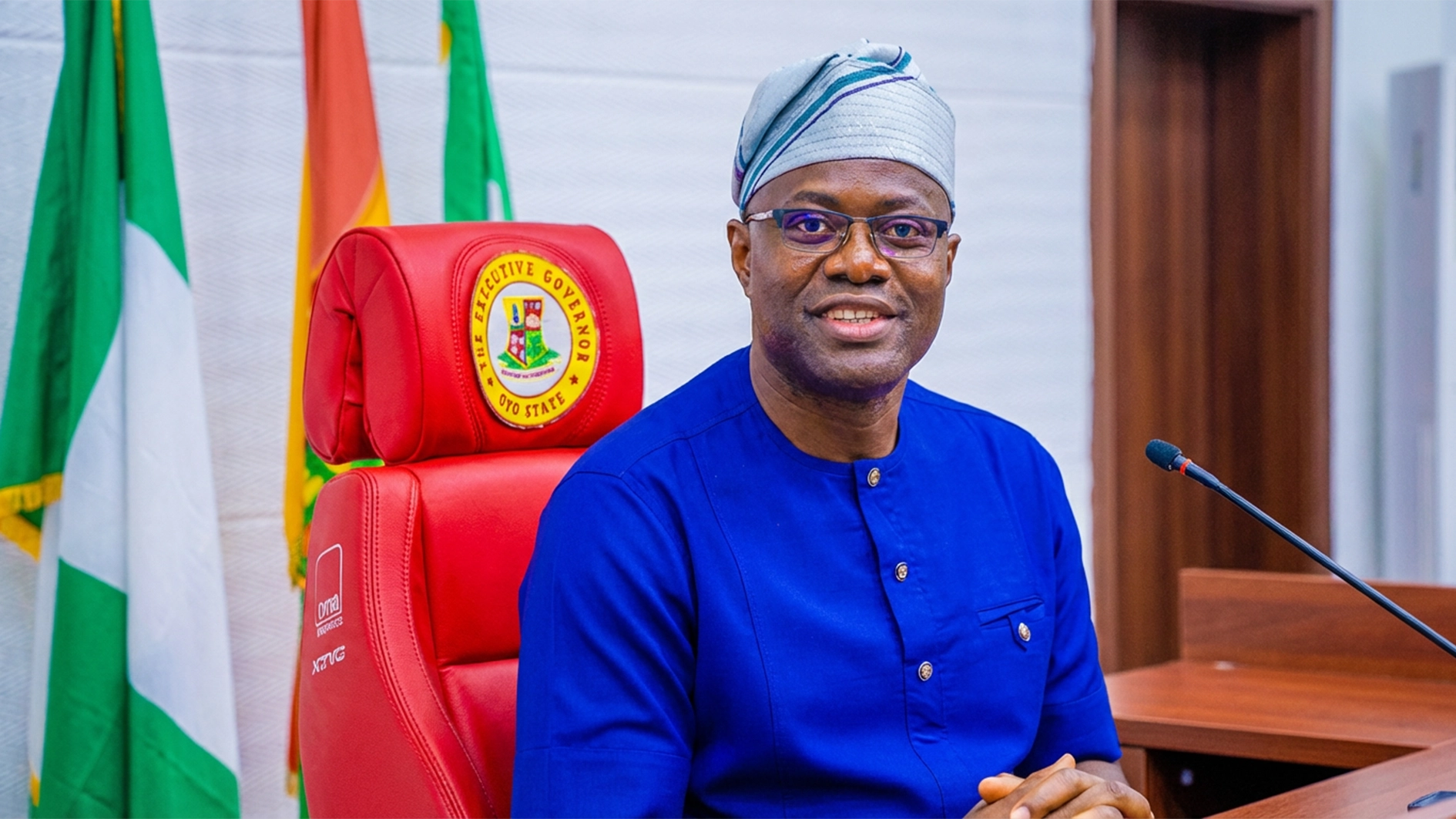
At the centre of the dispute, Oyo State Governor Seyi Makinde explained why he will not support President Bola Tinubu’s re-election bid in 2027, warning that efforts to destroy the Peoples Democratic Party (PDP) could ultimately undermine Nigeria’s democracy.
Speaking during a media chat in Ibadan yesterday, Makinde recounted a meeting attended by President Tinubu, the Minister of the Federal Capital Territory, Nyesom Wike, and others. He alleged that during the meeting, Wike volunteered to “hold the PDP” for Tinubu ahead of the 2027 elections, a statement that shocked Makinde. He clarified that the President did not ask Wike to make such a pledge.
Makinde stressed that while Wike is free to support Tinubu, he has chosen not to do so and believes every individual should be allowed to make their own political choices. He warned that attempts by agents of the All Progressives Congress (APC) government to weaken or destroy the PDP could have unintended consequences, including the erosion of Nigeria’s multiparty democracy.
He called on all democrats to resist any plot to impose a one-party system on the country.
During the same media interaction, the governor said he possesses more than enough experience to serve as Nigeria’s president if called upon in 2027. Responding to questions about his political future, Makinde said his qualifications for the nation’s highest office were not in doubt, pointing to his record as governor of Oyo State.
He argued that executive experience at the state level has historically prepared leaders for the presidency, citing President Tinubu’s own path from governor of Lagos State to the presidency. Makinde also highlighted his professional background outside politics, noting that he successfully ran a private company from the age of 29.
“I have heard people saying, ‘Oh, is Seyi trying to position himself for the 2027 presidency?’ Let me make this very clear: to serve this country at the highest level, I am qualified. I am even overqualified. I have run Oyo State. Even the current president, what brought him to the table? He was the governor of Lagos State. By the end of May 2027, by God’s grace, God sparing my life, I would have completed two tenures as governor of Oyo State. Professionally, I ran a company from a very young age, at 29,” he said.
Makinde also spoke about the legacy he wants his administration to leave behind, saying he hopes to be remembered for the institutions his government is building rather than for physical projects alone. According to him, the focus is on creating systems that will ensure good governance, sustainable development and growth long after his tenure.
Makinde accuses INEC of bias as PDP stakeholders decry alleged deregistration plot
ALSO, Governor Seyi Makinde yesterday accused the Independent National Electoral Commission of bias following the commission’s refusal to recognise the executives elected at the November 15 and 16, 2025, Elective National Convention of a faction of the Peoples Democratic Party (PDP) held in Ibadan, Oyo State.
Makinde alleged that the electoral umpire mishandled the PDP’s internal crisis by failing to involve all key stakeholders in critical engagements aimed at resolving the dispute. According to him, the exclusion of major actors deepened mistrust and worsened the party’s internal face-off.
The governor, while referencing the period of heightened tension that culminated in the emergence of the defunct G-5 governors and the circumstances surrounding the recent Ibadan convention, said INEC did not invite all parties involved in the dispute to the table.
He noted that the commission’s approach created the impression that some voices mattered more than others, adding that decisions were taken without broad consultation, even though the issues affected the entire party structure.
“INEC played us,” Makinde said bluntly, arguing that a fair and transparent process would have required hearing from all factions before drawing conclusions or taking positions.
He stressed that the lack of inclusiveness contributed significantly to the breakdown of trust between party leaders and institutions expected to act as neutral arbiters, leaving many party members feeling sidelined and reinforcing divisions that later played out publicly.
Makinde further maintained that strong democratic institutions must not only be fair but must also be seen to be fair, especially in the handling of internal party disputes. He warned that democracy suffers when critical stakeholders are excluded from conversations that shape political outcomes.
The governor also drew INEC’s attention to Supreme Court rulings affirming that party affairs remain internal matters beyond undue external interference.
Meanwhile, the South-West National Vice Chairman of the PDP, Ajisafe Toyese, raised the alarm over what he described as a clandestine plan to deregister the party.
Toyese questioned why a faction allegedly led by the incumbent Minister of the Federal Capital Territory (FCT), Abuja, was consistently accorded what he described as special and undue privileges.
He alleged that the minister was exerting influence on those in power in a manner that had continued to worsen the party’s crisis.
‘Why Commission rejected request to recognise Turaki-led NWC’
THE Independent National Electoral Commission yesterday explained its rejection of the request to recognise the PDP NWC led by Kabiru Turaki. Citing subsisting court judgements restraining it from taking such action, the commission said it cannot accept the request to publish the list of national officers purportedly elected at the party’s National Convention held on November 15 and 16, 2025.
In a letter dated December 22, 2025, signed by its Secretary, Dr Rose Oriaran-Anthony, and addressed to Akintayo Balogun and Co., legal representatives of the PDP, the electoral body said it was legally bound to obey final judgements of courts of competent jurisdiction, which expressly barred it from recognising or giving effect to the outcome of the said convention.
INEC said the request followed a series of letters written by different legal representatives of the PDP, including Taiwo Abe and Co. on November 14, 2025, Musibau Adetunbi, SAN and Co. on November 19, 2025, and Akintayo Balogun and Co. on November 21, 2025, all demanding that the commission recognise and update its website with the list of national officers allegedly elected at the convention.
The Turaki-led PDP NWC has the support of Seyi Makinde, governor of Oyo State, and Bala Mohammed, his Bauchi counterpart.
In November, the opposition party, with the backing of Mohammed and Makinde, convened a national convention in Ibadan, the Oyo State capital, which produced a new set of national officers.
The national convention was preceded by a series of conflicting court judgments, with some rulings from federal high courts in Abuja halting the event over alleged breaches of party constitution and electoral laws, while the Oyo State High Court in Ibadan cleared the PDP to proceed with the exercise and directed INEC to monitor it.
A group of party members led by Nyesom Wike, minister of the Federal Capital Territory (FCT), who opposed the convention, later formed a parallel NWC, board of trustees (BoT) and national executive committee (NEC).
The Makinde-backed PDP, through its counsel, asked INEC to recognise Turaki as the party’s authentic national chairman.
The commission, however, said it carefully reviewed the demands against existing facts, relevant laws and, most importantly, subsisting court judgements directly connected to the matter.
According to INEC, two final judgments of the Federal High Court, Abuja Division, are central to its decision.
These include Suit No. FHC/ABJ/CS/2120/2025 — Austine Nwachukwu & two others v. INEC & eight others, delivered on October 31, 2025, and Suit No. FHC/ABJ/CS/2299/2025 — Alhaji Sule Lamido v. PDP & four others, delivered on November 14, 2025.
The commission stated that both judgments, which are final and binding on all parties, expressly restrained INEC from supervising, monitoring, recognising or giving effect “in any manner whatsoever” to the outcome of the PDP National Convention held on November 15 and 16, 2025, or any other date, pending full compliance with the orders of the court.
INEC further noted that although notices of appeal had been filed against the judgments, settled law provides that the filing of an appeal does not amount to a stay of execution.
Civil group alleges plot to arrest opposition figures, warns of democratic strain
MEANWHILE, a civil society organisation has raised concerns over an alleged coordinated plan by state security institutions to arrest and detain prominent opposition figures, warning that such actions could further strain Nigeria’s democratic framework and heighten political tensions ahead of future elections.
In a statement issued in Abuja yesterday, the group, led by its coordinator, Adekunle O. Adebayo, claimed that former Vice President Atiku Abubakar, former Minister of Transportation Rotimi Amaechi and former Kaduna State Governor Nasir el-Rufai have been listed for possible arrest.
The organisation, a pro-Yoruba civic platform operating under the banner “Bí a bá pa ìtàn mọ́, ìtàn á pa wa” (When truth is suppressed, it ultimately destroys those who suppress it), said the alleged plan formed part of a broader political strategy aimed at weakening opposition forces.
It further alleged that other political figures, including former Minister of Interior Rauf Aregbesola, former Minister of Communications and Digital Economy Isa Ali Pantami and Kashim Ibrahim Imam, were also being targeted.
The group linked the claims to earlier arrests and interrogations of senior political actors such as former Sokoto State Governor Aminu Tambuwal, former Attorney-General of the Federation Abubakar Malami and former Minister of Labour Chris Ngige.
According to the statement, the alleged arrests are tied to a covert, multi-agency security directive reportedly coordinated by the Office of the National Security Adviser, involving anti-corruption, intelligence, and financial crime agencies. The organisation described the purported operation as politically motivated rather than a routine law-enforcement exercise.
It alleged that the broader strategy includes selective arrests, prolonged detention without formal charges, disruption of opposition meetings, pressure on politically exposed persons to defect to the ruling party, and the encouragement of factional disputes within opposition parties. The group also claimed that prolonged legal battles are being used to financially and organisationally weaken opposition platforms, particularly those exploring coalition arrangements.
Accord Party dismisses factional crisis claims, affirms unity ahead of elections
RELATEDLY, the opposition Accord Party yesterday dismissed claims of factionalisation, insisting it remains united, stable and focused on forthcoming elections.
Speaking at a press briefing in Abuja, the party’s National Chairman, Maxwell Mgbudem, described reports of a leadership crisis as false and misleading, driven by what he called “political jobbers” seeking publicity and personal gain.
Mgbudem said there was no faction in Accord at any level, stressing that he remains the authentic national chairman duly elected at the party’s national convention and recognised by the Independent National Electoral Commission (INEC).
He accused the party’s former 2023 presidential candidate, Prof Christopher Imumolen, of spreading misinformation following his expulsion for gross misconduct and anti-party activities, adding that Imumolen neither challenged the expulsion nor participated in the convention that produced the current leadership.
According to Mgbudem, the party’s disciplinary process was concluded in accordance with due procedure. He said the Disciplinary Committee submitted its report to the National Working Committee (NWC) on October 11, 2024, which was subsequently adopted and presented to the National Executive Committee (NEC) on November 20, 2024.
“After extensive deliberations, NEC unanimously approved, upheld and endorsed the disciplinary measures against Imumolen and seven others,” he said.
He added that the NEC passed a vote of confidence in his leadership and urged him to remain focused on rebuilding, rebranding and strengthening the party to meet citizens’ expectations for a better Nigeria, noting that INEC and other stakeholders have continued to relate with him as the duly elected national chairman.
Mgbudem said Accord held its national convention on July 28, 2024, at the Nicon Luxury Hotel, Abuja, in line with the party’s constitution, the Electoral Act and INEC guidelines, adding that the exercise was monitored by INEC and widely reported by the media.
He said attempts by Imumolen to claim the position of national chairman were dismissed by the courts, which ruled that leadership disputes within political parties are internal affairs and non-justiciable, adding that all interim orders obtained had lapsed or been vacated, while subsequent suits were struck out for want of jurisdiction.
The chairman also disclosed that a seven-member disciplinary committee investigated allegations against Imumolen and others, found them guilty and recommended their expulsion, a decision later ratified unanimously by the NEC in November 2024.
Calling on party members to remain united, Mgbudem said Accord would not dissipate energy responding to what he described as “frivolities from political nomads roaming the democratic space”.