



Angela Onwuzoo
To ensure the availability of safe blood in its blood banks, the Lagos State Government has renewed efforts to strengthen voluntary blood donation and close existing supply gaps, with a target of collecting 250,000 units of blood annually.
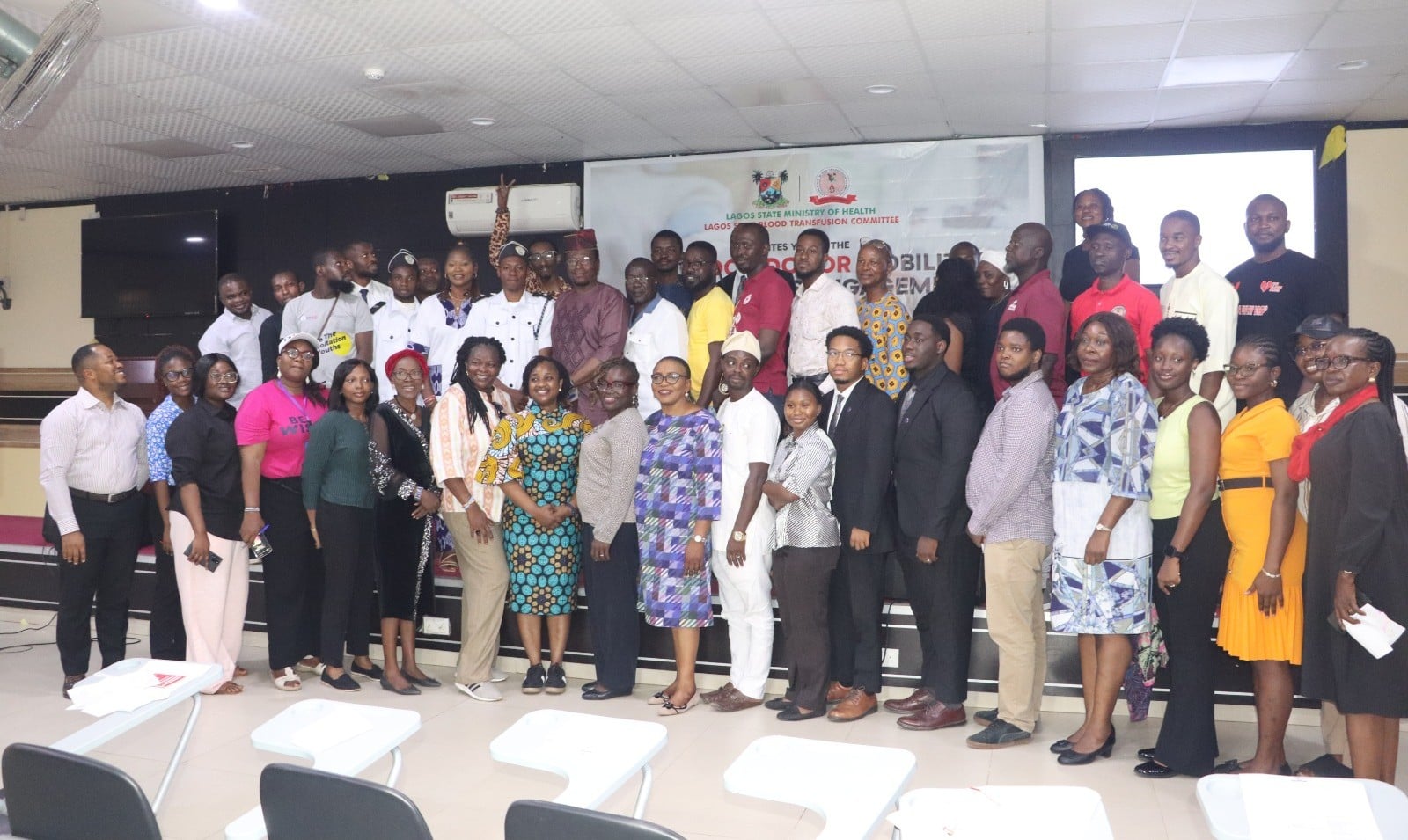
The Lagos State Blood Transfusion Service disclosed this during its 2026 Blood Donor Mobiliser Stakeholders’ Engagement.
The event brought together donor mobilisers, partners and civil society actors from across the state.
The engagement, themed “Voluntary Donors, Sustainable Blood: Securing Lagos State Blood Supply,” aimed to align stakeholders with the state’s 2026 donor recruitment targets, improve donor retention, address barriers to donation and strengthen partnerships to ensure a reliable supply of safe blood for patients.
The Commissioner for Health, Prof. Akin Abayomi, said Lagos, with an estimated population of 30 million, requires between 200,000 and 250,000 units of blood annually.
He stated that about 141,000 units, oughly 70 per cent of the target, were collected in the last cycle, commending residents who voluntarily donated to save lives.
Abayomi described blood as a “liquid organ,” likening transfusion to organ transplantation, and stressed that strict protocols, including rigorous screening and precise donor–recipient matching, are essential to prevent complications and infections.
The Executive Secretary of LSBTS, Dr Bodunrin Osikomaiya, said the meeting was taking place at a critical time, noting that blood demand in Lagos remains constant due to childbirth complications, accidents, surgeries, sickle cell crises and cancer care, while donation levels fluctuate dangerously.
Osikomaiya stressed that blood cannot be manufactured or substituted, explaining that only consistent voluntary, non-remunerated donation can guarantee safety and sustainability. She added that the sharp decline in donations experienced during the December festive period underscored the urgency of stronger mobilisation.
She described donor mobilisers as the most critical link in the blood supply chain, noting that policies and infrastructure alone cannot save lives without people willing to donate and trusted voices encouraging them to do so within communities, workplaces, schools and faith-based organisations.
According to her, the 2026 strategy will focus on recruiting more first-time voluntary donors while converting them into regular, repeat donors through improved follow-up, donor care, recognition and the “each one, reach one or two” referral approach.
Osikomaiya said the engagement was designed to move beyond talk to practical action, with clear performance indicators, simple reporting and feedback mechanisms, and coordinated outreach plans that reflect Lagos realities such as time constraints, distance and traffic.
Presenting the donor recruitment outlook, the Head of Donor Recruitment and Retention at LSBTS, Ms Olayinka Animashaun, revealed that in 2025 the service recruited 7,670 donors, with 5,656 successful donations recorded from 216 blood drives conducted across the state.
Animashaun explained that improved face-to-face advocacy, pre-donation counselling, better donor service delivery and enhanced documentation helped boost turnout. However, challenges such as low awareness, myths, poor internet connectivity and space constraints continued to limit optimal performance.
She noted that the 2026 focus would be on strengthening community-level engagement, improving donor experience and addressing misconceptions that discourage voluntary blood donation among otherwise eligible residents.
Speaking on behalf of partners, the President of the Rotary Club of Lagos Palm Grove Estate, Rotarian Pravin Kumar, described Lagos State as a critical bridge between donors and the health system, noting that Rotary clubs across the state actively mobilise donors to support emergency blood needs.
Kumar disclosed that Palm Grove Estate alone donates an average of 500 pints of blood annually to the state, with plans to increase the figure to 1,000 pints this year through intensified awareness and stakeholder collaboration.
Also speaking, the Co-founder of One Health Lifesavers, Mr Idris Ibrahim, said the engagement strengthened collaboration among organisations, stressing that pooled resources and shared networks would enable partners to reach more people and organise multiple donation drives across Lagos.
Similarly, the PRO of the KBK Club, Mr Kamal Safiriyu, said the forum provided an opportunity to reflect on past efforts, share lessons and refine strategies, adding that stronger collaboration remains key to improving donation outcomes.
Founder and Chief Executive Officer of the Diabetes & Limb Salvage Foundation, Mrs Osarenkhoe Chima Nwagwugwu, described blood donation as a non-negotiable societal need. She recounted her personal experience of difficulty accessing blood in December and called for blood donation to become a constant conversation in homes, communities and institutions.
She emphasised that normalising blood donation at family and community levels would help save countless lives, urging Lagos residents to see voluntary blood donation as a shared responsibility rather than an occasional charitable act.
The engagement concluded with a collective commitment by stakeholders to expand coordinated outreach, strengthen donor trust and work closely with LSBTS to ensure that safe blood is always available for patients across the state.
Copyright PUNCH
All rights reserved. This material, and other digital content on this website, may not be reproduced, published, broadcast, rewritten or redistributed in whole or in part without prior express written permission from PUNCH.
Contact: health_wise@punchng.