



By Gift Habib
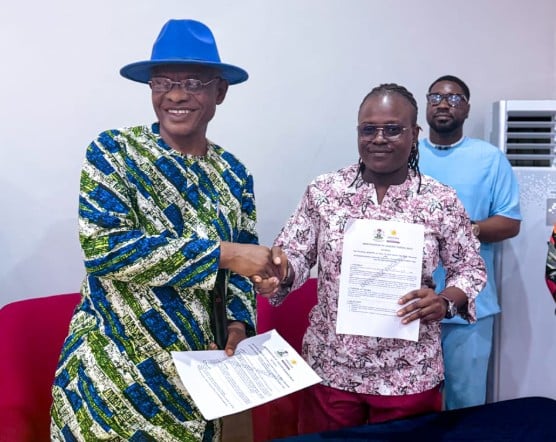
The Federal Ministry of Health and Social Welfare has signed a Memorandum of Understanding with a Civil Society Organisation, Intersex Nigeria, to integrate intersex perspectives into the country’s healthcare policies, in a move aimed at improving protection and access to care for persons born with variations in sexual characteristics.
The agreement, signed over the weekend in Abuja, formalised a partnership that began in 2023 between the ministry and the CSO.
It also coincided with the unveiling of a policy toolkit designed to guide healthcare institutions in adopting more inclusive practices.
This was contained in a statement signed by the Programme Officer, Intersex Nigeria, Ehikioya Ataman, on Tuesday.
Intersex persons are born with innate biological sexual characteristics that do not fit typical binary notions of male or female.
The CSO noted that global estimates indicate that about 1.7 per cent of the world’s population has intersex traits. In some cases, children born with these traits may later discover differences in their reproductive anatomy or genetic makeup that were not immediately apparent at birth.
According to the statement, the Director of the Department of Family Health, John Ovuoraye, who represented the Minister of Health, Prof. Ali Pate, said the minister had directed the ministry in 2023 to support advocacy efforts aimed at mainstreaming intersex issues into existing healthcare policies, recognising them as matters of public health importance.
Ovuoraye said the formal signing of the MOU signals the ministry’s commitment to inclusive healthcare delivery and coordinated advocacy for intersex persons in Nigeria.
He noted that low awareness of intersex issues within the healthcare system contributes to stigma and harmful misconceptions.
“So the tendency to aportion the occurrence to witchcraft or wizard will be there and also the issue of stigmatisation. So the whole idea of signing this MOU is to make it a public healthcare issue,” he said in the statement.
Ovuoraye added that the ministry has a responsibility to lead public education and policy coordination on the issue.
“The ministry should own and lead the process so that awareness is well created. Because if people are aware of it, they would be able to accept them (Intersex trait).
“The conversations will be around them. The people would now be made to know that the population exists. They are neither witches nor wizard they are just born like that, and therefore they should be accommodated into healthcare policies,” the director noted.
The event also featured the presentation of a policy toolkit developed by Obioma Chukwuike, Founder and Executive Director of the Centre for Health Care Development and Youth Empowerment, known as Intersex Nigeria.
The toolkit is intended to support reforms that reduce discrimination and make healthcare facilities more responsive to the needs of intersex children and adults.
Chukwuike described the agreement as a milestone for the rights and well-being of intersex persons in Nigeria.
“We are not asking for a new world altogether; we are asking for the already existing policies to have guidelines that can support intersex inclusivity and protection for all children and adults,” she said.
Stakeholders at the event included representatives of the National Human Rights Commission, civil society organisations, and healthcare professionals from community-based and tertiary health facilities.
Copyright PUNCH
All rights reserved. This material, and other digital content on this website, may not be reproduced, published, broadcast, rewritten or redistributed in whole or in part without prior express written permission from PUNCH.