




Angela Onwuzoo
Nigeria has recorded a major medical breakthrough as a private Lagos hospital, The Prostate Clinic, successfully performed West Africa’s first robotic gynaecological surgery, marking a new milestone in minimally invasive healthcare in the sub-region.
Gynaecological surgery includes surgical procedures performed on the female reproductive system—uterus, ovaries, fallopian tubes, cervix, and vagina—to treat benign conditions, cancers, infections, or infertility.
The procedure, carried out on a 30-year-old woman on Sunday, represents a deliberate expansion of robotic surgery at TPC from male-focused interventions to women’s health, using cutting-edge technology.
Experts described the feat as a significant step toward reducing medical tourism and enhancing access to advanced care locally.
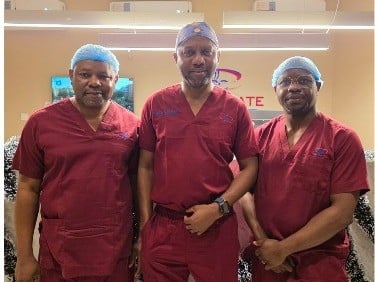
The landmark surgery was performed under the leadership of Prof. Kingsley Ekwueme, a renowned consultant urologist and expert in laparoscopic and robotic surgery.
Announcing the achievement, Ekwueme, who is also TPC’s Medical Director and a Consultant Robotic Surgeon, said the milestone reflected the hospital’s commitment to innovation in Nigeria and West Africa.
“Following our tradition of leading innovation in Nigeria and West Africa, we introduced the first surgical robot in the sub-region last year. Today, we are proud to extend that innovation to women’s surgeries.
“This young woman has an ovarian tumour that has caused pain and disrupted her life. With robotic surgery, we removed two big tumours, she will go home today and return to work tomorrow”, the consultant urologist said.
He described the procedure as a game-changer for women suffering from gynaecological conditions such as fibroids, endometriosis, ovarian tumours and selected ectopic pregnancies.
According to him, robotic surgery offers significant advantages over open surgery, including reduced blood loss, lower risk of infection, minimal post-operative pain and shorter hospital stays, enabling patients to resume normal activities within 24 hours.
“Within six hours, once vital signs are stable, the patient can eat and go home. Recovery is fast, blood loss is minimal, and vital functions are preserved,” he said.
Ekwueme added that the procedure was carried out at no cost to the patient as part of TPC’s corporate social responsibility, noting that the unquantified economic losses from prolonged illness far outweigh the cost of advanced surgical care.
He also disclosed that TPC has partnered with the Imo State Government to establish a robotic surgery centre, described as the first of its kind in Nigeria, aimed at driving innovation, research and curbing medical tourism.
“This revolution has just started. With the right partnerships and vision, Nigeria can become a hub for advanced medical care, training and research,” he said.
Providing further insight, a Consultant Gynaecologist at the Lagos State University Teaching Hospital, Ikeja and member of the surgical team, Prof. Yusuf Oshodi, said the patient was carefully evaluated and found suitable for robotic-assisted surgery.
“The tumour is benign, and the precision of robotic surgery allows us to remove only the affected tissue without compromising her fertility. She will be free from the pain she has endured for six months, without damage to surrounding structures,” Oshodi said
The gynaecologist disclosed that many Nigerian women suffer silently from conditions such as fibroids, endometriosis, ovarian tumours, and abnormal menstrual bleeding.
He stated that fibroids are particularly common, affecting up to 70 per cent of women in some communities, though only 10–20 per cent experience significant symptoms.
Oshodi cautioned that delays in seeking care often lead to complications, including anaemia and impaired heart function.
He also highlighted the benefits of robotic and minimally invasive surgery, which he said offers precise treatment, reducing hospital stays, preserving reproductive capacity, and allowing women to quickly return to their normal lives.
A UK-based Consultant Gynaecologist and another member of the team, Dr Olaolu Aladade, said the benefits of robotic and minimally invasive surgery cannot be compared to those of open procedures.
Aladade noted, “With open surgery, you have more complications, longer recovery and potential reproductive issues. With robotic surgery, patients recover faster, return to work sooner and enjoy better psychological and economic outcomes.”
Healthcare experts have hailed the achievement as a turning point in Nigeria’s medical landscape, commending TPC for championing innovation in women’s health.
In 2025, TPC also performed the UroLift procedure, a historic minimally invasive surgery for men with enlarged prostate that preserves sexual function, making Nigeria the first country in West Africa to carry out the procedure.
Copyright PUNCH
All rights reserved. This material, and other digital content on this website, may not be reproduced, published, broadcast, rewritten or redistributed in whole or in part without prior express written permission from PUNCH.
Contact: health_wise@punchng.