



The Managing Director and Chief Executive Officer of Ultimate Health Management Services, Otunba Lekan Ewenla, has urged employers in both the organised private and informal sectors to convert workers’ medical allowances into health insurance premiums in line with the provisions of the National Health Insurance Authority Act 2022.
Citing the Act, which makes health insurance mandatory for all Nigerian citizens and legal residents, Ewenla explained that the law requires employers with at least five workers to enrol their staff in a health insurance programme.
He emphasised the need for stronger awareness and sensitisation to enhance compliance with the law, noting that employers already have a statutory responsibility to cater to the medical needs of their employees.
According to him, rather than incur additional expenditure, employers can simply convert the medical allowances currently paid to workers into health insurance premiums.
He said this would reduce out-of-pocket spending on healthcare while improving workers’ productivity.
“With the NHIA Act 2022, participation is now mandatory, and enforcement is key to ensuring that all employers comply and that employees receive the coverage they are entitled to,” he said.
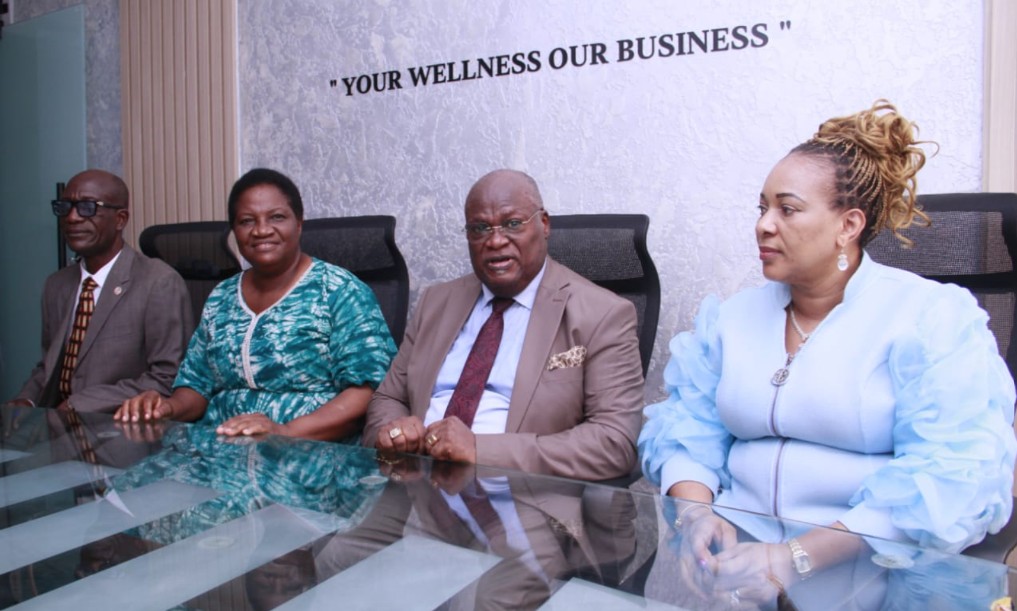
Ewenla made the call at the launch of the Group, Individual and Family Social Health Insurance Programme by Ultimate Health Maintenance Organisation in Lagos.
He noted that increased enrollment in health insurance programmes would lead to greater financial inflows into the health sector and improvements in healthcare infrastructure.
Speaking on the theme, “Setting the Right Agenda for the Enrolment of the Organised Private Sector, Individuals, Families, Groups, Associations and the Informal Sector in the Health Insurance Programme Based on the NHIA Act 2022,” Ewenla said the GIFSHIP package, regulated by the NHIA, was designed to provide affordable and guaranteed healthcare coverage with a premium of N38,718 per person annually.
According to him, the programme is intended to expand access to healthcare coverage across different population groups.
“This briefing is designed to formally launch and announce the adoption of the GIFSHIP benefit package as the basic benefit package of Ultimate Health HMO for individuals, families, associations, groups, the organised private sector, and operators in the informal sector in Lagos and across the country,” he said.
“The benefit package is regulated by the National Health Insurance Authority and is very robust. Healthcare providers are familiar with the services covered at the three levels of care and understand the operational processes, including obtaining pre-authorisation codes and utilising NHIA tariffs for secondary and tertiary services,” the CEO noted.
With over two decades of experience in the health insurance industry, Ewenla disclosed that Ultimate Health HMO currently manages hundreds of thousands of public-sector enrollees and also serves several small, medium, and large corporate organisations across the 36 states and the Federal Capital Territory.
He added that the NHIA Act 2022 empowers the Authority to approve and code all private health insurance products offered by Health Maintenance Organisations.
According to him, the provision is aimed at addressing challenges such as arbitrary reduction of premiums and the marketing of different benefit packages to the organised private sector and the informal sector.
He cited Section 34(2) of the Act, which states that “Any private health insurance plans marketed by a Health Maintenance Organisation shall be subjected to approval by the Authority.”
Similarly, Section 15(9) provides that “All private health insurance schemes or plans shall be regulated by the Authority.”
Ewenla, a former spokesperson for the Health and Managed Care Association of Nigeria, also noted that the Act recommends individual enrollment while reducing the emphasis on family enrollment, which had previously created operational challenges.
He further revealed that Ultimate Health HMO was among the first organisations to submit its actuarially developed complementary or supplementary benefit packages to the NHIA for approval and coding.
“These products are designed for top executives with adequate consideration for their social status, expectations, and healthcare needs,” he said.
He noted that adopting GIFSHIP as the basic benefit package aligns with efforts to make healthcare affordable, accessible, and equitable, adding that the organisation’s strategy is to focus on the mass market to help improve Nigeria’s poor health indices.
Ewenla explained that several challenges that previously hindered the uptake of health insurance had been addressed by provisions in the NHIA Act 2022, particularly Section 3, which mandates health insurance for all Nigerians and legal residents.
He recalled that when the public-sector health insurance scheme was introduced in 2005, the Federal Government converted 10 per cent of civil servants’ basic salaries, previously paid as medical allowances, into health insurance premiums.
According to him, the same model can be adopted by private-sector employers.
“Compliance with the NHIA Act does not necessarily mean spending more on employees’ healthcare. Employers can simply convert the medical allowances already being paid to workers into health insurance premiums,” he said.
Ewenla expressed optimism that increased enrollment in health insurance would help improve health outcomes and curb the migration of healthcare professionals abroad.
The Director-General of the NHIA, Dr Kelechi Ohiri, said in 2024 that the Federal Government had set an ambitious target to enrol at least 40 per cent of the country’s population in health insurance schemes by 2030.
Ohiri stated that the target was part of the government’s efforts to achieve universal health coverage and ensure that all Nigerians have access to quality healthcare services.
He expressed concern that about 99 per cent of Nigerians in the informal sector had yet to be incorporated into health insurance schemes.
In his remarks, the President of the Healthcare Providers Association of Nigeria, Dr Austin Aipoh, emphasised the need to scale up health insurance uptake, particularly in the informal sector, while calling for full enforcement of the mandatory health insurance provision under the NHIA Act.
He noted that about 60 per cent of Nigerians operate within the informal sector, yet remain largely excluded from structured health financing schemes.
“The informal sector is not entirely unorganised. There are associations and leadership structures that can be engaged to drive enrollment,” Aipoh said.
Copyright PUNCH
All rights reserved. This material, and other digital content on this website, may not be reproduced, published, broadcast, rewritten, or redistributed in whole or in part without prior express written permission from PUNCH.