

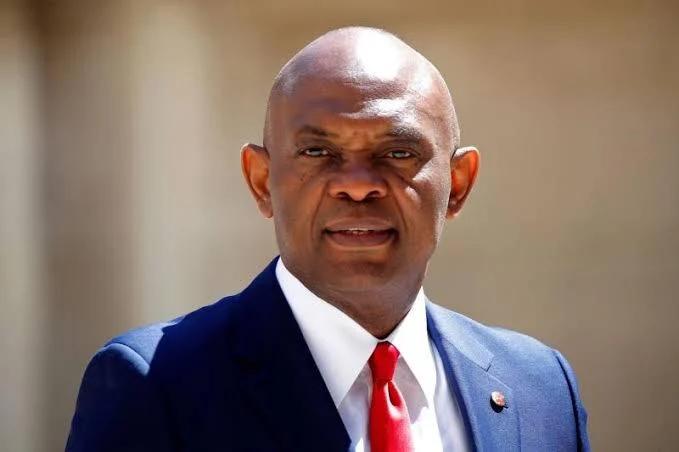

The Chairman of Heirs Holdings and Transcorp Group, Tony Elumelu, has urged President Bola Tinubu to prioritise judicial reforms, warning that delayed justice and weak enforcement of contracts could discourage investment despite government incentives and economic reforms.
Nigeria continues to face challenges with delays in commercial litigation, contract enforcement and dispute resolution, which can discourage domestic and foreign investment.
According to the World Bank’s Business Ready 2025 report, Nigeria scored 63.48 out of 100 for its commercial dispute resolution regulatory framework, 24.50 for public services and 53.80 for operational efficiency.
The findings highlight weaknesses in judicial service delivery and the gap between legal provisions and their implementation, reinforcing concerns about the speed and effectiveness of commercial justice in Nigeria.
Elumelu said investors required fair, impartial and timely judicial decisions, alongside predictable regulations and protection of contractual agreements, to commit long-term capital to Nigeria.
He made the call on Thursday in Abuja while delivering the keynote address at the WOC Justice Summit, themed “The Rule of Law as a Catalyst for Private Sector Growth and Economic Transformation.”
“Before power, before roads, before tax incentives, the first condition is a court judgment that is fair, impartial and timely,” he said.
The businessman explained that investors assessed the reliability of a country’s judicial system before committing funds, warning that uncertainty over contracts and regulatory enforcement could trigger capital flight.
“Where any of them is in doubt, capital doesn’t argue. It leaves,” he warned.
Elumelu added, “I have said it in New York, London, Paris and I’ll say it in Abuja: capital goes where it’s safe and stays where it’s respected.”
According to him, the rule of law requires contracts to remain enforceable despite changes in government, while regulations must apply equally to businesses and their competitors.
He recalled that his acquisition of a struggling bank alongside other investors in 1997 depended partly on confidence that Nigerian law would protect the transaction.
Similarly, he said investments in Transcorp, electricity generation and the oil and gas sector involved assessing the country’s judicial system alongside its economic prospects.
“That is what the rule of law, properly working, delivers: justice that is routine, not heroic and justice that is not delayed,” he said.
Elumelu commended Tinubu’s economic reforms, including petrol subsidy removal, exchange-rate unification and the enactment of tax reform laws, describing them as necessary measures to address longstanding economic distortions.
He argued that the administration inherited an economy characterised by costly subsidies, multiple exchange rates that encouraged arbitrage and a tax system that disadvantaged compliant businesses.
Acknowledging the hardship caused by the reforms, he said, “I know the cost has been borne by ordinary Nigerians, and I know you know it too.”
He maintained that discretionary subsidy allocations, opaque foreign exchange arrangements and negotiated tax obligations undermined fair competition and economic growth.
Elumelu particularly emphasised the electricity sector, arguing that transparent regulation would attract investment, improve power supply and support industries, hospitals and educational institutions.
However, he insisted that judicial delays remained a major obstacle to private sector development.
“But justice is still being delayed. Justice is still being denied,” he said.
He urged the President to extend his reform agenda to the judiciary by deploying technology and introducing measurable performance indicators for case management and dispute resolution.
“That is the reform the private sector has been waiting for, and it is the reform that will outlast all of us,” he declared.
Elumelu also urged the administration to sustain its focus on electricity, arguing that improving investor confidence and capital inflows could accelerate economic transformation.
Speaking on Africa’s relationship with Europe, he rejected the continent’s continued dependence on exporting raw materials while importing finished products.
“Africa will not be Europe’s raw-material diversification strategy. We will be an equal partner and a creator of value,” he said.
He described Africapitalism as a development philosophy that places African businesses at the centre of economic transformation, supported by credible legal institutions.
The summit also celebrated the 75th birthday and 50-year legal career of Senior Advocate of Nigeria, Chief Wole Olanipekun.
Elumelu praised Olanipekun’s contributions to the legal profession, including his service as President of the Nigerian Bar Association, Chairman of the Body of Benchers and counsel to four successive Nigerian presidents in election disputes.
He also acknowledged the unveiling of six volumes of Wole Olanipekun Through the Cases, describing the publication as a record of significant legal disputes involving power, property, elections and liberty.
“Justice and prosperity are inseparable,” Elumelu concluded.
