

With more than two million children in Borno and Yobe states at risk of acute malnutrition in 2026, according to the United Nations Children’s Fund, amid worsening food insecurity in the north-east, ISAH OJO examines how mothers are waging a largely silent battle to save their children from malnutrition and preventable deaths, often with little support and at enormous personal sacrifice, both at home and in health centres
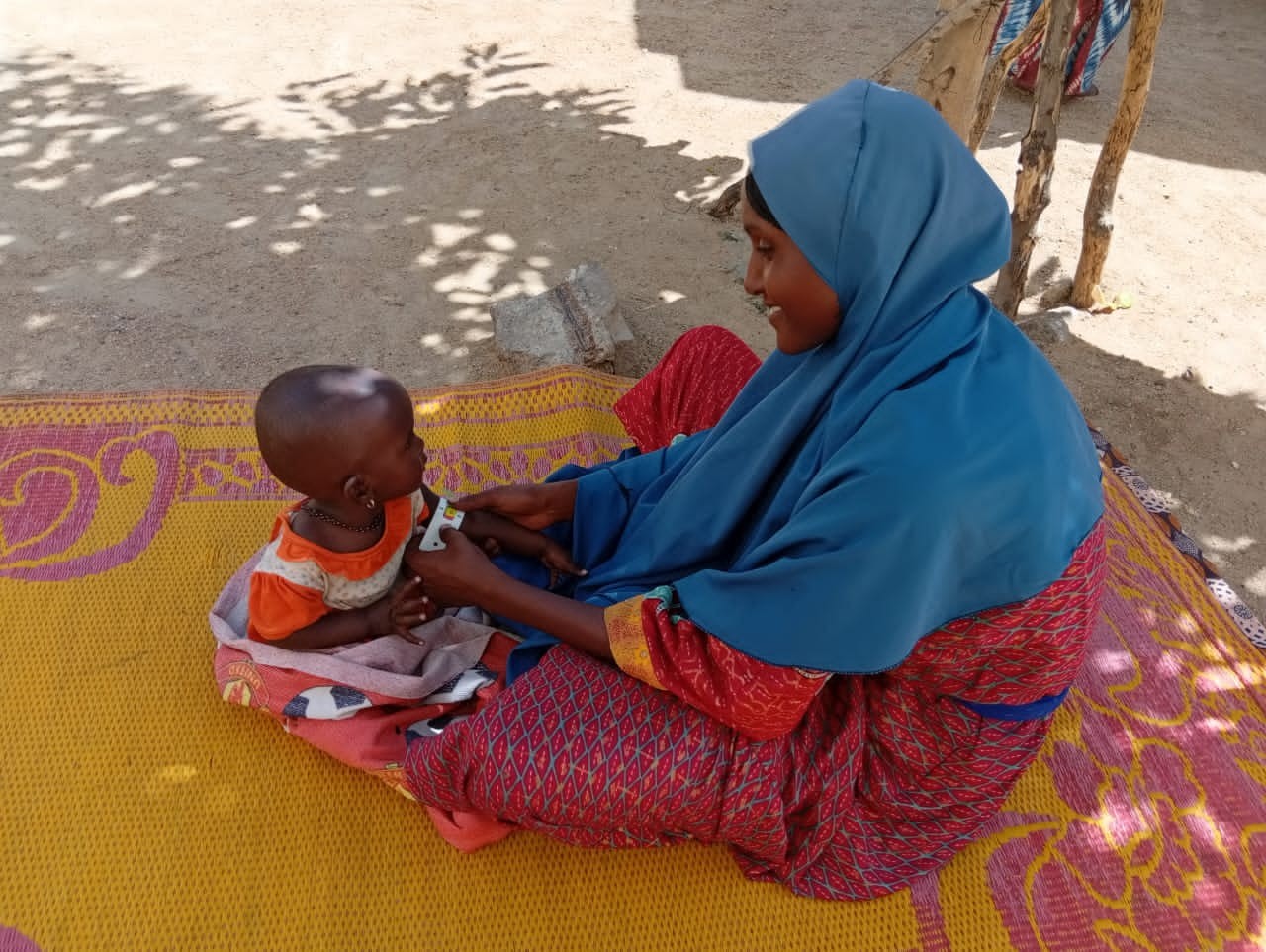
Maryam Abdullahi, 25, wrapped a tape containing red, yellow, and green colours around her baby Fanna’s arm under a small tree in Jere Local Government Area, Borno State.
She carefully pinned her left hand to the baby’s shoulder, measuring her arm to detect her nutritional status. Maryam’s hand was shaking. Her heart beat faster. She prayed the tape would not indicate red.
It was Maryam’s first independent home trial on 11-month-old Fanna after she learnt in the hospital that a certain three-colour (red, yellow, and green) tape called the Mid-Upper Arm Circumference could read the nutritional status of her baby.
Before her knowledge of the tape, Maryam had concluded that her child was suffering a spiritual attack as a result of her deteriorating health. In her description, her daughter, Fanna, was already looking skinny while constantly vomiting.
The neck of her gowns became obviously wide. The sleeves of her shirts had also become extremely large for her arms. The mother said she had visited different hospitals for medication, but the symptoms persisted.
Some days, Fanna would crawl around the yard, crying profusely, before returning to her mother with high body temperatures, who barely understood her condition.
Relatives recommended Maryam visit herbal homes, neighbours suggested self-care, while community members called for prayers, but Maryam, the mother of five children, with tears always soaked at the tip of the wrapper she used to wipe her face whenever she saw the baby vomiting helplessly.
“This was my story until a solution came through a coloured tape, which suggested that my baby was suffering acute malnutrition,” Maryam said while recounting her first encounter with the three-colour MUAC tape.
She said she learned about the tape and how it works at the Alkome Outpatient
Therapeutic Programme centre in Jere LGA, where her child was first confirmed to be suffering acute malnutrition. “After the first test was conducted and I was told that she is acutely malnourished because the tape showed red. I was left in shock,” she stated.
Following the confirmation, Maryam said her daughter began to receive care, including relief items such as Ready-to-Use Therapeutic Food and drugs at the Alkome OTP centre, a support facility established under the UK-funded, UNICEF-implemented Multi-sectoral Integrated Nutrition Action project.
Through the scheme, Maryam said she and other mothers with similar cases had received the same support and learnt how to conduct a weekly independent child malnutrition test on their babies to detect early symptoms using the MUAC tape.
Describing her knowledge of the tape and its core function in layman’s terms, she said that when a baby’s arm measurement shows red, it means the child needs Tarmuwa (RUTF) to survive. If it displays yellow, it means the baby is on the verge of becoming malnourished and needs medical attention.
The green, she said, is what confirms that the baby is healthy. “From the day my daughter’s tape showed red, the tape became a gateway for her to access nutritional care services. We were given Tarmuwa (Ready-to-Use Therapeutic Food) and drugs from the Alkome OTP centre to support her recovery,” Maryam said.
However, the democratisation of the testing process did not end the struggles of these mothers whose children were treated for acute malnutrition. Like many other women, Maryam said she still suffers from the shock of the first hospital test. She said it comes back every time she conducts the weekly test, which she uses to track her baby’s recovery process from home.
Mothers’ sacrifices
Just like Maryam, other mothers with similar experiences recounted how the MUAC tape eased their fears, brought relief, and provided other incentives, including empowerment that places the responsibility of care and the fight against malnutrition in their hands.
For the women, confronting malnutrition was no longer a choice; it was perceived as an urgent threat to children’s growth across communities, which must be decisively tamed since it was already knocking on many homes.
One of the mothers whose son was first admitted at the Ajilari Primary Health Centre in Maiduguri, Muhammed Hauwa, said beyond the RUTF food and medical support her malnourished child got, she was also taking responsibility by cultivating foods in her homestead gardens to contribute to food security and in supporting balanced diet.
According to Hauwa, she learned about the impact of fruits and staple foods on children’s health at the Ajilari Primary Health facility, where she was trained on how to cultivate them through home gardens.
“After my child was confirmed to be suffering from acute malnutrition six weeks ago. Aside from the RUTF and medical treatment, I was also trained on home garden farming. After the training, I received a banana sucker, orange seed, and bitter lemon seed,” she recounted, adding that “my yet-to-be-born babies will eat from it because it will be fresh and devoid of chemicals”
Similarly, Falmata Modu, another mother at the Ajilari centre whose child tested positive for malnutrition two years ago, said she was given vegetable seeds after her home garden training. “I got vegetable seeds as my support. After weeks of nurturing, my baby and husband and I ate from the farm. This complemented my child’s RUTF and drugs, and made the recovery process even easier. I applied the knowledge in caring for my subsequent births”, she noted.
In Yobe State, one of the mothers whose child is also receiving care at the Mairari Primary Health Care Centre under the MINA scheme, Salamatu Muhammed, credited her child’s survival to the MUAC tape.
“The tape saved, and still is saving my baby from death. With every test, I am reminded that early detection and action can go a long way in managing malnutrition before it affects a child”, she said.
Meanwhile, alongside the agricultural initiative, the United Nations Children’s Fund said about 14,117 participants in total (from MINA Phase I and II) of the project benefited from a gender-sensitive cash transfer support to help mothers improve dietary habits and provide their children with better, diverse and adequate diets.
The UNICEF Nutrition Specialist, Dr Kelechi Nwogu, while giving the breakdown, said the MINA programme, which started in 2023, covers 24 local government areas in Borno and Yobe states. “Beyond these direct nutrition interventions,
MINA has contributed to a broader improvement in health, women’s empowerment and essential services. 14,117 women in selected households within the first 1,000 days of Life have benefited from the gender-sensitive cash transfers. 742,170 mothers trained to conduct weekly MUAC screening of their children,” he said.
The training, Nwogu said, has assisted in screening and treating approximately 368,665 malnourished children in 1,220 communities across the two states of Borno and Yobe.
Meanwhile, the Nutrition Manager of Life at Best Development Initiative, Isaac Clifford, one of the MINA project UNICEF implementing partners involved in the disbursement of the cash transfer to the project participants, said that in Phase II alone, a total of 656.4 million Naira was disbursed to 3, 424 participants.
“Each person got 191,700 Naira. There are conditions to get the money; the woman has to be pregnant or must be a mother of an under-two-year-old child. Among those who qualify, we will now proceed to check for families living in food insecurity through an assessment process. Conclusively, I will say that at least 90 percent of the qualified pregnant mothers, and those with under two-year-old children, benefited from the Phase II cash transfer,” he said.
Quest to tackle child malnutrition
Maryam and other women who are part of Phase II of the MINA project had a successful treatment experience which led to the gradual recovery of their children. However, the experience also left a deeper trauma.
She and about 100 other women from the Alkome and Ajilari care centre who spoke to this reporter said that, in the process of seeking medical help, they had to embrace an approximately 50-minute trek under extreme sunny weather conditions while returning home from the care centre every day due to their inability to afford transport costs.
For Maryam, she alleged that her exclusion from the cash transfer worsened her treatment experience despite meeting the eligibility criteria. She said the exclusion made seeking medical attention for her child feel like a burden, which exposes her baby to more critical, life-threatening risks.
Maryam further said that, contrary to claims of financial disbursement to mothers with children below the age of two, and agricultural support for mothers, she and other women in her centre only heard about it but never benefited from it.
She claimed that beyond the home-garden training, she was entirely responsible for getting the seeds to plant.
“We have not received any seed or money in either cash or transfer in this (Alkome) OTP centre. Sometimes, I borrow 500 Naira from my neighbour to transport myself and baby to this venue to access care,” Maryam said.
To confirm her claim, this reporter followed her home to the Muna camp area where she lives using a commercial tricycle. It cost the sum of 500 naira to and from the centre. This is aside from the five-minute walk from her home to the main road where she boards the public transport.

Similarly, her colleague in the same centre, Zahara Jida, also corroborated her account, saying most of them in the centre trek in groups from their homes to the centre.
She lamented the imbalance in the scheme, stressing that it was already draining the women who spend the little they have to meet the demands of the programme.
“When my child was confirmed to be suffering malnutrition.
He was admitted, given Tarmuwa (RUTF), and other medical supplies including drugs. I have not benefited from anything aside from this,” she said, adding that “Inside the hot sun, we all carry our babies on our backs and trek home from the centre as a result of lack of money to pay for transportation. This is telling on our well-being,” she said.
Another mother at the centre, Hajia Muhammad, who became a part of the project seven weeks ago, complained that after the agricultural training received by mothers in the centre as part of the programme demands, she was not given any seed to embark on the home practice, contrary to claims that they had been empowered.
“I became a part of this (MINA) programme about seven weeks ago, nearly two months now. Aside from the RUTF and drug, nothing has gotten to me. My husband bought the seed that I planted. I planted maize, beans, and groundnut,” Hajia said
“We still keep hope that we will also benefit, as others in Yobe and other facilities in Maiduguri benefited,” she added.
What the MUAC tape must fix going forward
While the MUAC tape has provided approximately 368,665 children suffering from malnutrition access to treatment, it has also left a critical gap, capable of threatening the sustainability of care for the children and those unborn if it is not fixed.
Despite repeated training, many women are yet to understand how to read the MUAC tape correctly, a gap the Officer-in-charge of the Alkome OTP Centre, Danjuma Danlami, attributed to a high level of illiteracy. “Not all of them can use the tape correctly. You know, these people are not educated. Despite repeated training on the use of the tape, many of them are still not getting it,” he said.

Danlami also confirmed the mobility challenges the women endure, citing the need to provide them, particularly in his centre, more support to enable them to prioritise their hygiene and other needs.
“The women need help. Like giving them food items and clothes. Sometimes when we ask them why they are allowing themselves and their children to look dirty, they will say they don’t have money to buy detergent. Also, most of them trek to this centre,” he stated.
On her part, the Officer-in-charge of the OTP centre in Ajilari Primary Health facility, Naphtali Bello, said that while a critical part of the project has recorded remarkable success, it is still marred by funding constraints.
“I have been managing this centre since 2025. Ever since I got here. I have attended to over 1,000 mothers. We have had remarkable progress and given children hope via treatment. However, none of them have received any form of cash assistance or transfer. We have never collected their account details before,” she said.
“We once heard about cash transfers to mothers, but it’s not at nearby centers. We are now even losing patients to other organisations involved in the similar program. While we give 14 pieces of RUTF, in centre like Umaru Shehu Hospital, they get 30. Many of our women are already going there,” Bello added.
Beyond the financial support, the concern raised by the mothers on agricultural empowerment in the Alkome centre may demand a follow-up. Although the women highlighted a lack of support in terms of seed provision, when this reporter visited the Agricultural Officer in charge of the project in Jere Local Government Area, Borno State, Peter Dauda, for comments, he said the seeds are not enough to go around, while noting that more are still coming.
“Like in Jere, our target is 1,000 households. Because it is not enough for all of them, we had to work by that target, but I can tell you, most of them were provided with these seeds,” he said, while listing the agricultural packages to include manure, seeds, a watering can, and others, adding that the key requirement to getting them is a home space.
“Here in Alkome, we have already ordered the seeds. When they arrive, we will share them with them. We are hoping they will come by next week,” Dauda assured.
While the women await the seeds and other support, Maryam, just like other mothers, now comfortably sits under the tree every week, where she checks the condition of her daughter, Fanna, using the MUAC tape after watering the plants she cultivated to produce nutritious food. Stronger and healthier, she said Fanna now plays around in the dust like other healthy children.
Copyright PUNCH
All rights reserved. This material, and other digital content on this website, may not be reproduced, published, broadcast, rewritten, or redistributed in whole or in part without prior express written permission from PUNCH.
