






Uche Okere
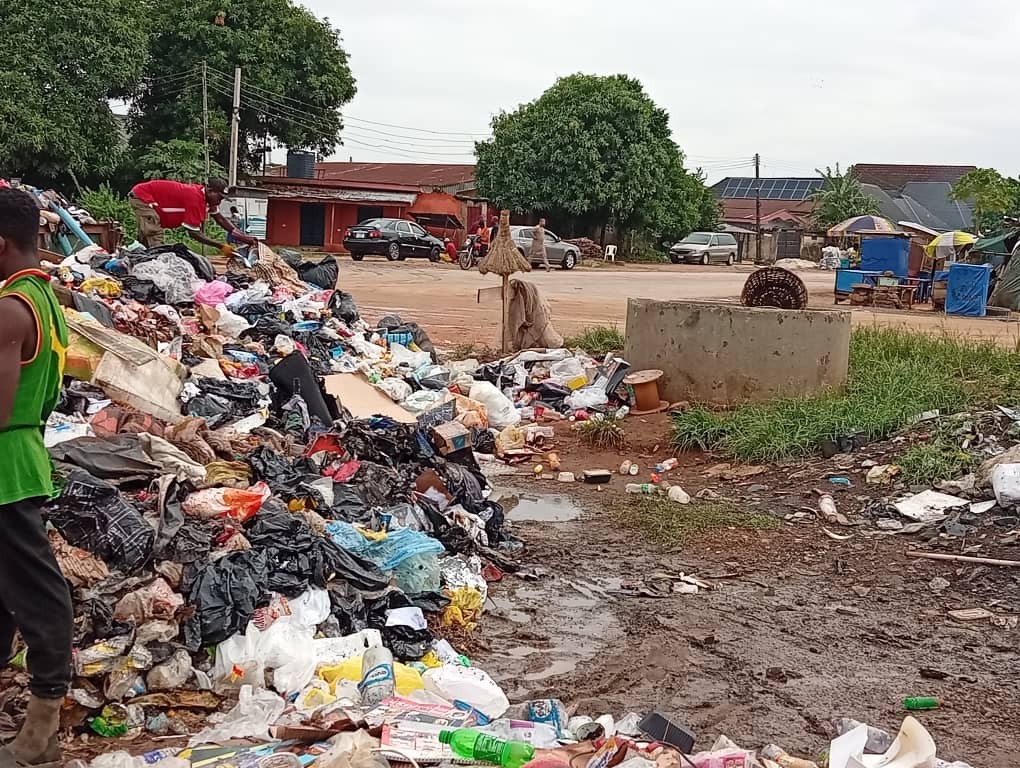
Residents of Owerri, the Imo State capital, have raised the alarm over a possible outbreak of Lassa fever and other diseases following the mounting refuse across the state.
The situation has heightened concerns, especially as recent rainfall has drenched the already foul-smelling and decomposing waste, raising fears of serious health risks.
Currently, refuse dumps have begun to cause traffic gridlock along Douglas Road, where one lane has been abandoned due to accumulated debris.
Traffic is also affected around the World Bank Roundabout, Orji, Jehovah Jireh along Egbu Road, Umuguma Hospital Road, Amakohia, and Irete, all of which are grappling with abandoned refuse dump sites.
PUNCH Online reports that Owerri has also been experiencing rainfall, worsening health and economic concerns over the increasing volume of refuse accumulating across the city and creating environmental eyesores.
The Eastern Waste Management Company, the agency responsible for clearing refuse in Imo State, recently appealed for patience via its social media platforms but did not specify when the waste would be cleared.
EWAMAC had on Wednesday posted on its Facebook page, “We hear you. We see the concerns. And we are responding. Our teams are actively working to improve the current situation across Owerri, with ongoing efforts focused on waste evacuation and environmental clean-up in key areas. While progress may not be immediate in every location, please be assured that coordinated actions are underway to restore cleanliness across the city. We appreciate your patience and continued cooperation.”
Some radio stations have also warned about the dangers posed by uncleared refuse to public health.
Reacting on social media, a resident, Promise Chigozirim, wrote on Facebook, “They are the worst in waste management; the entire state is dirty.”
Another resident, Chimezie Ebosim, said, “This is the most ineffective agency in Imo State right now. The whole of Owerri is littered with waste and stinks.”
Speaking on the dangers associated with accumulated refuse, the Associate Director of Climate at Corporate Accountability and Public Participation Africa, Martins Ogunlade, in an exclusive interview with PUNCH Online, described the situation as a creeping disaster.
According to him, the dangers of uncleared refuse include blocked water channels, also known as drainages or gutters, which can turn manageable rainfall into floods, further straining the environment.
Ogunlade said, “Refuse, when left uncleared and allowed to accumulate, is not just an eyesore; it is a creeping disaster that communities face. Often, it is a reflection of regulatory failure and poor community oversight.
“The dangers of indiscriminate refuse dumping and uncollected waste are serious health hazards. They block water channels, also known as drainages or gutters, and turn manageable rainfall into floods, further straining the environment.
“They also provide a breeding ground for rats, mosquitoes, and cockroaches, which thrive in decomposing waste. In densely populated cities, this can increase urban heat and raise the risk of fire outbreaks.”
On the health implications, he said, “Stagnant water trapped in refuse is a breeding ground for malaria and other disease vectors. Rotting organic waste releases pathogens that contaminate groundwater and soil and can affect the quality of farm produce consumed.
“Unsuspecting children and young adults who play near accumulated waste sites are exposed to respiratory illnesses caused by toxic gases such as methane and hydrogen sulphide. These gases have also been linked to climate change. This is why there has been an increase in cases of skin diseases, cholera, and even certain cancers.”
He warned that in a country with rising poverty levels, increased healthcare spending due to disease outbreaks places an additional burden on citizens.
Ogunlade added that other consequences include declining property values and reduced economic activities, as local businesses suffer from poor environmental conditions.
He urged the authorities to prioritise prompt refuse disposal, provide emergency funding to tackle the challenge, and adopt proactive policy measures alongside community monitoring, noting that such steps would improve public health and reduce health-related emergencies.
Copyright PUNCH
All rights reserved. This material, and other digital content on this website, may not be reproduced, published, broadcast, rewritten, or redistributed in whole or in part without prior express written permission from PUNCH.


