


• Four Rivers Reps join ruling party, cite crisis in PDP, LP
• FCT senator Ireti Kingibe joins ADC, quits Labour Party
• Bafarawa loyalists, ex-deputy gov candidate, defect to APC in Sokoto
• PDP executives switch to ruling party in Zamfara’s Maradun council
• ‘How electoral fraud, weak institutions drive Nigeria’s leadership crisis’
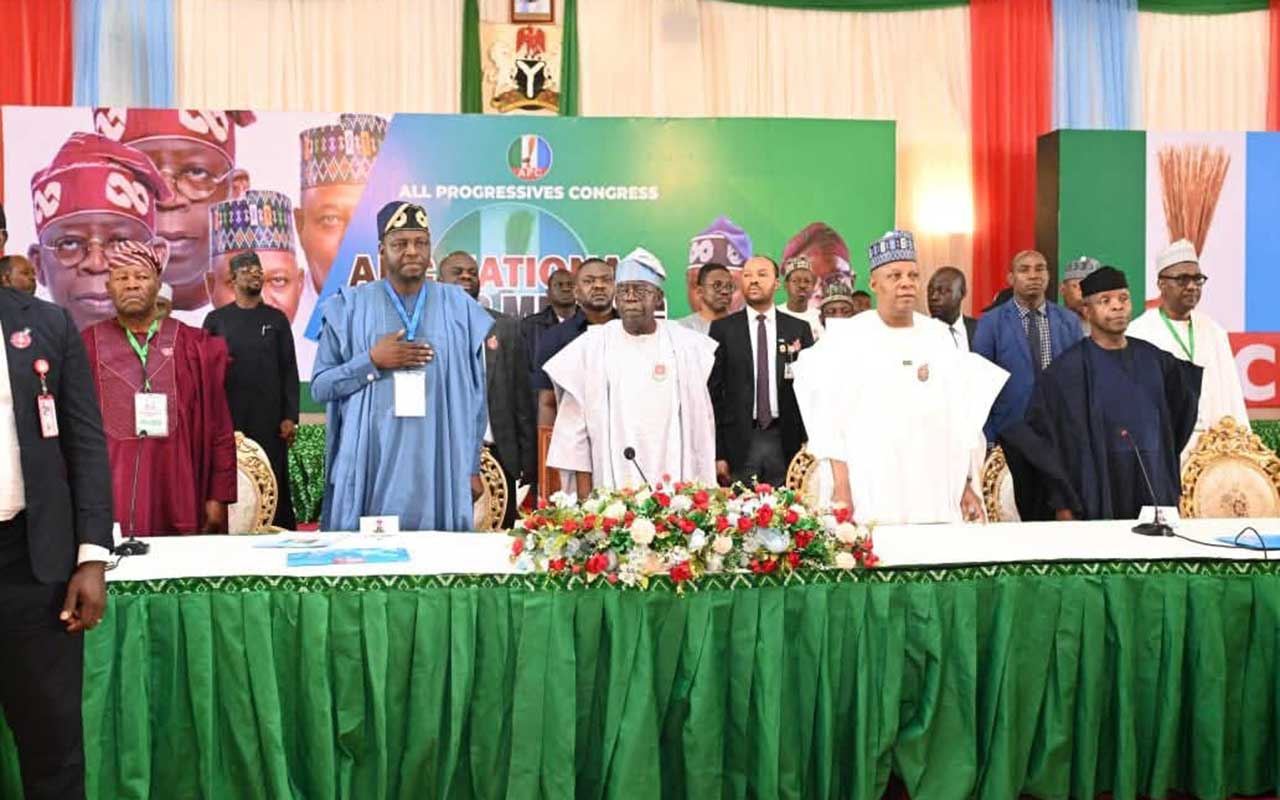
A new wave of defections by lawmakers, party executives and political blocs across Rivers, Sokoto, Zamfara and the FCT has signalled an accelerating political realignment, as the All Progressives Congress (APC) consolidates power and opposition parties grapple with internal crises, raising fresh questions about the opposition’s capacity ahead of 2027.
Four lawmakers from Rivers State in the House of Representatives yesterday defected to the APC, leaving the Peoples Democratic Party (PDP) and the Labour Party (LP).
The defectors are Awaji Inombek Abiante, who represents Andoni–Opobo/Nkoro Federal Constituency; Boma Goodhead of Akuku-Toru/Asari-Toru Federal Constituency; and Emerengwa Boniface of Emoha/Ikwerre Federal Constituency—all formerly of the PDP—as well as Manuchim Umezuruike of Port Harcourt I Federal Constituency, who defected from the Labour Party.
The Speaker of the House of Representatives, Abbas Tajudeen, announced their defection after reading their letters on the floor of the House.
In the letters, the lawmakers attributed their decision to prolonged and unresolved internal crises within their former parties.
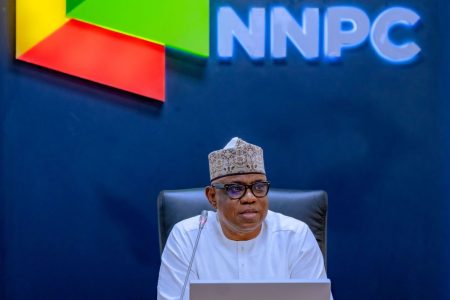
The development comes amid recent political realignments in Rivers State following Governor Siminalayi Fubara’s defection from the PDP to the APC, which he announced at a stakeholders’ meeting at the Government House in Port Harcourt.
Fubara joined a growing list of governors who have left the PDP, including Delta State Governor Sheriff Oborevwori, Akwa Ibom State Governor Umo Eno, Enugu State Governor Peter Mbah and Bayelsa State Governor Duoye Diri, among others.
Speaking at the meeting, Fubara said full political alignment was necessary to effectively support President Bola Tinubu’s administration, adding that his supporters had collectively resolved to move to the APC.
Recall that on March 18, President Tinubu declared a state of emergency in Rivers State, suspending Governor Fubara, his deputy, Ngozi Odu, and members of the State House of Assembly for six months over prolonged political tension in the state.
The President said the move was aimed at restoring stability following a breakdown in governance arising from disputes between the executive and the legislature. He subsequently appointed retired Vice Admiral Ibok-Ete Ibas as administrator to oversee the affairs of the state.
Six months later, Fubara was reinstated and pledged to prioritise peace, reconciliation and political stability in Rivers State.
FCT senator Ireti Kingibe joins ADC, quits Labour Party
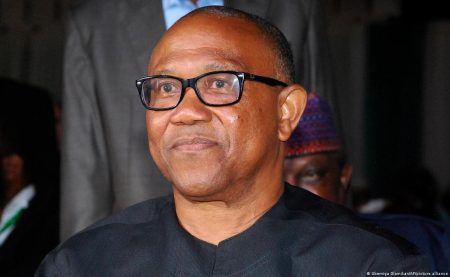
ALSO, the senator representing the Federal Capital Territory (FCT), Mrs Ireti Heebah Kingibe, yesterday formally joined the African Democratic Congress (ADC), ending months of speculation over her political future.
Kingibe received her membership card at the ADC national headquarters in Wuse, Abuja, marking her official departure from the Labour Party.
Political observers said her exit from the LP had been delayed by prolonged internal crises within the party and lingering uncertainty surrounding its national leadership under Peter Obi.
Analysts have long noted that Kingibe’s political leanings appeared aligned with the ADC. Sources close to the senator said she had exercised caution in making the move public amid internal turmoil in her former party and Nigeria’s fluid political climate.
The registration ceremony, scheduled for 10:00 a.m., was attended by senior ADC officials, candidates for the February 21 FCT Area Council elections, party supporters and members of the media. Many attendees described the event as an “epoch-making moment” for the opposition party.
With the defection, Kingibe becomes the only serving senator in the ADC, a development analysts said could strengthen the party’s national profile and boost its influence in the FCT, where she commands a strong political following.
Observers noted that her experience, leadership background and constituency reach position her as a strategic asset for the ADC as it prepares for the 2027 general elections.
Speaking through her aides, Kingibe said her decision was driven by her commitment to inclusive governance, accountability and a structured opposition, values she believes are more firmly embedded in the ADC.
For many residents of the FCT, the defection is seen as a clear political statement. Supporters described it as a long-anticipated move, while analysts said it reflects the growing appeal of the ADC to established politicians seeking an alternative platform in a fragmented opposition space.
Confirming the development, her Senior Special Assistant on Media, Mr Kennedy Mbele, said all activities surrounding the registration were conducted peacefully and in a celebratory manner.
Bafarawa loyalists, ex-deputy gov candidate, defect to APC in Sokoto
IN Sokoto State, political loyalists of former governor Attahiru Dalhatu Bafarawa, including the PDP deputy governorship candidate in the 2023 general elections, Sagir Bafarawa, have defected to the All Progressives Congress (APC).
The chairman of the political movement in the state, Prof Muhammad Hamza Maishanu Yabo, said the decision to join the ruling party was taken collectively after several months of consultations.
He said the group had resolved to support the administration of Governor Ahmed Aliyu and work towards his re-election in 2027.
“This decision was taken because of Governor Ahmed Aliyu’s resilience in delivering dividends of democracy to the people of Sokoto, and the dignity and humility with which he treats our principal,” Yabo said.
According to him, the movement’s members agreed to back the state government, noting that Bafarawa was a key co-founder of the APC and that their action was in line with that political legacy.
Also speaking, Attahiru Dalhatu Bafarawa said he had retired from active partisan politics and now serves as an elder statesman.
“Since quitting the PDP, I announced my retirement from active politics and distanced myself from taking any political appointment,” he said.
“I am now an elder statesman who only gives and airs opinions on issues that border on the country’s prosperity,” he added.
He explained that although he has thousands of supporters across Sokoto State with political ambitions, he had consistently made it clear that he was no longer involved in active politics.
“They sought to know where my focus is, and I told them clearly that I am no longer in active politics. When they insisted and, based on their own convictions, decided to join the APC, I told them that wherever they choose to be politically, I would always wish them well,” Bafarawa said.
“I am willing and ready to support their choice and will be the last person in the state to oppose Governor Ahmed Aliyu Sokoto for his loyalty to and respect for me as a father,” he added.
Reflecting on his political career spanning about five decades, Bafarawa recalled mentoring several leaders who later became governors of Sokoto State, including Yahaya Abdulkareem, Aliyu Wamakko, Aminu Waziri Tambuwal and the incumbent governor, Ahmed Aliyu.
PDP executives switch to APC in Zamfara’s Maradun council
SIMILARLY, the All Progressives Congress has recorded a political gain in Maradun Local Council of Zamfara State following the defection of the Peoples Democratic Party’s executive members in the council.
A source familiar with the development said the PDP executives formally joined the APC after a crucial meeting with the Minister of State for Defence, Bello Muhammad Matawalle.
Maradun is the hometown of Matawalle. During the announcement of their decision, the defecting PDP executives declared their loyalty and full support for the minister and his political ally, Senator Abdulaziz Yari.
They described the defection as a carefully considered move aimed at aligning with leaders they believe are committed to peace, security and the overall development of Zamfara State and the country.
The former PDP officials also pledged to mobilise their supporters and party faithful in Maradun Local Council to strengthen the APC and support its continued electoral success in the state.
Political observers see the development as a boost for the APC in Maradun and a reflection of the growing influence of Matawalle and Yari across Zamfara State.
Nigeria’s leadership crisis driven by electoral fraud, institutional decay, say experts
MEANWHILE, Nigeria’s leadership failure is not a crisis of youth, technology or innovation, but the cumulative outcome of decades of manipulated elections, compromised institutions and neglected leadership development, lawmakers and governance advocates have said in Abuja.
The consensus emerged at the public unveiling of Leadership 365, a new book by leadership scholar and development expert Prof Linus Okorie, where speakers warned that without credible elections and deliberate ethical formation, national renewal would remain elusive.
Leading the discussion, Senator Ikechukwu Obiora said Nigeria’s inability to produce accountable leadership is directly linked to the systematic theft of the electoral process, which has severed the bond between leaders and citizens.
“When leaders rig their way into office, they do not feel accountable to the people,” Obiora said. “Elections are the mechanism through which power belongs to citizens. Once that process is corrupted, governance collapses and corruption thrives.”
He rejected claims that moral decay among young Nigerians is responsible for the country’s troubles, arguing instead that the conduct of political elites has shaped a culture of impunity.
“The moral fabric of the younger generation has been bruised by what they see leaders do,” he said. “You cannot preach integrity to young people when dishonesty is rewarded at the highest levels.”
Obiora traced Nigeria’s leadership deficit to the early post-independence era, noting that entrenched electoral fraud prevented the emergence of competent, visionary and legitimate leaders, weakening state institutions and fuelling insecurity, economic stagnation and social fragmentation.
He cautioned against placing excessive faith in technology as a solution to electoral malpractice, stressing that digital tools are ineffective in the hands of compromised institutions.
“No technology can rescue an election conducted by an institution that lacks independence,” he said, calling for constitutional reforms to guarantee a genuinely autonomous electoral management body free from executive control.
Beyond elections, Obiora emphasised the need for deliberate investment in leadership development, insisting that human capacity remains more decisive than artificial intelligence or technological advancement.
“Countries that have transformed did so by investing in people,” he said. “The properly channelled human spirit is the most powerful force for national development.”
Also speaking, Senator Osita Izunasor said leadership is defined by service rather than status, warning that Nigeria’s challenges would persist unless leaders embraced selflessness, ethics and mentorship.
“Leadership is not conferred by title or office,” Izunasor said. “It is service. Selfishness and leadership cannot coexist.”
He called on experienced leaders to deliberately mentor younger Nigerians, describing mentorship as a missing link in rebuilding public ethics and restoring trust in governance.
The author, Prof Linus Okorie, said Leadership 365 was designed as a practical tool to address declining reading culture and shallow engagement with leadership values. Structured into 365 short chapters, the book offers one leadership competency for daily reflection and application.
“In one year, a reader acquires 365 leadership competencies,” Okorie said. “It is a daily manual for personal growth and ethical leadership.”
He advocated adopting the book as a general studies text in secondary schools and universities, arguing that early exposure to leadership thinking could significantly reshape values, character and national culture.
Together, the speakers delivered a unified message: Nigeria’s recovery will not come from rhetoric or technology alone, but from credible elections, strong institutions and the daily practice of ethical, service-driven leadership.
“Until Nigeria fixes its elections and invests deliberately in leadership development,” Obiora concluded, “it cannot fix its future.”