


The Federal Government says it is targeting the creation of about 10,000 jobs from each 500-cattle-per-day capacity abattoir established through public-private partnerships across the country.
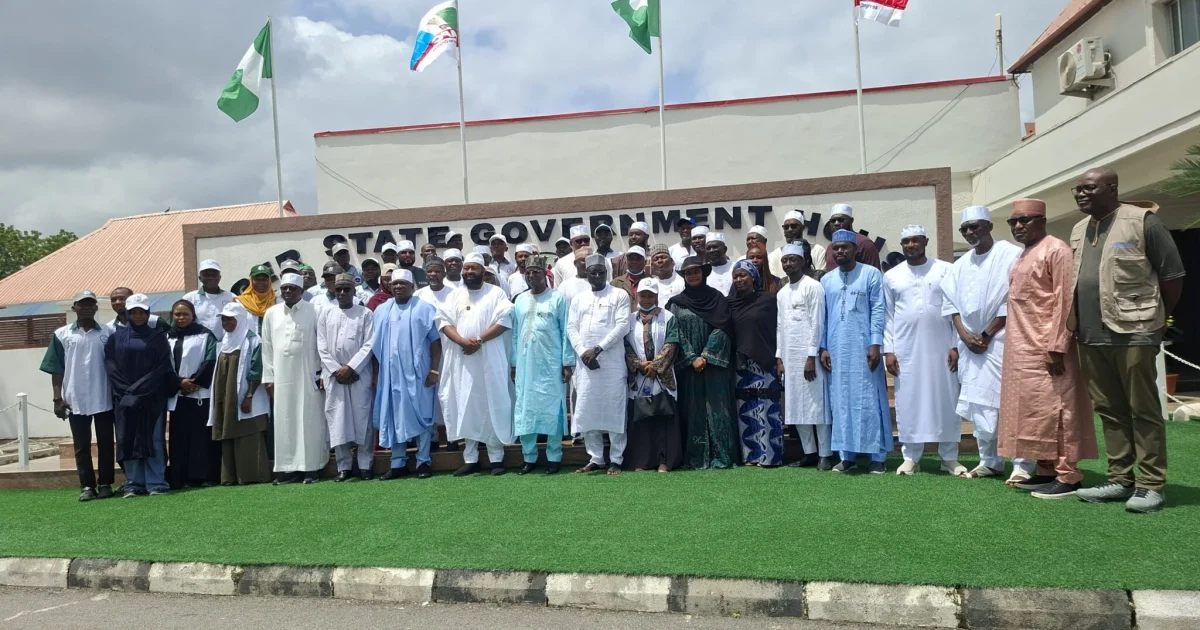
Minister of Livestock Development, Alhaji Idi Maiha, disclosed this when he paid a courtesy visit to Governor Umaru Bago of Niger while on a two-day working visit to assess L-PRES projects in Minna on Friday.
He said the initiative was part of measures to transform the livestock sector from transporting live animals to processing meat locally.
Maiha urged state governments to partner with private sector operators to establish and operationalise modern abattoirs in their respective capitals.
According to him, such facilities would have a catalytic effect on backward integration, creating opportunities for young people in cattle fattening, pasture cultivation, feed production, animal health services and transportation.
He said Nigeria had continued to transport live animals from the North to the South, resulting in loss of animal weight, accidents, waste and limited value addition.
“We need to pivot from the transportation of live animals into the transportation of processed meat, under cold environment, and that calls for abattoir operations,” he said.
The minister said the livestock sector had significant capacity to absorb unemployed youths because activities such as egg production, poultry, milk production and goat processing could generate income throughout the year.
The minister identified feed and fodder, breed improvement and animal health management as the ministry’s three major priorities.
He said the ministry would work with state governments to encourage the establishment of livestock development centres where pastoralists could settle and develop various livestock value chains.
According to him, nomadism was not a cultural practice but a survival mechanism through which herders moved animals from areas of scarcity to areas of abundance.
He said improved breeding would enable Nigeria to increase milk production, noting that the country was spending about $1.5bn annually on the importation of dairy products despite having about 55 million cattle.
The minister also called for collaboration among the Federal Government, state governments and private sector to improve livestock productivity and reduce dependence on imported dairy products.
He commended Bago for creating an enabling environment for livestock and agricultural investments in Niger, describing Zaima Farm, which he visited, as a centre of excellence.
The minister also commiserated with the Niger Government and families of miners who died in recent incidents in the state, urging stakeholders to learn lessons from the incidents and work toward formalising and managing the sector for economic benefit.
Responding, Bago said the state would address the shortage of pasture by promoting the cultivation of animal feed, saying the state had secured $100m from Saudi Exim Bank, with an initial $10m being deployed to irrigation projects aimed at supporting pasture production.
Bago said the initiative would provide water, feed, paddocks and veterinary services, while creating incentives for pastoralists to settle and engage in organised livestock production.
He said El-Presco had brokered an arrangement for Niger to supply about 200 cattle daily to Niger Food and Abis in Abuja, with each production cycle expected to accommodate between 18,000 and 20,000 cattle in feedlots.
According to him, the arrangement was expected to create about 20,000 direct and indirect jobs.
The governor also appealed to the Federal Ministry of Livestock Development to review its L-PRES investment plans to ensure that Niger remained part of the programme.
Bago called for the activation of railway routes linking Niger to Lagos to facilitate the movement of livestock and reduce pressure on roads, saying efficient rail transportation would reduce wastage, ease the movement of animals and help mitigate farmer-herder conflicts.
Earlier, Hajiya Aisha Ahmed-Nasir, Chief Executive Officer of Zaima Farm, said in an interview with newsmen that the L-PRES intervention had significantly improved the farm’s poultry production and processing capacity.
She said the intervention had provided key infrastructure, including access roads and a broiler processing unit.
She added that the processing facility had enabled the farm to process poultry in a clean and hygienic environment, while also opening up opportunities for farmers within and outside Niger to access the facility.
The News Agency of Nigeria reports that the minister was received by Mr Yakubu Garba, Deputy Governor of Niger, at the Bola Tinubu International Airport.
NAN
