




By Iyanuoluwa Abiola
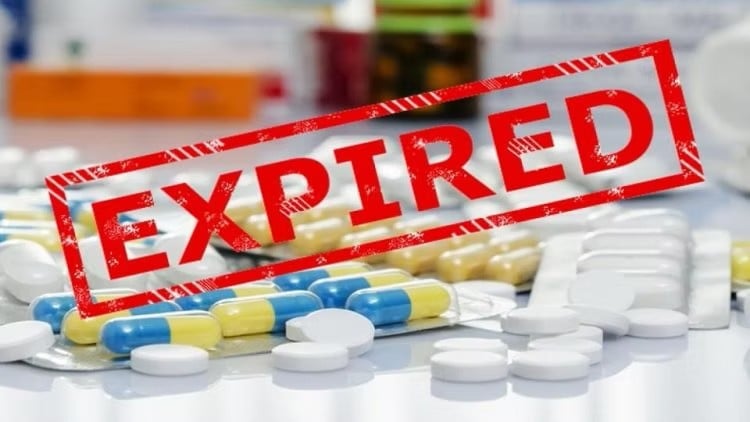
Expired medicines can be as dangerous as fake drugs and may cause treatment failure, organ damage and potentially death, pharmacists have warned.
They reminded Nigerians that the danger of unsafe medicines is not limited to fake or counterfeit drugs.
The pharmacists explained that medicines could lose their potency after their expiry dates had passed, preventing patients from receiving the intended therapeutic effect and potentially worsening illnesses, particularly when the drugs are used to treat serious conditions.
They cautioned Nigerians against assuming that a medicine is safe simply because it is genuine, urging them to check expiry dates, pay attention to storage conditions and obtain medicines only from approved pharmacies.
The World Health Organisation says medicines that have passed their expiry dates should not be used because pharmaceutical products may lose their potency as they degrade, making them less effective. The WHO recommends that expired medicines be safely disposed of rather than improperly discarded.
In Nigeria, the National Agency for Food and Drug Administration and Control has guidelines for the handling and disposal of unwholesome medicines and other regulated products, including expired medicines.
The concern is not limited to medicines held by pharmacies and health facilities, as unused and expired medicines are also kept in Nigerian homes.
In an exclusive interview with PUNCH HealthWise, a former President of the Pharmaceutical Society of Nigeria, Olumide Akintayo, explained that the restriction on the use of expired medicines was intended to protect patients and maximise patient safety.


Akintayo noted that after expiry, the quantity of active ingredients in a medicine could decrease, depending particularly on the storage conditions.
“This situation may induce reduced therapeutic outcomes, which is contrary to the goal of treatment,” he explained.
He added that in some specific instances, expired active ingredients could become toxic to the body.
“In some specific instances, the expired active ingredients may be toxic to body organs,” he stated.
Akintayo further warned that repeated exposure to such substances could cause end-organ damage and death.
On the disposal of expired medicines, Akintayo recalled that Community Pharmacy Action Centres, also known as COPA Centres, previously provided a structure for the collection of expired medicines, which were subsequently evacuated by NAFDAC for destruction.
He, however, noted that a current challenge was the cost associated with the destruction of expired medicines, explaining that discussions were ongoing over NAFDAC’s position on charging facilities for the service.
Akintayo urged Nigerians to obtain their medicines only from pharmacies approved by the Pharmacy Council of Nigeria, noting that consumers had the right to verify the registration status of such pharmacies.
“There’s only one way out. Identify and procure your drugs from PCN-approved pharmacies. It is your right to verify the registration status of such pharmacies, which will allow you to check the expiry date of products you buy,” he advised.
He also recommended that patients have a personal pharmacist who was familiar with their medication history to help ensure they received appropriate medicines and achieved optimal therapeutic benefits.
A 2022 study published in the Pan African Medical Journal on pharmaceutical waste disposal among residents of Lagos State found that 53 per cent of respondents had some quantity of purchased medicine remaining unused at home, while 43.6 per cent had between one and five unused or expired medicines at home.
The study further found that 57.9 per cent of respondents did not know what to do with unused or expired medicines, while 73.2 per cent disposed of unused medicines in household garbage.
Speaking exclusively with PUNCH HealthWise, the Senior Vice-President of Advantage Health Africa and Immediate Past National Chairman of the Association of Community Pharmacists of Nigeria, Adewale Oladigbolu, warned that expired medicines could cause serious harm if used after their expiry dates.


“Expired drugs can cause organ damage and it can lead to death if not controlled,” he warned.
Oladigbolu explained that expired medicines could lose their efficacy, potentially resulting in treatment failure.
He noted that the consequences could range from a medicine failing to relieve pain to medicines used to treat serious infections and infestations failing to adequately address the condition.
“Once drug expires, don’t touch it,” he cautioned.
Oladigbolu stressed that the problem was not limited to the expiry date itself, as the storage conditions of a medicine could affect its stability even before the printed expiry date was reached.
“The storage condition of the drug affects the stability of the product in spite of the expiration date that is still valid,” he stated.
Using insulin as an example, he explained that medicines requiring cold-chain storage could lose their effectiveness when exposed to temperatures outside their recommended conditions.
Oladigbolu further highlighted the need for caution when using medicines with a narrow therapeutic index, noting that such drugs had a small margin between an effective dose and a harmful one.
“The dosage that can heal and the dosage that can kill are close,” he explained.
He noted that such medicines were often used in life-threatening situations, making the preservation of their efficacy particularly important.
Oladigbolu therefore urged Nigerians to pay attention to both the expiry date and storage conditions of medicines and to obtain their drugs from licensed community pharmacies.
He advised members of the public to look for the green cross sign and the relevant licences displayed by licensed community pharmacies, including the pharmacist’s licence and the licence for the premises.
On expired medicines already in the possession of pharmacies, Oladigbolu explained that community pharmacists had a system for collecting expired products through their zonal structure and the Association of Community Pharmacists of Nigeria, with the products subsequently submitted to NAFDAC for destruction.
He, however, expressed concern that pharmacists currently bore the cost of destroying the medicines, arguing that the government should take responsibility for the process or provide incentives to support the safe disposal of expired products.
Oladigbolu also explained that the association had previously operated a system through which medicines approaching expiry could be redistributed, helping to reduce wastage and prevent products from expiring in the first place.
He advised consumers who discovered that they had purchased an expired medicine to first approach the pharmacist and, if the matter was not resolved, report the issue through the appropriate regulatory channels, including NAFDAC or the Pharmacy Council of Nigeria.
Copyright PUNCH
All rights reserved. This material, and other digital content on this website, may not be reproduced, published, broadcast, rewritten or redistributed in whole or in part without prior express written permission from PUNCH.
Contact: health_wise@punchng.