




Janet Ogundepo
The Lagos State Chairman of the Nigerian Medical Association, Dr Babajide Saheed, has said that the health sector has performed poorly and witnessed only little improvement in infrastructural development.
In a statement issued to PUNCH Healthwise to commemorate the 2026 Democracy Day celebration, Saheed said the Federal Government had shown no clear commitment to tackling the brain drain in the health sector, arguing that attention was instead being directed toward international partnerships and the expansion of medical and educational institutions.
PUNCH Healthwise reports that Nigeria currently has about 40,000 licensed doctors, a further decline from the 55,000 that the Coordinating Minister of Health and Social Welfare, Muhammad Pate, said in 2024, and far below the estimated 300,000 needed to adequately serve a population of over 240 million.
Continuing, the Lagos NMA chairman said, “There is no sign or evidence that the FG is willing or ready to resolve the issue of Japa syndrome, where doctors are leaving the country in droves.
“FG through the Coordinating Minister of Health & Social Welfare, Prof Muhammad Pate, is not willing to implement parameters that will reduce or eradicate Japa syndrome but is interested in global and international partners’ engagements in terms of research, leaving the basic health sector issues of medical services, training, human resources, health financing and good governance in the health institutions and MDA unattended.”
Saheed reiterated that the “Japa syndrome can be reduced or eradicated through better remuneration with corresponding financial inflation, better welfare packages, improved working conditions, training and retraining, including overseas training, better and quality equipment and materials, grants, research, etc.”
He further decried the government’s health financing, describing budgetary allocations to the sector as grossly inadequate compared to the 15 per cent target contained in the Abuja Declaration.
The Lagos NMA chairman stated that funds allocated to health institutions and agencies were not always effectively utilised to improve healthcare delivery.
He said, “Health financing of this administration is poor and grossly inadequate, with poor budgetary allocations to the health sector against the 15 per cent Abuja Declaration. FG pays more attention to infrastructure like roads, bridges, and offices than to the health and education sectors in terms of budgetary allocations. Even what was being allocated to the health sector wasn’t implemented to a meaningful percentage by the Federal Ministry of Finance.
“Also, the ones given to the MDAs and institutions on health aren’t used properly and judiciously for the healthcare delivery system.”
Saheed noted that many ongoing and abandoned infrastructural projects in the sector were being built without consideration about the unavailability of the needed human resources, equipments, tools and materials.
He expressed concern over the establishment of new healthcare and medical training institutions despite shortages of health workers and poor welfare conditions, arguing that the move could further fuel the migration of professionals abroad.
The orthopaedic surgeon further stated that the development has also contributed to difficulties faced by medical and allied health graduates in securing placements for housemanship and internship training.
“Building more healthcare institutions, medical and health tertiary education institutions with a shortage of human resources and poor welfare will definitely increase the export of doctors and other healthcare workers abroad. This will be a great loss to the country.
“This has created more problems with placement for housemanship training and internship training of the healthcare workers in the country, where many medical and non-medical graduates find it difficult to get a placement for one-year housemanship and internship because of the limited health institutions that are doing housemanship and internship.
“This situation has brought the health sector back to what happened in the late 90s and early 2000s, where newly graduated medical students would wait for more than a year before they could get placement for housemanship,” he said.
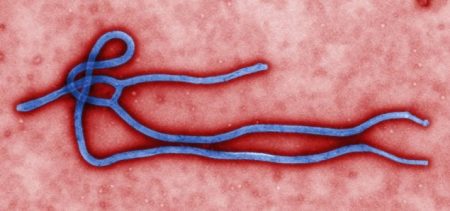
Saheed described Nigeria’s infectious disease control system as poor and inefficient, noting that “FG should have reliable, strong, efficient and effective structures on the ground to be ready to tackle any global, regional or local infectious diseases. Each state should have an infectious disease hospital with the central control hospital in Abuja. This should have been in place before the current Ebola Virus issue in the Democratic Republic of Congo.”
He condemned the lack of foresight for the establishment of specialist hospitals in the six geo-political zones of the country, stressing that having these hospitals would reduce and prevent medical tourism.
“FG should establish Paediatric, Neurosurgery, General Surgery, Obstetric and Gynaecology, ENT, Plastic Surgery, Maxillofacial Centres and Specialist Hospitals in the six regions, Abuja and Lagos,” he said.
Saheed submitted, “FG and the Federal Ministry of Health have performed poorly on the healthcare delivery system because of a lack of willingness and priority on health sector development in Nigeria.
Copyright PUNCH
All rights reserved. This material, and other digital content on this website, may not be reproduced, published, broadcast, rewritten or redistributed in whole or in part without prior express written permission from PUNCH.
Contact: health_wise@punchng.