


Chima Azubuike
The Civil Society Legislative Advocacy Centre has urged women journalists to take the lead in the fight against tobacco use by adopting gender-sensitive reporting that highlights the disproportionate impact of tobacco on women and children.
Speaking at a one-day training workshop on gender mainstreaming in tobacco control held in Gombe on Wednesday, the Executive Director of CISLAC, Comrade Ibrahim Musa-Rafsanjani, said women journalists have a crucial role to play in shaping public attitudes and influencing tobacco control policy.
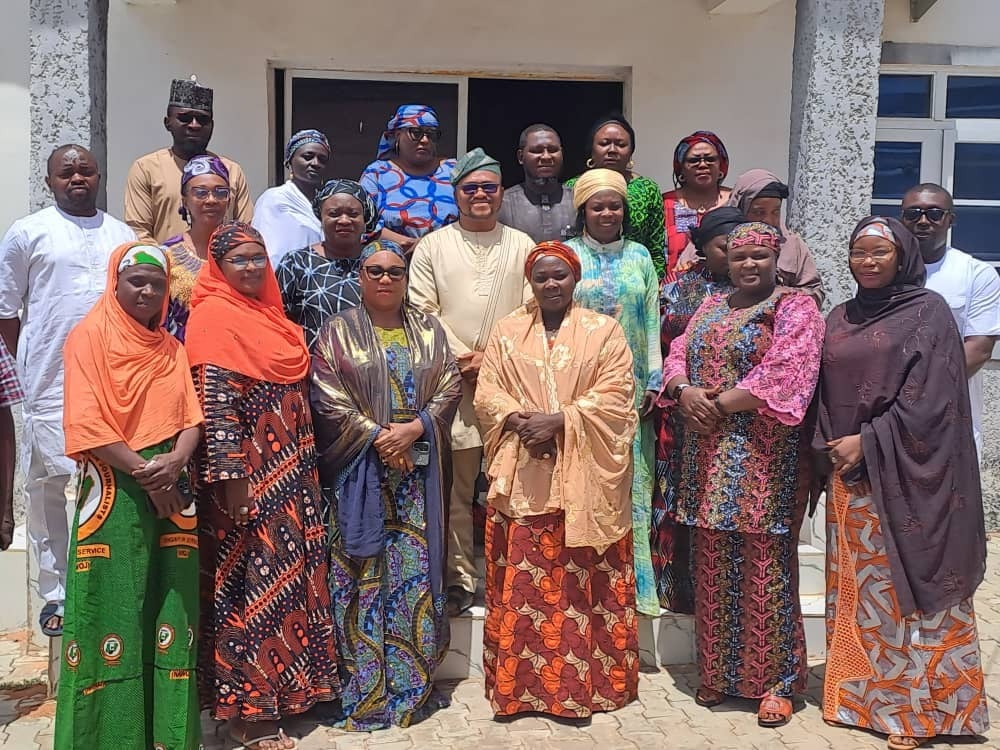
The workshop, organised by CISLAC with support from Tax Justice Network Africa, brought together members of the Nigeria Association of Women Journalists in Gombe State to strengthen their capacity on tobacco tax advocacy and gender-responsive reporting.
Represented by CISLAC’s Senior Finance Officer, Mohammed Muritala, Musa-Rafsanjani said research had shown that tobacco use and exposure affect women differently and often more severely than men.
“We are here today to train members and executives of NAWOJ in Gombe State on tobacco tax advocacy and to build their capacity on how to report tobacco issues appropriately using gender lenses.
“We discovered that tobacco affects women disproportionately compared to men. Therefore, women journalists must use their voices and platforms to advocate for stronger tobacco control policies and ensure that their reports adequately capture how tobacco affects women and their reproductive health,” he said.
He said women journalists, as mothers and role models, are strategically positioned to discourage children and young people from taking up tobacco use.
“To start tobacco use is one thing, but quitting is another entirely because tobacco is highly addictive. If mothers are able to monitor and guide their children properly, they can discourage them from taking up the habit in the first place,” he said.
“The chances of becoming addicted are reduced if children are prevented from starting early. Women and journalists alike are very crucial in this area because many people look up to them in society.”
Musa-Rafsanjani also noted that the intervention was being implemented across several African countries through support from Tax Justice Network Africa and funding from the Bill and Melinda Gates Foundation.
According to him, Nigeria has yet to meet the minimum tobacco taxation benchmarks recommended by regional bodies.
“Nigeria has a tobacco taxation policy, but the current rates are not high enough to discourage consumption in line with ECOWAS recommendations and World Health Organisation benchmarks,” he said.
“We need to improve the excise tax rates to reduce affordability and ultimately reduce tobacco consumption.”
Earlier, CISLAC Programme Manager, Solomon Adoga, said the training was designed to deepen journalists’ understanding of tobacco-related risks and the gender dimensions associated with tobacco use and exposure.
“What we did today was to engage women journalists in Gombe State to create awareness and understanding of tobacco use, exposure, and the associated risks,” Adoga said.
“We also sought to establish the gender dimensions associated with tobacco use and drive home the importance of gender mainstreaming in policy formulation and implementation, particularly in tobacco control policies.”
He explained that women occupy influential positions in society and can help challenge misconceptions surrounding tobacco use.
“Our expectation is that these women will use their platforms to amplify the message that flavoured tobacco products are not less harmful and that tobacco use does not enhance beauty, contrary to some misconceptions,” he added.
Adoga stressed the need for policymakers to incorporate gender considerations into tobacco control strategies, especially in the allocation of revenues generated from tobacco taxation.
Also speaking, Chairperson of the Nigeria Association of Women Journalists (NAWOJ), Gombe State chapter, Abigail Kolo, described the workshop as timely and necessary.
“This workshop has educated us and will improve our reporting. Journalists are already contributing to the reduction of tobacco use through awareness creation, and this training will strengthen our efforts,” she said.
“Tobacco remains a serious public health concern. We still have a long way to go, but journalists in Gombe State are committed to educating people through our reports and direct engagement, especially with young people.”
She expressed optimism that sustained media advocacy would contribute to a significant reduction in tobacco use across the state.
“We hope that one day Gombe State will proudly say that tobacco smoking has drastically reduced because of the collective efforts of all stakeholders,” she said.
Similarly, Chairperson of the Media Working Group on Health, Rebecca Maina, said participants had acquired new knowledge that would improve the quality and depth of health reporting.
“I believe participants are leaving here with a lot of knowledge,” Maina said.
“We will now go beyond routine news reportage to bring out the key issues discussed today. This opportunity has broadened our understanding and will help us tell more impactful stories on tobacco control and public health.”
The participants pledged to utilise the knowledge gained from the workshop to promote evidence-based reporting and support ongoing efforts aimed at reducing tobacco use and its harmful effects, particularly among women and young people.
Copyright PUNCH
All rights reserved. This material, and other digital content on this website, may not be reproduced, published, broadcast, rewritten or redistributed in whole or in part without prior express written permission from PUNCH.