


The Federal Government has presented 65 investment projects valued at approximately $78.5bn to Polish investors as part of efforts to attract foreign capital, expand domestic production and create about 366,000 jobs across Nigeria’s productive sectors.
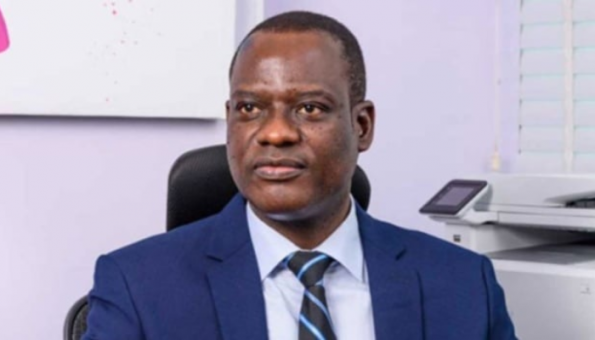
The Minister of Finance and Coordinating Minister of the Economy, Taiwo Oyedele, presented the investment opportunities on Tuesday at the second Polish-Nigerian Economic Forum in Lagos, calling for stronger economic cooperation between both countries.
According to a statement issued on Wednesday by the ministry’s Head of Information and Public Relations, Efe Ovuakporie, the projects cover infrastructure, manufacturing and energy, with completed feasibility studies to facilitate private sector investment.
The statement read, “The Federal Government has presented 65 bankable projects valued at approximately $78.5bn to Polish institutional and industrial investors, a capital drive projected to create 366,000 jobs across Nigeria’s productive sectors.”
The ministry explained that the investment opportunities were identified through Projects Nigeria, the government’s deal room facility designed to connect investors with commercially viable projects.
“Curated through the government’s deal room facility, Projects Nigeria, the 65 ventures come backed by completed feasibility studies and are structured to absorb private capital into infrastructure, manufacturing, and energy,” it added.
Oyedele said Nigeria was shifting its foreign economic strategy from dependence on raw material exports towards industrial partnerships that would support factory development, transport infrastructure and domestic production.
He cited the planned groundbreaking for the modernisation of the Lagos Port Complex at Apapa and Tin Can Island, supported by Polish financing, as evidence of the potential for bilateral agreements to translate into infrastructure development.
The minister also expressed concern over the relatively low volume of trade between Nigeria and Poland despite their economic potential and longstanding diplomatic relations.
Data from the ministry showed that bilateral merchandise trade between both countries stood at $734m in 2025, comprising $565m in Nigerian exports to Poland and `$169m in Polish exports to Nigeria.
The figures indicate that Nigeria recorded a trade surplus of $396m, accounting for approximately 77 per cent of total bilateral trade.
However, crude oil accounted for more than 90 per cent of Nigeria’s exports to Poland, reflecting the limited diversification of the country’s export earnings from the European market.
Oyedele described the trade volume as inadequate for two countries with considerable economic and demographic potential.
“To correct that imbalance, the minister proposed widening commerce beyond crude oil and raw grain into processed agricultural goods, fertilisers, sesame, industrial machinery, technology, and services,” the statement noted.
He urged Nigerian businesses to prioritise the export of finished products while leveraging Polish engineering expertise and industrial equipment to expand local manufacturing capacity.
Welcoming Poland’s Minister of Finance, Andrzej Domański, Oyedele said both countries had a responsibility to deploy fiscal instruments and development financing towards employment generation and improved household incomes.
The minister noted that economic relations between Nigeria and Poland dated back to a trade agreement signed in 1962, followed by the establishment of a strategic partnership in 2013 and the opening of a Polish Foreign Trade Office in Lagos in 2018.
Despite these developments, he said commercial exchanges had remained below their potential.
Drawing a parallel with Nigerian-born footballer Emmanuel Olisadebe, who helped Poland qualify for the 2002 FIFA World Cup, Oyedele said both countries could pursue commercial partnerships that delivered mutual benefits.
He also cited Poland’s economic transformation, from an economy valued at approximately `$67bn in 1989 to more than $1tn in 2025, as a useful benchmark for Nigeria’s structural reforms.
