

Angela Onwuzoo
The Lagos State Government has pledged to prioritise routine immunisation and upgrade primary healthcare centres to provide round-the-clock services across all local government areas and local council development areas in 2027.
The move is aimed at strengthening primary healthcare delivery and ensuring that every unvaccinated child, particularly those in hard-to-reach communities, is reached with life-saving vaccines.
The state government also reiterated its commitment to reducing maternal mortality through the recruitment and retention of more skilled healthcare workers and birth attendants.
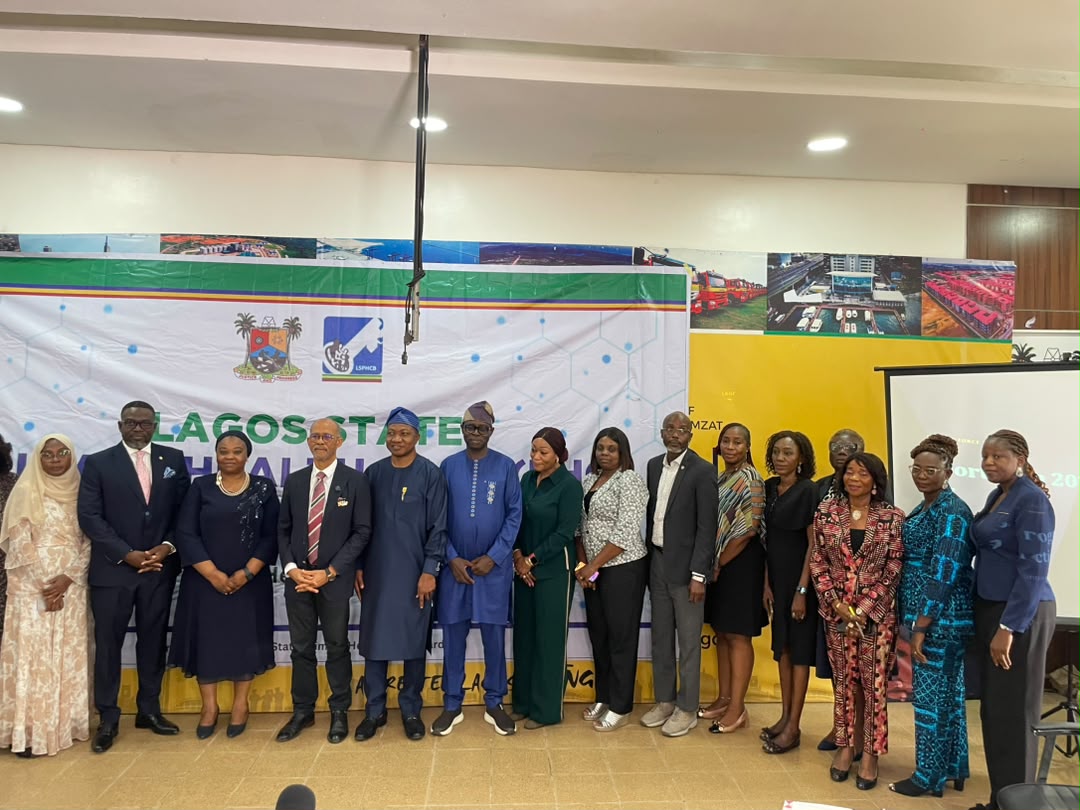
The Deputy Governor, Dr Obafemi Hamzat, gave the assurances at the third quarterly meeting of the Lagos State Task Force on Immunisation and Primary Healthcare Services, held on Tuesday at the Press Centre, Alausa, Ikeja.
Hamzat, who chairs the task force, said it had made significant progress in identifying barriers to functional primary healthcare centres and addressing them to ensure that residents had access to timely and affordable healthcare.
Represented by the Permanent Secretary, Lagos State Primary Health Care Board, Dr Ibrahim Mustapha, the deputy governor also acknowledged that gaps remained in primary healthcare performance, which he said required concerted efforts by local government chairmen, development partners, traditional institutions and religious leaders.
The meeting, organised by the LSPHCB in collaboration with the EngenderHealth Consortium, brought together key stakeholders, including directors and permanent secretaries in the state Ministry of Health, UNICEF, the International Society of Media in Public Health and journalists, to discuss priorities and strategies for strengthening primary healthcare delivery.
The task force, inaugurated on October 30, 2025, in line with the Nigeria Governors’ Forum’s commitments under the Seattle Declaration, serves as a high-level, multi-stakeholder platform for providing strategic oversight, guidance and coordination of immunisation and other primary healthcare services.
Reviewing the task force’s performance since its inauguration, Hamzat said it was working to ensure that every child in Lagos received the full complement of routine immunisations and that residents could access quality primary healthcare close to their homes.
He said the task force had recorded progress on six action points agreed upon at its inaugural meeting, including improving cold-chain capacity, digitising primary healthcare services and strengthening PHC performance.
According to him, Lagos currently has 348 functional primary healthcare centres across its 57 local government areas and local council development areas, while 86 facilities provide round-the-clock services.
He added that 82 per cent of PHCs were enrolled in the Sustainable Drug Revolving Fund, 212 had functional laboratories, and 74 per cent were equipped with information technology devices for electronic medical records.
The deputy governor also said the state had secured a 10-year commitment from local government and local council development area chairmen to finance primary healthcare services.
He said, “Since we last met, there has been real progress, and much of it is the result of partnerships represented in this hall.
“At our inaugural meeting, we agreed on six action points: to strengthen community engagement through our traditional and religious leaders; improve cold-chain capacity for vaccine storage; enhance coordination among the health, education and environment sectors; expand the digitalisation of our PHCs; promote nutrition education and family planning awareness across our communities; and advocate for a dedicated budget line for routine immunisation at the local government level.”
Despite the progress, Hamzat said Lagos still had the highest number of zero-dose children in the country, a challenge he attributed partly to the large number of people migrating to the state daily.
He disclosed that the state had 119,000 zero-dose children, defined as those who had not received their first dose of the pentavalent vaccine.
“Lagos still has 119,000 zero-dose children, that is, children who have not received the first dose of the pentavalent vaccine. Every one of them is a child exposed to diseases we know how to prevent. Reaching them is not a task for the health sector alone.
“It needs our royal fathers and religious leaders to help build trust, our LGA/LCDA chairmen to fund and mobilise, our security agencies to support safe access to every community, and our media to carry accurate and timely messages.
“We must also plan for a changing funding environment as development partner funding support for health is reducing across the country.
“This makes domestic financing more important than ever. Our shared task is to make sure that what we have built together is sustained by our own resources,” the deputy governor said.
Hamzat stressed that primary healthcare remained the foundation of the state’s health system, noting that strengthening it required more than funding. He said it also depended on deliberate coordination, data-driven decision-making and strong partnerships aligned with government priorities under the Sector-Wide Approach.
“It is where we achieve the greatest impact in disease prevention, health promotion and early intervention, and it is the first point of contact for most of our citizens,” he said.
Outlining the government’s priorities for 2027, Hamzat said the state would intensify efforts to reach every zero-dose child and underserved community while increasing demand for routine immunisation and other essential health services.
He also pledged to ensure that every ward had a functional primary healthcare centre and that at least one additional PHC in each local government area or LCDA was upgraded to provide round-the-clock services.
Other priorities, he said, included establishing dedicated budget lines for local governments and LCDAs to finance and implement their PHC work plans, recruiting and retaining more skilled healthcare workers, and supporting the maintenance and use of electronic medical records in primary healthcare facilities.
In his remarks, the state Commissioner for Health, Prof. Akin Abayomi, described primary healthcare as a critical component of the healthcare system, both in Lagos and across the country.
He said primary healthcare served as an important link between the informal and formal healthcare sectors and formed the foundation of the formal healthcare system.
“The primary healthcare platform should be the first point of contact for anyone seeking access to the orthodox healthcare system. Both public and private primary healthcare facilities should serve as the first point of medical contact and maintain patients’ health records before they are referred to other levels of care,” Abayomi said.
The commissioner advised residents to establish relationships with doctors and maintain medical records at primary healthcare facilities, whether public or private.
“Ideally, everybody should also have a doctor, preferably in a primary healthcare facility, with proper connectivity between the public and private systems.
“The primary healthcare platform should be capable of managing at least 70 to 80 per cent of medical conditions. This means that most patients should receive the care they need at this level without having to move to higher healthcare facilities.
“Only when a condition is complicated or requires specialised services should a patient be referred to a secondary or tertiary healthcare facility. These higher levels of care provide sophisticated and specialised services that are not usually available at the primary healthcare level,” he stated.
The Special Adviser to the Governor on Health, Dr Kemi Ogunyemi, urged healthcare workers to ensure that primary healthcare facilities were clean, welcoming and suitable for the communities they served.
She said poor sanitation, damaged floors and inadequate facilities could discourage residents from returning to health centres for care.
“If people visit a health centre and find dirty toilets, damaged floors and poor facilities, they may not want to return.
“We must therefore continue to improve the condition of our health centres. The attitude of health workers is also important, but we must first ensure that the physical environment is welcoming and suitable for patients.
“We want more people to use our primary healthcare facilities rather than rely on traditional birth attendants for services that should be provided by trained health professionals,” Ogunyemi said.
In a presentation on routine immunisation, the Head of Immunisation Services at the LSPHCB, Dr Bunmi Akinlade, identified difficulties in reaching certain communities, particularly large slums, hard-to-reach settlements and mobile populations, as major barriers to immunisation coverage.
She also highlighted gaps in vaccine supplies and inadequate tracking of children who missed scheduled immunisation appointments, noting that the state lacked a consistent system for following up with defaulters.
Akinlade recommended stronger community-based immunisation services supported by proper planning, including fixed vaccination sessions and outreach programmes.
She said the large number of young children in some communities further underscored the need to improve access to immunisation services.
Outlining the way forward, she called for dedicated funding for routine immunisation by both state and local governments, as well as prioritisation of local government areas with high disease burdens.
“We need to support last-mile vaccine delivery, repair cold-chain equipment in schools, and assess the capacity of cold-chain equipment in our health facilities”, she said.
Akinlade warned that Lagos could not rely solely on the Federal Government to address immunisation challenges, stressing the need for the state to take greater responsibility for ensuring adequate vaccine supplies.
Meanwhile, the Head of the Monitoring and Evaluation Unit of the LSPHCB, Dr Amodu Abioye, said primary healthcare centres had recorded approximately 2.1 million patient visits so far in 2026, representing 32 per cent of all visits to public health facilities in the state.
She said PHCs accounted for 94 per cent of all immunisations conducted across Lagos.
On maternal health services, Abioye disclosed that primary healthcare centres accounted for 26 per cent of deliveries recorded across public health facilities, while antenatal care visits at the facilities represented 24 per cent of the total visits recorded across public facilities.
She said the figures highlighted the need to establish more Level Two primary healthcare centres to increase the number of deliveries managed at the primary healthcare level.
Copyright PUNCH
All rights reserved. This material, and other digital content on this website, may not be reproduced, published, broadcast, rewritten, or redistributed in whole or in part without prior express written permission from PUNCH.
