


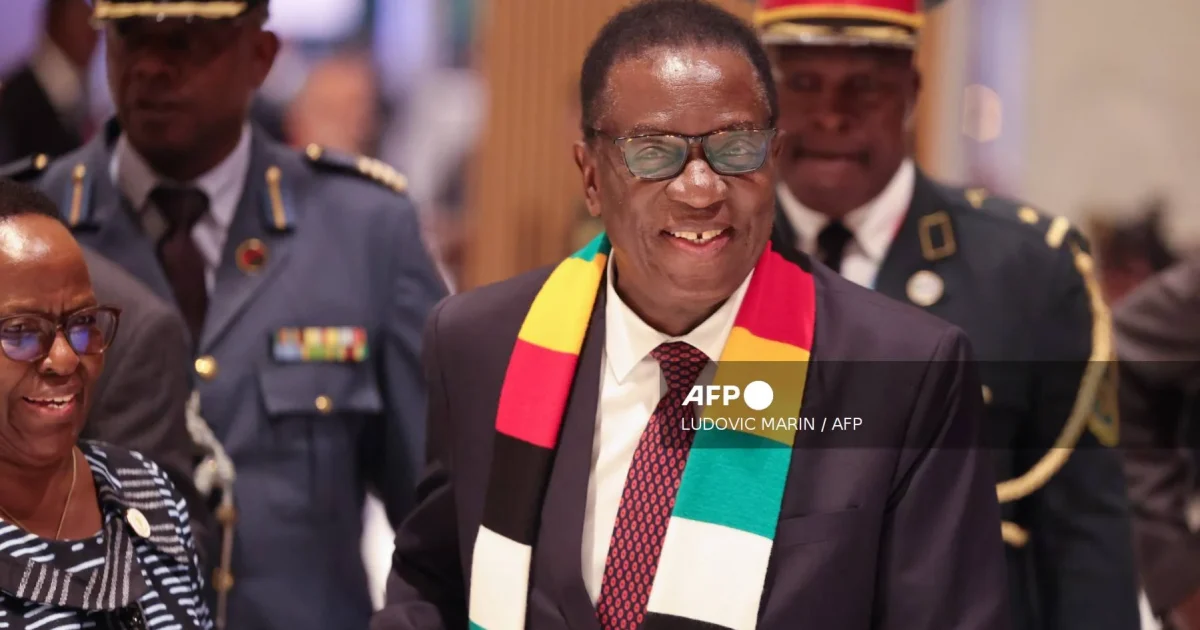


Zimbabwe’s justice minister introduced to parliament Tuesday a controversial constitutional amendment bill that would extend the term of the president, but faces fierce opposition and court challenges.
Parliament has to vote on sweeping changes to the constitution approved by the cabinet in February that include a provision that would extend President Emmerson Mnangagwa’s term until 2030.
The measures would also do away with general presidential elections, giving parliament the power to appoint the president, and extend the terms of lawmakers from five to seven years.
The amendment has become one of the most contentious political issues in Zimbabwe, where Mnangagwa’s Zanu-PF party enjoys an overwhelming majority in parliament.
After introducing the proposal, Justice Minister Ziyambi Ziyambi told journalists the government was determined to push the measure through a parliamentary debate.
He said a 90-day public consultation process was successful and widely supported.
Opponents say the consultations were marred by intimidation and violence, with anti-amendment activists assaulted by suspected state agents or arrested.
Several legal challenges seeking to stop or invalidate the amendment process are before Zimbabwe’s courts.
Critics say the bill would entrench the Zanu-PF, which has governed the resource-rich country since independence in 1980, overseeing crippling economic crises and accused of corruption and repression.
Mnangagwa came to power in 2017 in a military-backed coup that ousted Robert Mugabe, president for 30 years.
He was elected for two five-year terms, in 2018 and 2023, which is the constitutional limit for a president.
AFP
All rights reserved. This material, and other digital content on this website, may not be reproduced, published, broadcast, rewritten or redistributed in whole or in part without prior express written permission from PUNCH.
Contact: [email protected]