



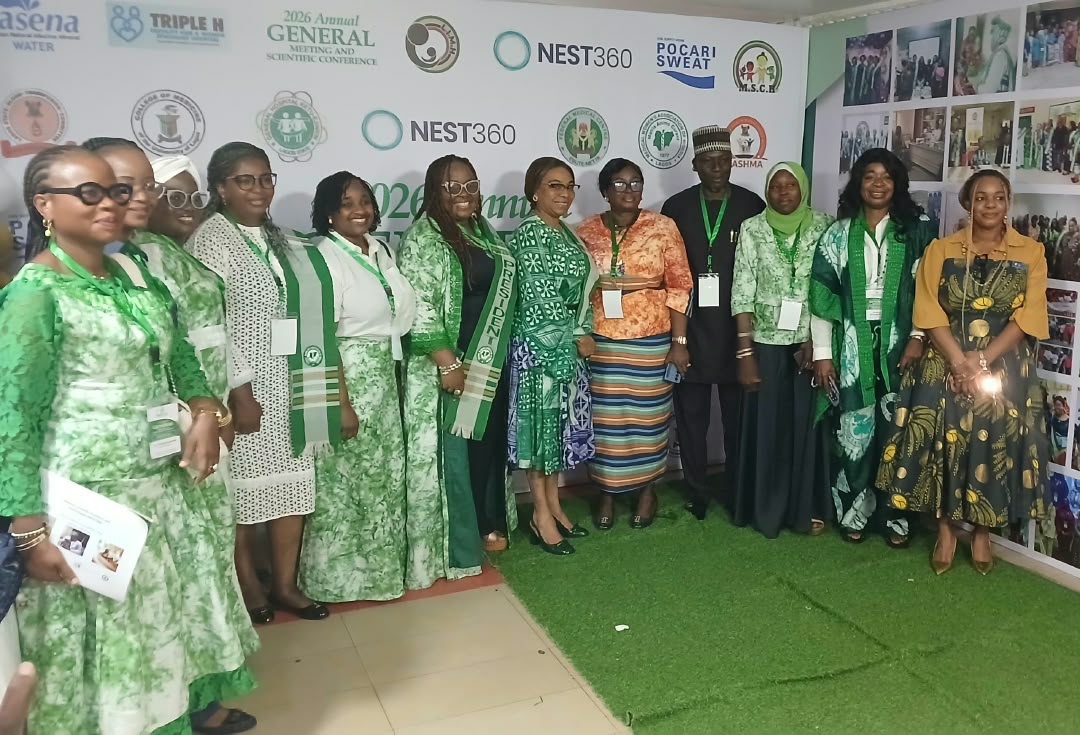
The Medical Women’s Association of Nigeria, Lagos State Branch, has warned that poor welfare for doctors, inadequate equipment and the continued migration of medical professionals are undermining efforts to improve maternal and child healthcare in the country.
The association asserted that governments at all levels must improve working conditions and provide functional health facilities to enable doctors who remain in the country deliver quality care, especially as the country continues to grapple with high maternal and child mortality rates.
MWAN further urged women physicians to take more active roles in healthcare leadership, policy development and community interventions to address persistent inequalities affecting women and children, stressing that women doctors must combine clinical practice with advocacy and mentorship to improve access to healthcare,
The call was made at its 2026 Scientific Conference and Annual General Meeting, themed “Women Physicians at the Forefront of Health Equity,” with the sub-theme, “Innovation and Technology: Transforming Maternal, Child and Women’s Health.”
In her opening remarks, the MWAN’s President, Dr Ime Okon, said health equity required deliberate efforts to ensure that everyone had a fair opportunity to attain the highest possible level of health, irrespective of gender, socioeconomic status or location.
She urged women physicians to champion policies and interventions that address the healthcare needs of women and children.
The president, who is the Medical Director/Chief Executive Officer of Apapa General Hospital, also urged women physicians to support one another through mentorship, professional development and collaboration, rather than allowing competition to undermine their collective progress.
“We must not only be present where healthcare decisions are made; we must be at the table shaping those decisions, driving innovation and speaking to power until health equity becomes a reality for every woman and every child, leaving no one behind,” Okon said.
In an interview with journalists on the sidelines of the conference, Okon said the association’s efforts to advance women’s and children’s health must also address the shortage of doctors in the country.
She called on the government to improve healthcare infrastructure, provide adequate equipment and strengthen doctors’ welfare to discourage more medical professionals from leaving Nigeria.
“Support the people that are still here, that have not travelled out, by making sure that infrastructure is very okay, because it could be very disastrous when you find yourself in an environment where you can do a lot but you don’t have the machinery and equipment to be able to do that.
“Doctors are human beings. They have families and they have needs. So take care of their needs so that they are not frustrated to the extent of wanting to go and seek that welfare outside the shores of Nigeria,” she said.
Okon also identified out-of-pocket healthcare payments as a major barrier to access, particularly for women in rural communities, and called for greater promotion of health insurance.
She said maternal mortality remained a concern, adding that women should not lose their lives while going through pregnancy and childbirth.
The MWAN president encouraged women to embrace technology and continuous learning, irrespective of their age or gender, and to seek leadership opportunities.
“If they don’t give you a seat at the table, bring your seats. You just have to be present there,” she said.
In her address, the First Lady of Lagos State, Dr Ibijoke Sanwo-Olu, represented by the Medical Director and Chief Executive Officer of Orile-Agege General Hospital, Dr Temitope Bakare, commended MWAN for its contributions to the professional development of women doctors and improvements in healthcare delivery.
She identified maternal mortality, preventable childhood illnesses, reproductive health complications, malnutrition and limited access to specialist care as continuing challenges, noting that health equity required people to receive the right healthcare services at the right time, irrespective of their income, gender, social status or location.
The First Lady further said that women doctors were not only healthcare providers but also advocates, mentors, researchers and educators whose contributions should be reflected in leadership positions and health policy decisions.
She also highlighted the potential of telemedicine, digital health records, artificial intelligence-assisted diagnosis and remote monitoring to improve maternal and child healthcare, especially in a large and diverse state such as Lagos.
Sanwo-Olu called on MWAN members to continue advocating maternal and child health, mentoring younger doctors, providing evidence-based policy recommendations and promoting community health education.
Delivering the keynote address, a Professor of Public Health and Community Medicine at the Lagos State University College of Medicine, Kikelomo Wright, said Nigeria needed to track its health indicators, strengthen existing health systems and direct more interventions toward disadvantaged communities to reduce maternal and child deaths.
Wright said although the country had recorded some progress, maternal mortality remained high compared with global benchmarks, including the Sustainable Development Goals.
She highlighted the scale of Nigeria’s maternal health crisis, saying about 75,000 women died from pregnancy and childbirth complications in 2023, equivalent to one woman every seven minutes.
“According to the United Nations, in 2023, about 75,000 women died in Nigeria from complications of pregnancy and childbirth. That is one woman every seven minutes.
“By the time I finish this talk, about five more mothers will have died. Sadly, most of these deaths, as we know, are likely to be preventable deaths,” she said.
Wright further noted that Nigeria had reduced maternal deaths by only 13 per cent over two decades, compared with a global reduction of 40 per cent.
She also said that many deaths among women and children occurred in urban slums and other vulnerable communities, calling for targeted interventions in such areas.
The professor advocated increased funding, training and deployment of healthcare workers, as well as functional infrastructure and adequate equipment in health facilities.
She also stressed the need for effective referral systems between primary and secondary healthcare facilities to ensure that women experiencing obstetric emergencies could promptly access blood transfusion and emergency obstetric care.
“We need to strengthen existing health systems. We need to continue with training. We need to fund a lot of these health systems. We need to ensure that they are well equipped. They have the right infrastructure. They have the right personnel,” Wright said.
She identified education, unemployment and limited economic empowerment as social factors affecting women’s ability to access healthcare.
The community medicine specialist also said that some women who experience pregnancy complications understand the need to seek medical attention but lack the money or decision-making power to do so immediately.
“A lot of people are not employed. A lot of people are not educated. And so people still do things that they shouldn’t be doing,” she said.
Wright added that some women had to wait for their spouses or other family members to provide money before seeking medical care, even when experiencing emergencies.
She called for increased awareness, community engagement and stronger primary healthcare centres and general hospitals, particularly in hard-to-reach areas.
The keynote speaker further urged health authorities and other stakeholders to monitor interventions to determine what was working and where more efforts were needed.
The public health expert encouraged women doctors to use their professional experience to influence decisions affecting healthcare delivery.
“We deliver most of the care. We must also shape the decisions. It is non-negotiable,” she said.
Copyright PUNCH
All rights reserved. This material, and other digital content on this website, may not be reproduced, published, broadcast, rewritten or redistributed in whole or in part without prior express written permission from PUNCH.
Contact: health_wise@punchng.