





President Donald Trump of the United States has rejected the US Supreme Court verdict that struck down his global tariffs on Nigeria and 184 other countries.
The court on Thursday described the tariffs imposed by the President last year as illegal, according to Bloomberg.
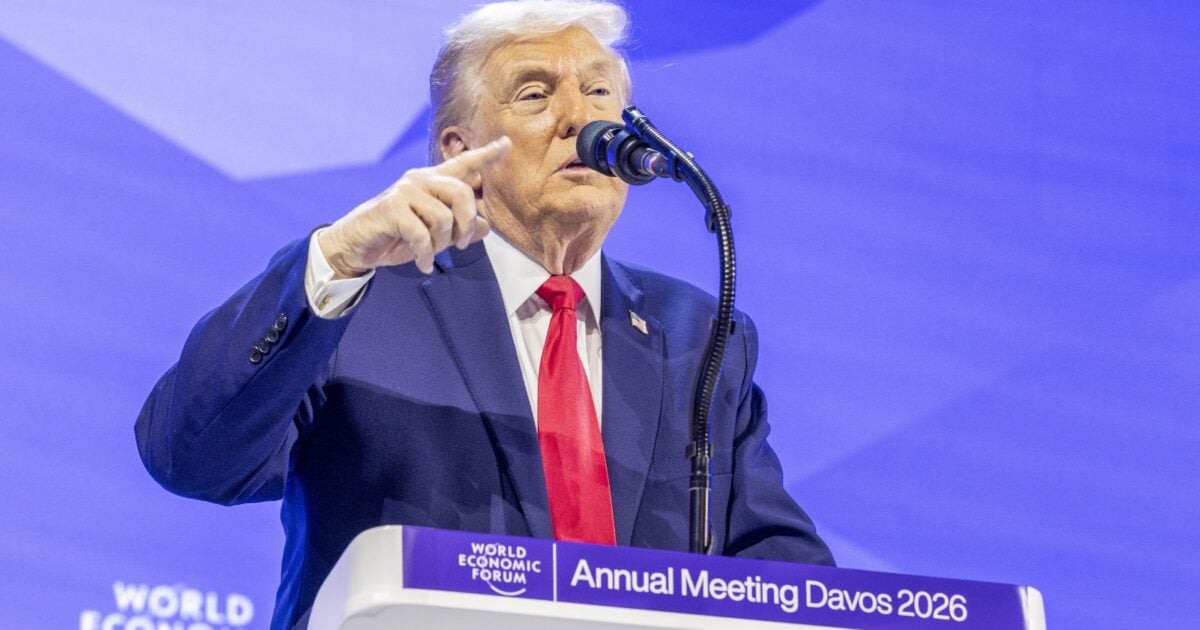
Speaking at the White House on Friday, Trump described the court’s ruling as “deeply disappointing.”
Al Jazeera quoted Trump as saying, “The Supreme Court’s ruling on tariffs is deeply disappointing, and I’m ashamed of certain members of the court, absolutely ashamed, for not having the courage to do what’s right for our country.”
Trump had, on April 2, 2025—a date he dubbed “Liberation Day”—imposed a 10 per cent baseline tariff on imports from all countries, alongside additional country-specific “reciprocal” tariffs ranging from 11 per cent to 50 per cent on nations with significant trade deficits with the United States.
The administration relied on the International Emergency Economic Powers Act, a 1970s-era law that allows a president to regulate imports during national emergencies.
Under the policy, Nigeria was subjected to a 15 per cent tariff.
The measures were designed to counter what Trump described as unfair trade practices, targeting countries such as China (34 per cent), Cambodia (49 per cent), and Japan (24 per cent).
As the tariff war escalated, duties were raised as high as 50 per cent on key trading partners, including India and Brazil, and up to 145 per cent on China in 2025.
However, in a 6–3 majority decision, the apex court held that Trump exceeded his authority by invoking an emergency law to impose the sweeping tariffs, ruling that congressional approval was required for such import levies.
The justices said the emergency authority Trump relied on “falls short” of granting him the power to impose tariffs of that magnitude.
The court clarified, however, that its ruling applied only to the “Liberation Day” tariffs and not to individual tariffs imposed on specific countries or products under separate statutory authorities.
Delivering the lead opinion, Chief Justice John Roberts described the decision as necessary to preserve the constitutional balance between Congress and the executive on trade policy.
“Allowing the administration to prevail would replace the longstanding executive-legislative collaboration over trade policy with unchecked Presidential policymaking,” Roberts wrote.
He rejected the administration’s argument that the president could use the emergency law to regulate commerce through tariffs.
“The president asserts the extraordinary power to unilaterally impose tariffs of unlimited amount, duration, and scope. In light of the breadth, history, and constitutional context of that asserted authority, he must identify clear congressional authorization to exercise it.
“The President must point to clear congressional authorization to justify his extraordinary assertion of the power to impose tariffs. He cannot. When Congress grants the power to impose tariffs, it does so clearly and with careful constraints. It did neither here.
“We claim no special competence in matters of economics or foreign affairs. We claim only, as we must, the limited role assigned to us by Article III of the Constitution. Fulfilling that role, we hold that IEEPA does not authorize the president to impose tariffs,” Robert added.
No clarity on refund of collected tariffs
The court did not provide clarity on whether funds already collected under the disputed tariffs would be returned.
As of December 14, the Federal Government had collected $134bn in revenue from the tariffs challenged by over 301,000 importers, according to data from United States Customs and Border Protection and a recent filing before the US Court of International Trade.
In his dissent, Justice Brett Kavanaugh observed that the majority opinion said “nothing today about whether, and if so how, the government should go about returning the billions of dollars that it has collected from importers. That process is likely to be a mess”.
Most significant economic case in years
The case is regarded as one of the most consequential economic disputes to reach the Supreme Court in recent years, challenging both Trump’s “Liberation Day” tariffs and separate duties imposed on imports from China, Mexico, and Canada.
At stake were tens of billions of dollars in revenue already collected by the government.
Trump and officials from the Justice Department framed the dispute as critical to the nation’s economic survival, arguing before the court that with tariffs, we are a rich nation and that without them, we are a poor nation.
However, a coalition of small businesses that challenged the duties described Trump’s position as a breathtaking assertion of power to effectively levy taxes without congressional oversight.
Legal analysts note that the president retains other, more clearly defined statutory authorities to impose tariffs without congressional approval. However, those powers are subject to stricter conditions, including time limits.
One such provision allows a president to raise tariffs by up to 15 per cent for a maximum of 150 days.
Another permits higher tariffs for national security reasons but requires a Commerce Department investigation and is limited to specific industries.
Lower courts had consistently ruled against Trump’s emergency tariffs. In one case brought by New York-based wine importer V.O.S. Selections, the US Court of International Trade held that the emergency law did not authorise the duties a decision later affirmed by an appeal court in Washington, DC.