

Ultimate Health HMO says it is intensifying efforts to expand health insurance coverage to Nigeria’s vast informal sector while deploying digital technologies and innovative healthcare solutions to drive universal health coverage.
The company disclosed this at its 14th Annual General Meeting held after its 39th Board meeting, amid renewed efforts by the Federal Government to deepen health insurance penetration following the enactment of the National Health Insurance Authority Act, 2022.
Nigeria has one of the lowest health insurance coverage rates in Africa, with a large proportion of the population relying on out-of-pocket payments to access healthcare services. The National Health Insurance Authority Act, signed into law in 2022, made health insurance mandatory for all Nigerians and legal residents, replacing the old National Health Insurance Scheme framework and expanding the government’s drive towards universal health coverage.
Despite the policy reforms, stakeholders say enrolment remains low, particularly among workers in the informal sector who account for the majority of Nigeria’s workforce. This has prompted health insurance providers to design products targeted at artisans, traders, transport workers and small business owners.
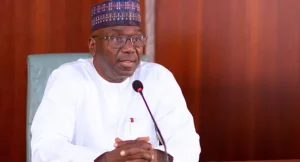
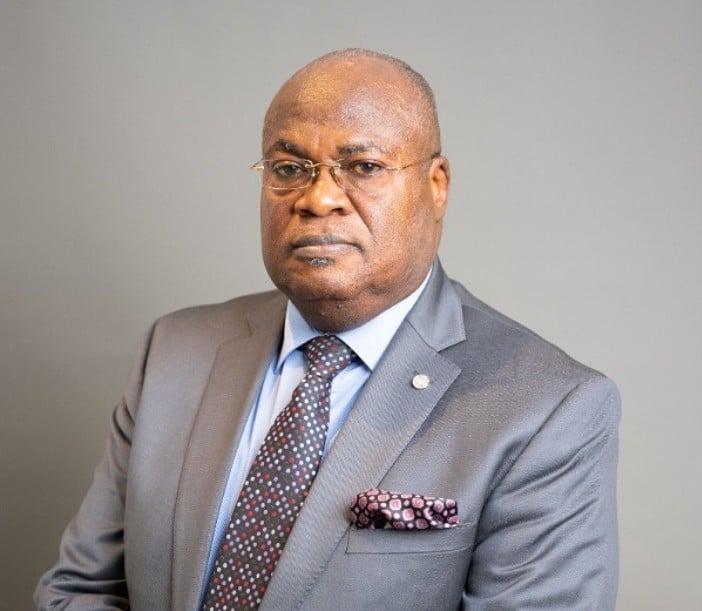
Speaking at the AGM, the Chairman of Ultimate Health HMO, Abulaziz Abdullahi, said the company had recorded significant growth in enrolment and was deliberately diversifying its client base beyond the public sector.
“Ultimate has been a pacesetter in the HMO sector in the country. The level of our enrolment has been growing tremendously and, ever since I joined the board in 2022, I have encouraged the management and fellow board members to focus more on the private sector and not rely solely on the public sector,” he said.
He noted that the NHIA Act has created fresh opportunities for expanding healthcare access across the country.
“The coverage should not just be limited to the formal sector. We are leading the way and, hopefully, by next year, our performance will be even more impressive,” Abdullahi added.
The chairman also said the company had embraced technology as a key driver of growth, noting that digital healthcare and artificial intelligence would play a bigger role in its operations going forward.
“If you do your research, you will find that Ultimate has been a pacesetter in digital medicine. Most of our operations are driven by technology, and our call centre operates 24 hours a day, seven days a week.
“Just two days ago, I was discussing with the management the need to explore the use of Artificial Intelligence in our operations. This shows that we are not taking chances,” he said.
Also speaking, the Managing Director and Chief Executive Officer of Ultimate Health HMO, Otunba Lekan Ewenla, said the company was targeting the informal sector because it remains largely underserved by health insurance providers.
According to him, statistics show that only a small percentage of Nigerians work in the organised private sector, making it imperative for HMOs to broaden their reach.
“Looking at the data released by the National Bureau of Statistics, we found that only about 15 per cent of Nigerians work in the organised private sector. The bulk of Nigerians are in the informal sector,” he said.
Ewele disclosed that the company had adopted the benefit package currently enjoyed by federal civil servants and extended it to artisans, traders and small business owners.
“What Ultimate has done differently and innovatively is to adopt the benefit package currently provided for federal civil servants as our basic plan and introduce it to the informal sector and small and medium-scale business owners.
“That is what we are doing differently and we are driving it vigorously because health insurance was designed for the mass market,” he said.
The Ultimate Health boss welcomed recent enforcement measures introduced by the Federal Government, including directives requiring employers and businesses to enrol workers in health insurance schemes and obtain certificates of compliance from the National Health Insurance Authority.
Industry stakeholders believe the policy could significantly increase health insurance uptake, especially among private sector workers and employees of small businesses.
“As a patriotic organisation, whatever policy the government introduces to improve the economy and the well-being of Nigerians is welcome to us,” Ewenla said.
“We were part of the decision-making process on how to enforce compliance after the law was passed. A circular issued by the Office of the Secretary to the Government of the Federation now requires companies to enrol their staff in health insurance schemes and obtain certificates of compliance from the NHIA.”
He added that Ultimate Health HMO was already engaging transport unions, market associations and other informal sector groups to expand enrolment.
According to him, the company has introduced flexible healthcare access options that allow enrollees to register two hospitals—one near their homes and another close to their workplaces or markets.
“We know that many traders and market women spend most of their day in the markets. So, we allow them to choose a hospital close to the market where they operate and another near their residence.
“In addition, we provide both physical and digital identity cards. The ID card is available on your phone, so you can simply present it at the hospital and access care immediately,” he explained.
On specialised healthcare services such as reproductive health treatments, including IVF and fibroid surgeries, Ewele said the company’s benefit package covers a wide range of medical conditions.
“You will be surprised that the basic NHIA plan covers a majority of these benefit packages, including cancer treatment. That is one of the reasons we adopted the package because of how robust and affordable it is,” he said.
He stressed that the company’s goal extends beyond profitability.
“It is not only about the premium; it is about changing the narrative of our poor health indices as a country.
“What drives growth across the world is patriotism. We are patriotic about this country, and it is Nigerians who will drive the development of Nigeria,” Ewenla added.
Copyright PUNCH
All rights reserved. This material, and other digital content on this website, may not be reproduced, published, broadcast, rewritten or redistributed in whole or in part without prior express written permission from PUNCH.