



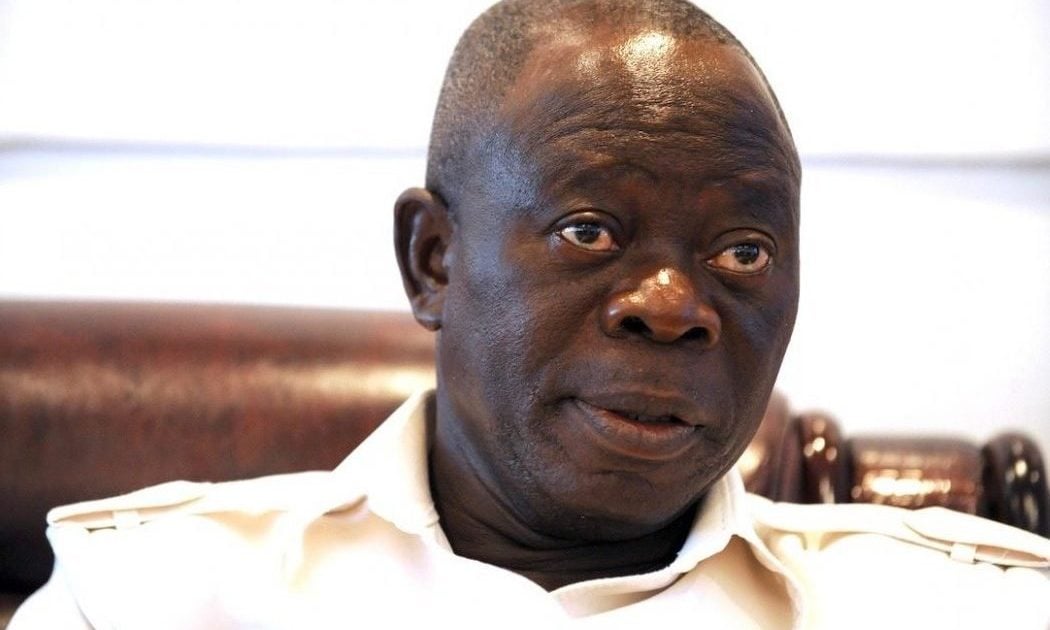


Senator Adams Oshiomhole has defended President Bola Tinubu’s newly enacted tax policy, insisting that evidence on the ground shows it reflects the core values of a progressive government by shifting the tax burden away from low-income earners to the wealthy.
The Edo North lawmaker said he was among the legislators who supported the tax bill before it was signed into law, describing the framework as equitable and socially responsive.
Speaking on Channels Television’s Politics Today on Wednesday, Oshiomhole argued that the structure of the policy confirms its progressive intent.
“The facts on the ground show that President Tinubu’s tax policy is consistent with the values of a progressive government.
“This is a progressive tax policy that places a higher burden on those who earn more while offering tax exemptions to those who earn less,” he said.
The former Edo State governor stressed that taxation remains fundamental to governance, dismissing the notion that governments generate revenue independently of citizens.
“It is only in Nigeria that people talk about government using money or claim that government earns money on its own. Governments do not earn money; citizens earn income, and the government taxes those earnings—whether individual or corporate. The sum of these taxes determines the annual revenue of the state,” he explained.
Oshiomhole added that the policy is designed to protect working families, noting that most Nigerian workers fall below the higher tax thresholds.
“There is no worker who is a member of the Nigeria Labour Congress earning N1 million a month, which totals N12 million a year. So, for salary earners, this tax policy is progressive,” he said.
On Value Added Tax, the senator said concerns were largely misplaced, as VAT predominantly applies to luxury and non-essential items rather than basic necessities.
He also faulted Nigerians who object to VAT payments locally while paying similar taxes abroad.
“Everywhere in the world, when you buy non-food items, you pay VAT. Nigerians pay VAT in America, London, Dubai, yet they resist paying VAT here in Nigeria,” Oshiomhole said.
Despite public debate surrounding the reforms, President Tinubu reaffirmed in December 2025 that the new tax laws would take effect from January 1, 2026.
The President said the reforms were not aimed at arbitrary tax increases but at achieving a structural reset, promoting harmonisation, safeguarding citizens’ dignity, and strengthening Nigeria’s social contract.
He urged Nigerians to support the implementation of the policy.