

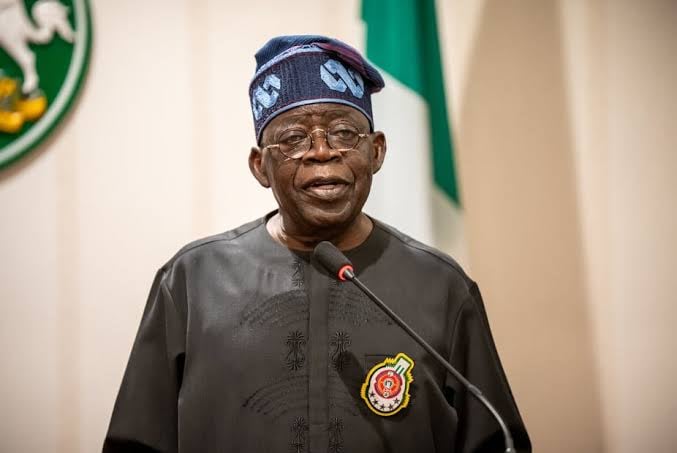

President Bola Tinubu has called on the House of Representatives to amend the Constitution to establish state police, but with built-in safeguards to prevent abuse by state governors.
The President made the appeal on Friday night during an interfaith breaking of fast with members of the House of Representatives at the Presidential Villa, Abuja, marking the third time in one week he has publicly pushed for the constitutional amendment.
Tinubu emphasised that the establishment of state police should not be “a straight free fall for everybody,” but should be structured with checks and balances drawn from past experiences.
“We just have to work together to put pressure on ourselves to accept the need for state police.
“Amend it, not a straight free fall for everybody, tie it in a way that will not be abused like in the past.
“A good legislature must learn from the past to cure the present. I’m ready to work with you,” the President stated.
He underscored the local nature of security challenges, urging lawmakers to recognise this reality as they consider the constitutional amendment.
Tinubu told the lawmakers, “You know more than anybody else that security is local, and if security is local, we just have to work together.”
The President’s call to the House follows similar appeals made earlier in the week to state governors on Monday and to the Senate on Wednesday, with an intensified push for the constitutional change ahead of the 2027 general elections.
It also comes days after he accepted the resignation of former Inspector General of Police, Kayode Egbetokun, and appointed Tunji Disu in his stead.
On Monday, during an Iftar with governors, Tinubu had declared, “What I promise you is not to be postponed. We will establish state police to combat insecurity.”
On Wednesday, while addressing senators, he requested them to “start thinking how best to amend the Constitution to incorporate state police for us to secure our country, take over our forests from marauders, free our children from fear.”
However, Friday’s Iftar dinner marked the first time the President explicitly outlined conditions for the establishment of State Police, acknowledging concerns about potential abuse by state chief executives.
While emphasising on learning “from the past,” he made reference to historical experiences during Nigeria’s First Republic when regional police forces were allegedly used to intimidate political opponents and suppress dissent.
Critics of state police have consistently raised concerns that governors could weaponise state-controlled security forces for political persecution, electoral manipulation, and settling personal scores.
The establishment of state police would require a constitutional amendment, which must pass through both chambers of the National Assembly with a two-thirds majority and be ratified by at least 24 of the 36 state Houses of Assembly.
Tinubu also praised lawmakers for supporting his administration’s controversial economic reforms, particularly the removal of fuel subsidy and the floating of the naira.
“I’m glad we’re out of the dark tunnel. It was very difficult at the beginning for people to realise the direction of my thinking, but I’m glad what happened with the heat from the critics, none of you came to me to say, can you reverse the removal of subsidy, or can you change the foreign exchange flotation of naira?” the President stated.
He commended the lawmakers for collaborating as a team despite what he described as “high voltage” criticism from opponents of the reforms.
“None of you, you collaborated, you joined together as a team. You just gave me the inspiration to move on, because the heat was high voltage from the critics, but today, we are better off for it,” Tinubu said.
The President thanked Speaker Tajudeen Abbas for his leadership, describing him as “a very good team leader.”
“I heard the speaker. I thought I would charge you to pay for the dinner.
“Nevertheless, you indirectly paid for it. You spoke very well.
“The shade of the representation here tonight represents the consciousness and the richness of your leadership,” Tinubu stated.
On insecurity, the President acknowledged ongoing challenges across the country, noting that he has observed some lawmakers on television visiting their constituencies to address security concerns.
“The next side is the area of insecurity. We are still working very hard on those too.
“I see some of you on television going to their localities and facing challenges,” he said.
Nigeria has faced escalating security challenges, including Boko Haram insurgency in the North-East, banditry in the North-West, kidnapping across multiple states, and separatist agitations in the South-East.
The call for state police has gained momentum among state governors, traditional rulers, security experts, and civil society organisations who argue that the centralised policing structure is inadequate to address localised security threats.
Proponents say state police would enable governors to have direct control over security operations in their states, allowing for quicker response to threats, better community policing, and more effective intelligence gathering.
However, opponents warn of potential abuse, politicisation of law enforcement, financial burden on states, and the risk of creating competing security forces that could clash during inter-state disputes.
The National Assembly is currently on recess and is expected to resume plenary sessions in March 2026.
Friday’s Iftar marked the third interfaith breaking of fast event hosted by President Tinubu this week, following similar gatherings with governors on Monday and senators on Wednesday.
