

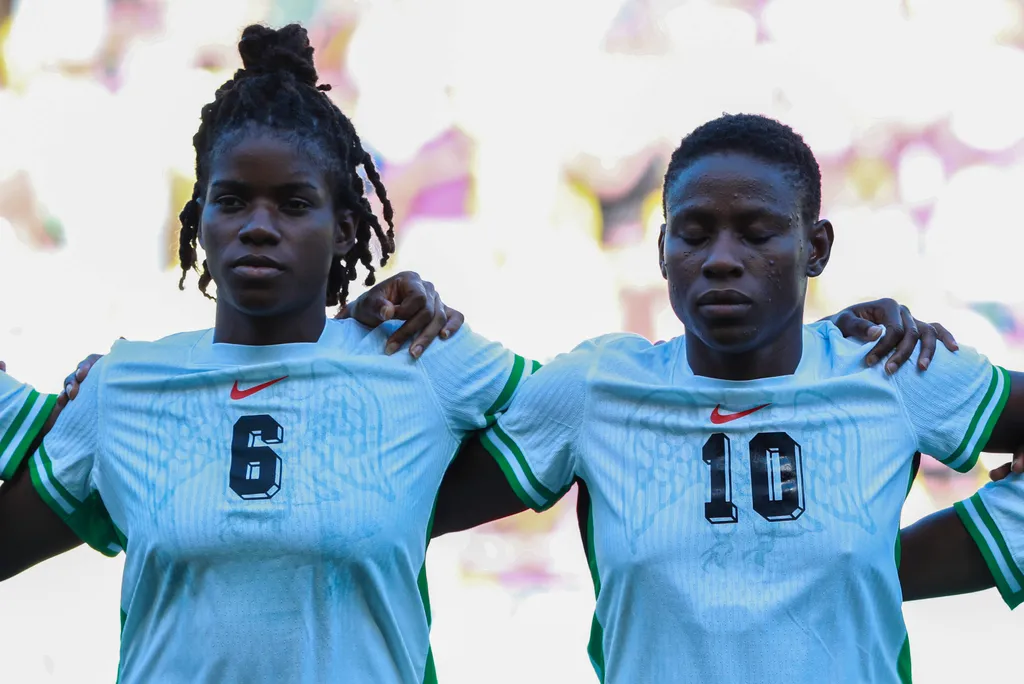
The Super Falcons will not participate in the 2027 FIFA Women’s World Cup after failing to qualify following their 2-1 defeat to South Africa on Thursday, Soccernet.ng reports.
Both teams entered the game knowing that a victory would secure a place in the intercontinental playoffs, but it was Banyana Banyana who claimed the ticket at the expense of the Super Falcons.
Nigeria had already suffered disappointment at the 2026 WAFCON after losing 1-0 to Cameroon in the quarterfinals. Thursday’s defeat has now created another painful moment for the team, as Nigeria will miss the Women’s World Cup for the first time since the inaugural edition in 1991.
/https%3A%2F%2Fmedia.soccernet.ng%2Fmain%2F2026%2F08%2Fimago10804753311.jpg)
A victory against South Africa would have seen the Super Falcons join Ghana, who defeated Ivory Coast, in the intercontinental playoff. However, another missed opportunity means Nigeria will have to watch the World Cup from home.
Super Falcons’ failure compounds Nigeria’s woes
Nigeria would have hoped that the Super Falcons could secure a place at the World Cup and ease some of the recent disappointment surrounding the country’s national teams.
The Super Eagles have already failed to qualify for two consecutive FIFA World Cup tournaments. Nigeria missed the 2022 edition and also failed to make the 2026 tournament, which ended last month after the team lost to DR Congo in the CAF playoff final.
The situation has also been worrying at the youth level. The Golden Eaglets failed to qualify for the 2023, 2025 and 2026 editions of the U-17 Africa Cup of Nations. Those failures also meant Nigeria missed out on the U-17 World Cup tournaments.
/https%3A%2F%2Fmedia.soccernet.ng%2Fmain%2F2026%2F06%2Fimago1070834329.jpg)
Nigeria has traditionally been one of the strongest teams at the U-17 level. The Golden Eaglets have won the FIFA U-17 World Cup a record five times, more than any other country, with Brazil next on four titles.
However, the team has struggled to maintain that dominance in recent years and has missed several editions of the competition. The poor run has already led to changes, with Eboboritse Uwejamomere recently appointed to help oversee a new era for the Golden Eaglets and transform the team.
The U-23 team has also suffered its own setback, failing to qualify for the 2023 Africa U-23 Cup of Nations and, as a result, missing out on the opportunity to qualify for the 2024 Olympics.
Nigeria also failed to qualify for the 2024 Beach Soccer AFCON (Men) and the 2027 U-20 Africa Cup of Nations, as well as the 2027 U-20 FIFA World Cup tournament.
The failures across different levels have led to changes in personnel, but the latest setback involving the Super Falcons could further increase calls for a revamp of Nigerian football.
/https%3A%2F%2Fmedia.soccernet.ng%2Fmain%2F2025%2F10%2Fimago1063359415-1.jpg)
For a country with Nigeria’s status and history in African football, the recent qualification failures are becoming increasingly difficult to ignore.
The setback will also put more pressure on NFF president Ibrahim Gusau, with the federation’s general elections scheduled to take place next month.
