






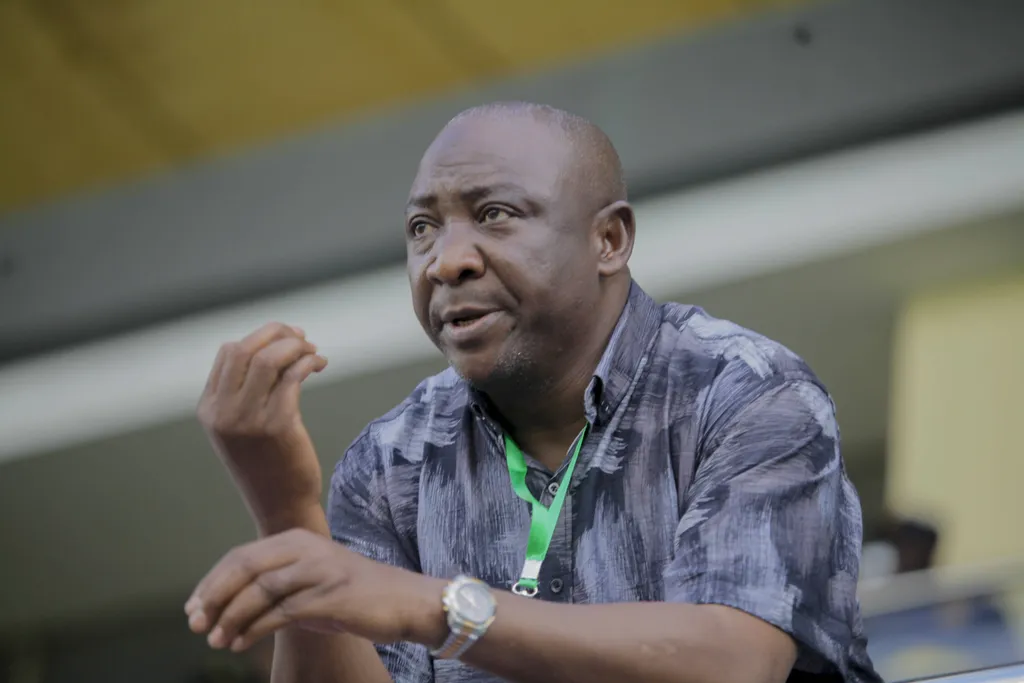
Ibrahim Gusau has resigned as president of the Nigeria Football Federation (NFF) president after several failures, including that of the Super Eagles and Super Falcons, Soccernet.ng reports.
Gusau’s exit followed a similar pattern as NFF presidencies in recent times. The board stepped down after direct pressure from Aso Rock and not through a boardroom vote. It followed weeks of public fury, and a run of results on the pitch that was unacceptable to Nigerians.
Gusau and General Secretary Mohammed Sanusi confirmed their resignations on Thursday, just under a month before the next general elections which was due to hold in Lafia in September.
However, their resignations had been coming, after the Super Eagles failure to qualify for the 2026 World Cup, and the Super Falcons’ failure for the Women’s World Cup as well.

/https%3A%2F%2Fmedia.soccernet.ng%2Fmain%2F2026%2F06%2Fimago1078390702-1.jpg)
Super Eagles: three coaches, one playoff and penalties in Rabat
The Super Eagles endured a poor start and picked up just three points from their opening four matches in CAF Group C, before Eric Chelle was even appointed as head coach in January 2025.
Chelle led a turnaround and Nigeria won four of their remaining six qualifiers, drawing only at home to Zimbabwe and away to South Africa. However, it was only enough finish second in the group, one point behind Bafana Bafana – who were group winners and settle for the playoff route.
Nigeria defeated Gabon 4-1 in the playoff semi-final in Rabat, Morocco, to set up a final against DR Congo. The match finished 1-1 after extra time, and the Leopards went on to win on penalties to book their place in the 48-team tournament instead of Nigeria.
It was Nigeria’s second straight World Cup absence, after they also missed out on the 2022 edition and it came despite a record ten African nations qualifying for the newly expanded finals, marking another failure in the country’s football.

/https%3A%2F%2Fmedia.soccernet.ng%2Fmain%2F2026%2F06%2Fimago1078198159.jpg)
The NFF’s explanation for the failure added to the anger from Nigerians rather than easing initial worries. Sanusi later admitted that using three different managers across the qualifying campaign had cost Nigeria the ticket and he argued that Chelle’s late-campaign form, sustained from the start, would likely have been enough to qualify with games to spare.
The federation also lost out on a guaranteed $12.5 million in FIFA preparation funding, which marked another financial blow for the NfF.
Super Falcons: a first-ever World Cup miss
While the Super Eagles’ exit was painful, the Super Falcons’ failure was historic and arguably more damaging to Gusau’s standing. Nigeria’s women had appeared at every Women’s World Cup since the tournament began in 1991, although that run ended this month.
They entered the 2026 WAFCON as defending champions and Africa’s most successful women’s teams. However, they lost their opening group match 3-2 to debutants Malawi, before they bounced back with wins over Zambia and Egypt.
They were eventually were eliminated in the quarter-finals by Cameroon, marking the first time in the competition’s history that Nigeria had failed to qualify for the last four and also cost them automatic World Cup qualification.

/https%3A%2F%2Fmedia.soccernet.ng%2Fmain%2F2026%2F08%2Fimago1048539627.jpg)
A second chance followed in a play-in match against South Africa’s Banyana Banyana in Casablanca. Nigeria lost again, 2-1, undone by a Thembi Kgatlana strike and a late Refiloe Jane goal, with Christie Ucheibe’s stoppage-time penalty proving only a consolation.
It was Nigeria’s third defeat to South Africa in six meetings, and it eliminated the Super Falcons from the 2027 World Cup in Brazil.
The fallout was swift. The NFF ordered head coach Justin Madugu and his entire technical crew to step down, and separately convened a six-member fact-finding committee, headed by Ambassador Fanny Amun, to investigate both the WAFCON exit and the World Cup miss.
Former Super Falcons forward Desire Oparanozie who was also among the committee, called publicly for a complete overhaul of the team’s structure.
Two failures, one reckoning
For the first time in Nigerian football history, both the men’s and women’s senior national teams will miss their respective World Cups in the same cycle.
The Federal Government issued a 24-hour ultimatum for the NFF board to resign and it was also reported that Gusau’s board was summoned the Presidential Villa before the resignations were confirmed.

/https%3A%2F%2Fmedia.soccernet.ng%2Fmain%2F2025%2F10%2Fimago1066232409.jpg)
Gusau had appealed directly to FIFA to intervene and block the government’s move, warning of the sanctions risk that comes with third-party interference in national federations. However, it didn’t save his position.
Nigerian football now heads into next month’s elections in search of a new leadership group and with two national teams in need of a major rebuild.


