

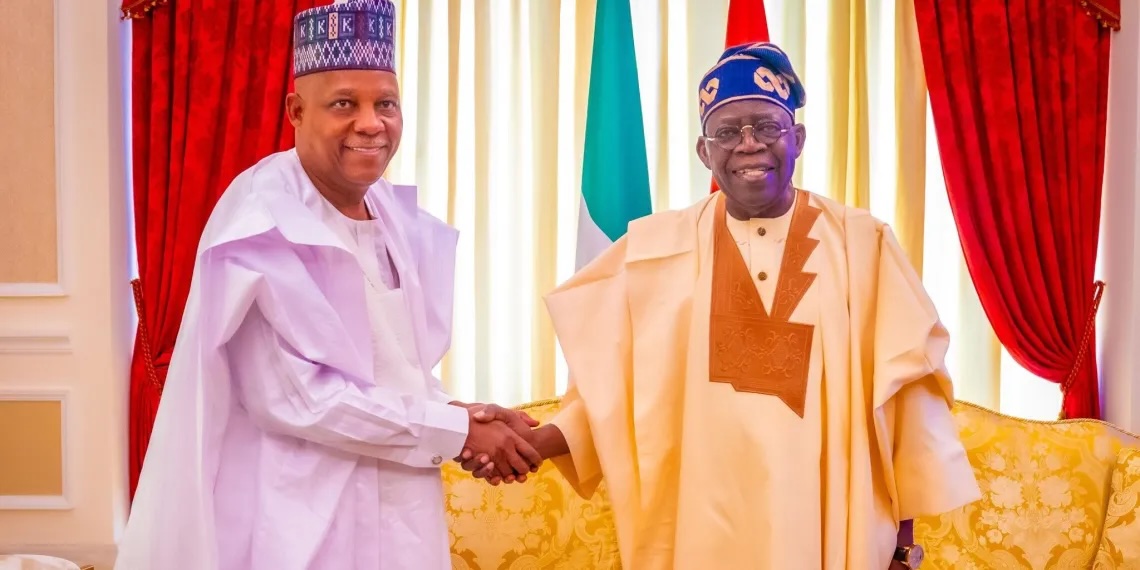
The growing number of northern politicians positioning for vice-presidential consideration ahead of the 2027 general election is reinforcing a powerful undercurrent in Nigeria’s evolving power calculus: that the presidency may remain in the South, LEO SOBECHI reports.
Across party lines, elite consultations, strategic defections, and subtle endorsements point to a contest in which southern presidential contenders dominate, while northern heavyweights jostle for the second-highest office as a stepping stone to 2031.
The trend, political observers note, reflects a convergence of zoning sentiment, electoral arithmetic and elite pragmatism. While zoning is not constitutionally binding, it has become an enduring stabilising principle in Nigeria’s fragile democracy, particularly after eight years of northern presidency under Muhammadu Buhari.
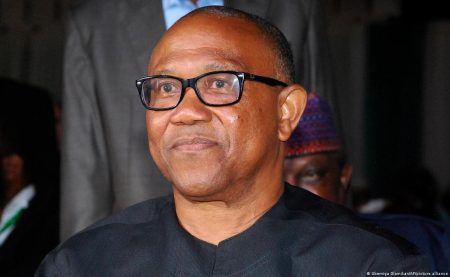
At the forefront of the unfolding permutations is incumbent President Bola Ahmed Tinubu of the ruling All Progressives Congress (APC), widely expected to seek a second term. Beyond Tinubu, other prominent southern figures linked to a 2027 presidential run include former Anambra State governor and 2023 Labour Party (LP) candidate, Mr Peter Obi; Social Democratic Party (SDP) standard bearer in 2023, Adewole Adebayo; and former Minister of Transportation, Rotimi Amaechi.
Adebayo has already declared his intention to contest again, though uncertainty surrounds his likely choice of running mate after his 2023 deputy, Yusuf Buhari, defected to the APC in March 2025. While Adebayo insists that politics is dynamic, SDP insiders concede that the party’s earlier Kano equation may require recalibration.
Obi’s move from the LP to the opposition coalition platform of the African Democratic Congress (ADC) has significantly altered the opposition landscape. On the ADC platform, he is expected to contest for the presidential ticket alongside former Vice President Atiku Abubakar and Amaechi. Although Obi had previously cast doubt on joining any platform that might undermine the North–South rotation principle, those doubts were laid to rest on December 31, 2025, when he formally joined the coalition.
ADC’s open-door posture and unspoken signals
Officially, the ADC has resisted calls to adopt zoning as a guiding principle. The party’s National Publicity Secretary, Bolaji Abdullahi, has repeatedly stressed that its flagbearer will emerge through a transparent and inclusive process.
“Only the presidential convention will determine who becomes the party’s candidate. There is no preferred aspirant, and no aspirant will enjoy preferential treatment,” Abdullahi stated.
Yet, within the coalition, the arithmetic appears to favour a southern presidential candidate. The clearest signal lies in the swelling list of northern politicians discreetly or openly angling for vice-presidential slots. For many of them, the vice presidency offers not merely proximity to power but strategic relevance, national visibility, and a head start toward the 2031 race.
History supports this logic. Both Atiku Abubakar and Peter Obi were vice-presidential candidates before emerging as major presidential contenders. The pattern has turned the VP slot into a coveted political investment.
Old alliances, revived speculations
Speculation about a possible Atiku–Obi reunion, reminiscent of their 2019 PDP ticket, has added further intrigue. While the idea excites some opposition strategists, many doubt that Obi would accept a return to the deputy role after his strong showing in the 2023 election.
Obi himself has consistently argued that stepping down would amount to a regression, especially after galvanising a nationwide youth movement and posting one of the most disruptive electoral performances in Nigeria’s recent history.
His defection to the ADC, followed by his declaration of interest, immediately triggered intense manoeuvring around potential running mates, elevating the vice-presidential question to a decisive variable.
Political insiders argue that, given the closeness of recent elections, the choice of running mate by leading contenders in both the APC and ADC could decisively shape regional alignments and voter enthusiasm.
APC calculations and the Shettima factor
Within the APC, President Tinubu’s position as the party’s presumptive flagbearer appears secure. However, the prospect of a formidable southern challenger emerging from the ADC has reopened internal discussions about the Tinubu–Shettima ticket, particularly the sustainability of the Muslim–Muslim formula.
Although there has been no official indication of a change, several names are being quietly floated as possible alternatives should recalibration become politically expedient. They include Rabiu Musa Kwankwaso, Deputy Senate President Barau Jibrin, former Speaker Yakubu Dogara and Yobe State Governor Mai Mala Buni.
Rabiu Musa Kwankwaso
The former Kano State governor and 2023 NNPP presidential candidate remains one of the most polarising figures in Nigerian politics. While some APC insiders argue that Kwankwaso’s return would inject volatility into governance and alienate parts of the North-East, others insist that his mass following in Kano and the wider North-West could significantly boost Tinubu’s re-election prospects.
Supporters of a Tinubu–Kwankwaso pairing argue that electoral pragmatism, rather than religious balancing, should guide the party’s decision. Critics counter that replacing Vice President Kashim Shettima could provoke backlash in his home region.
Senator Barau Jibrin
Deputy Senate President Barau Jibrin is being marketed by allies as a quieter but more dependable option. With deep political roots in Kano Central and no overt presidential ambition, Jibrin is portrayed as a loyal lieutenant capable of consolidating Tinubu’s reform agenda.
Supporters claim he could match Kwankwaso’s electoral value in Kano, particularly if Governor Abba Yusuf eventually aligns with the APC.
Yakubu Dogara
A former Speaker of the House of Representatives, Dogara, brings legislative experience, youthfulness and a Christian identity that could rebalance the ticket. A known Tinubu loyalist, Dogara, opposed the Muslim–Muslim ticket in 2022 and briefly defected to the PDP before returning to the APC after the election.
Sceptics argue, however, that Dogara’s influence is largely confined to parts of Bauchi State and the northern Christian bloc.
Mai Mala Buni
Yobe State Governor Mai Mala Buni’s appointment as head of the APC Reconciliation Committee has fuelled speculation about his future role. Party insiders describe the assignment as a confidence-building move, citing Buni’s role in stabilising the APC during its caretaker phase and his loyalty during the Buhari years.
Northern VP hopefuls in the ADC coalition
Within the ADC, the assumption that the presidency will remain in the South has emboldened several northern leaders to seek vice-presidential relevance. Among them are Aminu Waziri Tambuwal, Kwankwaso, Nasir Ahmad el-Rufai, Ibrahim Shekarau and Senator Datti Baba-Ahmed.
Aminu Waziri Tambuwal
Former Sokoto State governor Aminu Tambuwal enjoys broad elite endorsement, drawing support from figures such as former President Olusegun Obasanjo, retired General Ibrahim Babangida, the Sultan of Sokoto and Atiku Abubakar.
Sources within the coalition say that Atiku had, early in the talks, hinted that Tambuwal would retain his support if the presidential ticket shifted to the south. Tambuwal’s decision to step down during the 2022 PDP primaries to boost Atiku’s chances is widely viewed as a strategic sacrifice that reinforced northern consensus and blocked the emergence of Nyesom Wike.
At 60, Tambuwal combines relative youth, national visibility and cross-party appeal, strengthening his credentials as a potential running mate.
Kwankwaso’s enduring bargaining power
Despite perceptions of being a one-state political force, Kwankwaso’s ability to deliver Kano and mobilise a fiercely loyal youth movement keeps him central to calculations across party lines. His disclosure that negotiations with the APC collapsed due to unmet conditions has only enhanced his leverage within the ADC.
Political sources suggest that former President Obasanjo is quietly encouraging Kwankwaso’s alignment with a southern candidate, particularly Obi, as part of a broader effort to reinforce zoning discipline.
Nasir Ahmad el-Rufai
Former Kaduna State governor Nasir el-Rufai commands national recognition, having played a key role in ensuring that the APC presidential ticket shifted southward in 2023. Since leaving the APC in 2025, he has emerged as a vocal advocate of opposition unity.
However, el-Rufai’s open ambition for the 2031 presidency and concerns about post-election power dynamics have dampened enthusiasm for his vice-presidential prospects. Resistance from sections of Southern Kaduna and the Middle Belt further complicates his chances.
Ibrahim Shekarau
Former Kano State governor and senator Ibrahim Shekarau remains respected for his intellectual depth and governance record. Although his name features in vice-presidential discussions, coalition insiders say he harbours reservations about the feasibility and cohesion of the opposition alliance.
Datti Baba-Ahmed
The 2023 LP vice-presidential candidate stirred controversy by remaining with the Julius Abure faction of the LP rather than joining the ADC coalition. Baba-Ahmed has expressed scepticism about the coalition’s willingness to back Obi but positioned himself as a potential stabiliser within the LP crisis.
While he has ruled out deputising Obi again on the ADC platform, his willingness to step aside on the LP ticket underscores his continued relevance as a political power broker.
Vice-presidency as a bridge to 2031
Ultimately, the surge in northern vice-presidential ambition reflects a shared strategic reading of Nigeria’s political moment. With zoning sentiment favouring the South in 2027, many northern politicians see the vice-presidency not as an endpoint but as a launchpad — a means of staying politically relevant while positioning for the next cycle.
As one insider succinctly put it, “The sheer number of northern politicians angling for running-mate roles is itself a signal. The office offers visibility, clout and continuity. For many, it is the clearest route to the presidency in 2031.”
As conventions approach and alliances crystallise, the battle for the vice presidency may prove just as revealing and decisive as the contest for the presidency itself.