



To ensure that no child is left behind in accessing life-saving vaccines in Lagos State, stakeholders in the health sector have urged policymakers to increase domestic funding for routine immunisation as donor support continues to decline.
The advocates stressed that mobilising domestic resources to strengthen immunisation amid the global health funding crisis is critical, noting that vaccination remains one of the most effective and reliable ways to protect children from life-threatening diseases and ensure healthy growth and development.
They made the call at an advocacy meeting in Ikeja organised by Save the Children International under the GSK-supported Better Opportunities for Optimised Targeted Intervention project for zero-dose and unimmunised children in Nigeria.
The meeting aimed to reduce the number of zero-dose and under-immunised children in the state by engaging policymakers and the private sector to strengthen routine immunisation through increased domestic funding.
The stakeholders urged policymakers to prioritise ending zero-dose cases in the state and prevent avoidable deaths from vaccine-preventable diseases.
Participants included members of the Lagos State Accountability Mechanism and the Public Health Sustainable Advocacy Initiative, as well as officials of Save the Children International and the media.
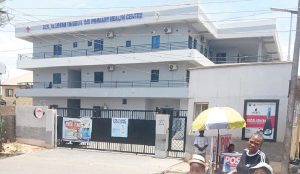
The participants resolved to unite in tackling zero-dose and under-immunised children by advocating increased budgetary allocations for child immunisation and addressing barriers to vaccine uptake, particularly in Alimosho and Ikorodu Local Government Areas, which have the highest number of zero-dose and under-immunised children in the state.
According to the United Nations Children’s Fund, vaccines are among the greatest advances in global health, having significantly reduced diseases such as polio and measles, eradicated smallpox, and improved child survival.
In her presentation, the Policy and Advocacy Coordinator for the BOOST Project, Dr Itunu Dave-Agboola, identified inadequate funding and a shortage of skilled manpower in hard-to-reach areas as major barriers to full immunisation coverage in the state.
She explained that the meeting was designed to orient advocates on the use of advocacy briefs developed under the BOOST Project.
The project targets children under five, particularly those who have never received any vaccines, known as zero-dose children, as well as those who are under-immunised.
According to SCI, Alimosho and Ikorodu LGAs have the highest number of zero-dose and under-immunised children in the state.
Zero-dose children, according to Gavi, are those who have not received the first dose of the diphtheria, tetanus and pertussis-containing vaccine by their first birthday, while under-immunised children have not received the third dose.
Dave-Agboola said the BOOST Project aims to create better opportunities to reach zero-dose and under-immunised children.
“Advocacy briefs outline progress made in routine immunisation, current challenges, and the way forward, particularly in mobilising domestic resources to improve immunisation coverage in Lagos State.
“It is important for advocates to understand the BOOST Project. It is all about improving routine immunisation and reducing the number of zero-dose and under-immunised children in our society.
“They also need to know how to effectively engage policymakers and stakeholders with the advocacy briefs, as well as follow up on commitments to ensure adequate resource mobilisation,” she said.
Dave-Agboola emphasised the urgent need to improve domestic funding for routine immunisation to end zero-dose cases.
“With declining donor support, we must develop sustainable local funding mechanisms to ensure continuity of immunisation programmes.
“Beyond funding, we also need adequate human resources, logistics, functional cold chain systems, and improved access to healthcare facilities, especially in hard-to-reach areas,” she added.
Dave-Agboola also urged the private sector to incorporate routine immunisation funding into its corporate social responsibility initiatives.
“We expect a coordinated effort from both the public and private sectors to improve service delivery and caregiver awareness, as prevention remains better than cure, especially with the prevalence of childhood killer diseases,” she said.
At the end of the four-hour meeting, stakeholders outlined strategies for engaging government officials, legislators and the private sector to secure commitments for increased immunisation funding using advocacy briefs.
Child health experts warned that the rising number of unvaccinated children, particularly in densely populated areas like Alimosho, poses a serious threat to both families and communities.
They noted that zero-dose and partially vaccinated children are more vulnerable to highly contagious diseases such as measles, whooping cough, polio and diphtheria, which can lead to severe complications or death if not prevented through timely immunisation.
According to the 2022 World Universal Immunisation Coverage Report, Nigeria has about 2.3 million zero-dose children—representing 26.5 per cent of children under one—ranking second globally in 2021.
The report also identified Alimosho as the local government area with the highest number of unvaccinated children in Nigeria, with over 35,000 cases.
Routine immunisation remains one of the most effective strategies for protecting children against vaccine-preventable diseases such as measles, polio, diphtheria, tetanus, hepatitis B and tuberculosis.