




Gabriel Oshokha
A representative of the World Health Organisation, Dr Philip Sorto, has called on the government and other stakeholders to collaborate on policies that promote the rational use of antibiotics, as well as raise awareness to reduce the prevalence of antimicrobial resistance.
Sorto disclosed that antimicrobial resistance has claimed about 4.1 million lives, aside from the vast sums expended on the public health issue, which he said deserves urgent attention.
He described antimicrobial resistance as an escalating global crisis with profound implications for sustainable development, food security, health equity, and economic stability.
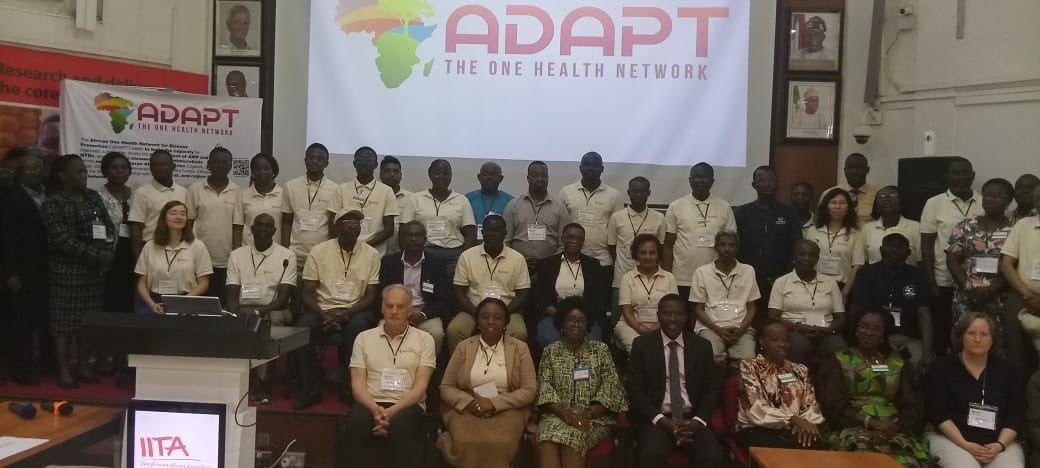
Sorto, who was represented by a WHO official, Dr Ajayi Paul, at the annual ADAPT Network stakeholders’ meeting held at the Conference Hall, International Institute of Tropical Agriculture, Ibadan, made the submission while presenting his paper titled, “Antimicrobial Resistance, Surveillance and Stewardship in Sub-Saharan Africa Using a One Health Approach.”
“We discussed antimicrobial resistance, which is an escalating global crisis with profound implications for sustainable development, food security, health equity, and economic stability.
“Several million people have died as a result of antimicrobial resistance, with about 4.1 million deaths recorded, while huge financial losses are also incurred. In Nigeria, since 1990, about 60,000 lives have been lost each year due to antimicrobial resistance,” Dr Sorto said.
He therefore called on governments, partners, and corporate organisations to collaborate on policies that would ensure the rational use of antibiotics, while creating awareness to stem the tide of antimicrobial resistance.
Speaking with The PUNCH on contributory factors, the Principal Investigator of ADAPT Nigeria, Prof George Ademowo, said that although antimicrobial resistance is a global problem, it is more severe in sub-Saharan Africa, with Nigeria bearing a significant burden.
“Antimicrobial resistance is a global problem; however, it is more intense in sub-Saharan Africa, and Nigeria bears a significant share of that burden. It is a major public health problem that has caused many deaths, putting both adults and children at risk.
“But because we see it as a global problem requiring local solutions, that is where ADAPT comes in,” Ademowo said.
He added, “The ADAPT consortium is working to ensure proper antimicrobial stewardship, which involves the appropriate use of antibiotics — using the right drug at the right dose. We are also engaging policymakers to utilise research findings so they do not just end up in publications without impact.”
Ademowo further explained that ADAPT is a consortium of scientists from seven African countries and Germany, working together to combat antimicrobial resistance through surveillance and stewardship programmes.
Also speaking, Prof Iruka Okeke of the Department of Pharmaceutical Microbiology, University of Ibadan, emphasised the need to use data on antibiotic resistance to improve patient care and public health outcomes.
“We must ensure that information on antibiotic resistance is used effectively to improve patient care. It is not enough to collect data; we must be quick, agile, and accurate in applying it to save lives,” she said.
She also stressed the need to strengthen infection prevention and control in hospitals, noting that many infections are transmitted within healthcare settings.
Highlighting environmental factors, Prof Greetje Ana of the Department of Environmental Sciences, University of Ibadan, underscored the importance of proper hygiene and sanitation, especially in public places.
“We must prioritise hygiene and sanitation in public spaces. We should not wait for outbreaks before practising proper hand hygiene.
“Poor waste management is also a concern. Untreated wastewater from abattoirs, hospitals, and other sources often contaminates water bodies. There is inadequate water surveillance and a lack of infrastructure to monitor water quality and emerging microbial threats,” she said.
Another panellist, Prof Adeyemi Kehinde of the Department of Medical Microbiology, University of Ibadan, emphasised the need to strengthen diagnostics and laboratory capacity for accurate disease diagnosis.
He expressed concern over the misuse of antibiotics without laboratory confirmation.
“Many people take antibiotics without a proper diagnosis. Correct usage involves appropriate dosage, route of administration, and completing the prescribed course. Failure to do so allows some bacteria to survive, develop resistance, and proliferate,” he said.
Other panellists included Prof Victoria Adetunji of the Department of Veterinary Medicine, University of Ibadan, and Dr Olusola Ayoola of the Federal Ministry of Health.
Stakeholders from seven African countries, Germany, and representatives of federal and state ministries of health, as well as WHO, attended the meeting.
Copyright PUNCH
All rights reserved. This material, and other digital content on this website, may not be reproduced, published, broadcast, rewritten or redistributed in whole or in part without prior express written permission from PUNCH.
Contact: [email protected]