







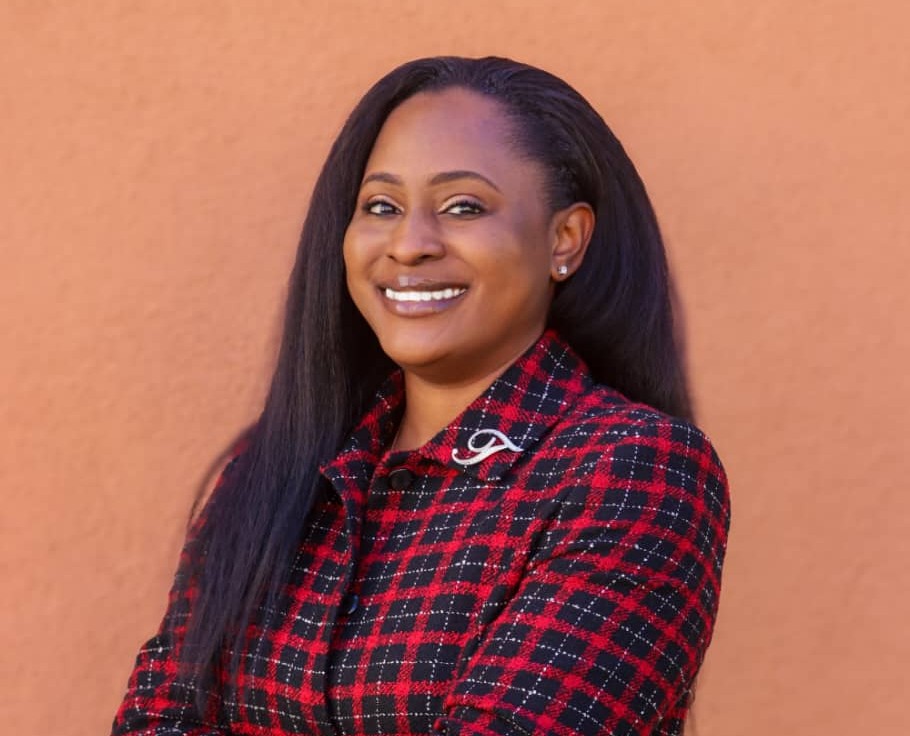
Peremoboere Uzoigwe, a Nigerian-born neuroscientist based in the United States, highlights her pioneering research on the links between sleep, the menstrual cycle, and mood regulation, as well as her contributions to the broader effort to close persistent gender data gaps in science and advance women’s health and cognitive performance in this interview with ANGELA ONWUZOO
How do sleep and the menstrual cycle affect women’s mood?
From my research, one of the most important insights is that sleep, mood, and the menstrual cycle are interconnected, yet they have often been studied separately. In fact, the brain is responding simultaneously to sleep processes and to hormonal changes across the menstrual cycle. This interaction between sleep and hormones can shape how women feel.
In my work, following healthy young women across multiple phases of the menstrual cycle, I found that the association between sleep and mood appears to be phase-specific. For example, certain aspects of sleep, like Rapid Eye Movement (REM) sleep, may be more strongly associated with mood changes during the menses phase of the menstrual cycle. Such that, during menses, when hormone levels are low, more REM sleep is needed to help stabilize a positive mood. This suggests that the brain’s emotional regulation systems are interacting with hormonal fluctuations in ways we are only beginning to understand.
Another important takeaway is that during the luteal and menses phase of the menstrual cycle, women experience mood changes that are often dismissed as simply “hormonal.” My findings show that the quantity and quality of sleep they are getting may be an important part of that story. When sleep is disrupted, the brain becomes less efficient at regulating emotions. If that occurs during phases of the cycle when hormones are already influencing brain circuits involved in mood and cognition, the effects can be amplified.
Since most sleep studies have centered on men, what specific gaps is your research filling for women?
For decades, much of neuroscience and sleep research has relied heavily on male participants. One reason was the assumption that hormonal fluctuations across the menstrual cycle would make data “too variable.” As a result, many foundational findings in sleep science were developed without a full understanding of how female biology might shape those same processes.
My research helps address this gap by studying sleep in the context of the menstrual cycle rather than ignoring it. Instead of treating the menstrual cycle as a complication, we treat it as a key biological variable that can reveal new insights about brain function in women.
By tracking women across different menstrual phases and examining sleep architecture, mood, and cognitive performance together, we can begin to see patterns that would otherwise remain hidden. Filling this gap is important for the accuracy of the scientific method, and also for women’s health. Many women report sleep disturbances, mood changes, or cognitive shifts across their cycle, yet historically these experiences have been understudied. By bringing rigorous sleep science into this space, my work contributes to a more comprehensive understanding of brain health and moves us closer to personalized medicine that truly reflects both male and female physiology.
How did your upbringing in Nigeria influence your curiosity about sleep, hormones, and brain health?
I have always been curious, even before I ever stepped into a laboratory. I grew up in Warri, Delta State, Nigeria, in a family that valued education despite limited opportunities. My parents encouraged me to ask questions and do well in school, especially in science subjects like Biology and Chemistry.
A personal experience also influenced my path. My younger brother was born with cerebral palsy, and watching him navigate his health challenges made me curious about how the brain works and why neurological conditions affect people differently. Even as a child, I noticed that when he slept well, he seemed to function better both mentally and physically. That observation stayed with me and later inspired my interest in studying sleep and brain function.
When I enrolled at Igbinedion University to study Human Anatomy, many of the questions I had carried for years finally began to take scientific shape. During my undergraduate studies, I investigated how environmental toxins such as lead affect brain structures in animal models. That work gave me my first real glimpse into how complex and vulnerable the brain can be.
A key influence during that time was my mentor, Professor Uche Osimen-Eboziegbe, whose research explores how environmental and pharmacological factors affect reproductive systems. Working with her, I studied how substances – from plant extracts to neuroactive compounds – can alter brain structure and reproductive tissues in experimental models. This experience shaped the core question that still guides my work today: how biological states influence the brain.
Now, working with Professor Sara Mednick at the University of California, Irvine, I explore these ideas from a different angle. My research focuses on how sleep physiology and hormonal changes across the menstrual cycle affect mood, memory, and cognitive performance in women. In many ways, the curiosity that started during my training in Nigeria has evolved into a broader effort to understand how sleep and hormones shape women’s brain health – areas that science has often overlooked.
What are the key takeaways from your research for women’s mental health?
One major takeaway from my research is that women’s mental health and cognitive performance cannot be fully understood without considering the interaction between sleep and hormonal rhythms. My findings suggest that sleep does not influence mood in the same way across the menstrual cycle; its effects can vary depending on the hormonal environment of a given phase.
This means that sleep may play a particularly important role in buffering emotional well-being at certain points in the cycle. In practical terms, improving sleep quality and duration, especially during menses, could be an often overlooked factor in supporting women’s emotional regulation, cognitive performance, and overall mental health. It also highlights the need for medical research and health recommendations that take women’s biological rhythms seriously, rather than treating them as variability to be ignored.
How has being a Nigerian and Black woman shaped your research interests?
My identity has shaped the questions I ask and the perspective I bring to science. Growing up in Nigeria and later training abroad has made me very aware of how many voices and experiences are missing from scientific research. As a Black woman and immigrant in neuroscience, I am motivated to study areas such as women’s brain health and hormonal rhythms that have historically been underrepresented in research. My background reminds me that science should reflect the diversity of the people it aims to serve.
How do your mentoring and outreach efforts support an inclusive global neuroscience community?
At the Center for the Neurobiology of Learning and Memory (CNLM) at UC Irvine, I have mentored students through programs such as the Summer Neuroscience Institute. I mentored Morgan Chambers, a senior at Spelman College in Atlanta, as she navigated her research project and explored career paths in neuroscience. I also mentor undergraduate students through the Undergraduate Research Opportunities Program (UROP). What I do is to help them develop research ideas and gain hands-on lab experience.
Seeing students grow through these opportunities is truly rewarding. Two of the female students I mentored under the 2025 Research Discovery Program (RDP) are now research assistants in our Sleep and Cognition lab. This shows how mentorship can directly open doors into scientific research. Coming from Nigeria and finding my path into global research spaces myself, I understand how transformative access and mentorship can be. That is why my goal is to help create pathways so that talented students, especially women and students from underrepresented backgrounds, can see themselves as future neuroscientists and contribute to the field.
What is your boldest vision for advancing women’s brain and sleep health in the next decade?
I want the “Menstrual Cycle” to become a standard part of how we study brain health and design medical care. For a long time, women have often been excluded from research because hormonal changes were surprisingly considered “too complex.” In the next decade, I hope we move in the opposite direction and fully integrate those rhythms into neuroscience. Scientifically, this means building large, well-powered studies that track sleep, hormones, mood, and cognition together across the menstrual cycle and across different stages of women’s lives across cultures. This will help us better understand why women experience certain sleep disturbances, mood changes, or cognitive shifts and how we can support better mental health and cognitive performance.
My vision is that this line of research leads to more personalized approaches to brain health for women, where sleep recommendations, mental health care, and even work and wellness practices recognize and respect women’s biological rhythms rather than ignoring or generalizing them.
What key actions should African and US institutions take to make that vision a reality?
Institutions need to invest more in research that specifically includes women. This means funding long-term studies, building sleep research infrastructure, and supporting interdisciplinary work that connects neuroscience, endocrinology, and mental health.
Another suggestion would be that universities and research institutes should create stronger training pathways for young scientists, especially women and students from underrepresented backgrounds. Programs that support mentorship, international collaborations, and research exchanges between African and U.S. institutions can help develop the next generation of neuroscientists working on these questions.
I would also encourage institutions to prioritize translating research findings into healthcare practice and public awareness. When scientific discoveries about sleep, hormones, and brain health reach doctors, workplaces, and communities, they can begin to improve how women’s health is understood and supported globally.
What is your advice for young women and girls pursuing science in spaces where they are still underrepresented?
Stay curious and persistent. Science can sometimes feel intimidating, especially in spaces where you may not see many people who look like you. But curiosity is one of the leading qualities a scientist can have. The questions you ask and the perspective you bring are valuable.
I will also encourage young women to seek mentors and supportive communities. Having people who guide you, encourage you, root for you, and open doors can make a huge difference in navigating a scientific career.
Finally, remember that the challenges you face today can become the strength you need for the long haul. Many of the most important discoveries come from people who were willing to ask new questions and challenge old assumptions. The world needs more women in science, and your voice and ideas truly matter.
Copyright PUNCH
All rights reserved. This material, and other digital content on this website, may not be reproduced, published, broadcast, rewritten, or redistributed in whole or in part without prior express written permission from PUNCH.


