

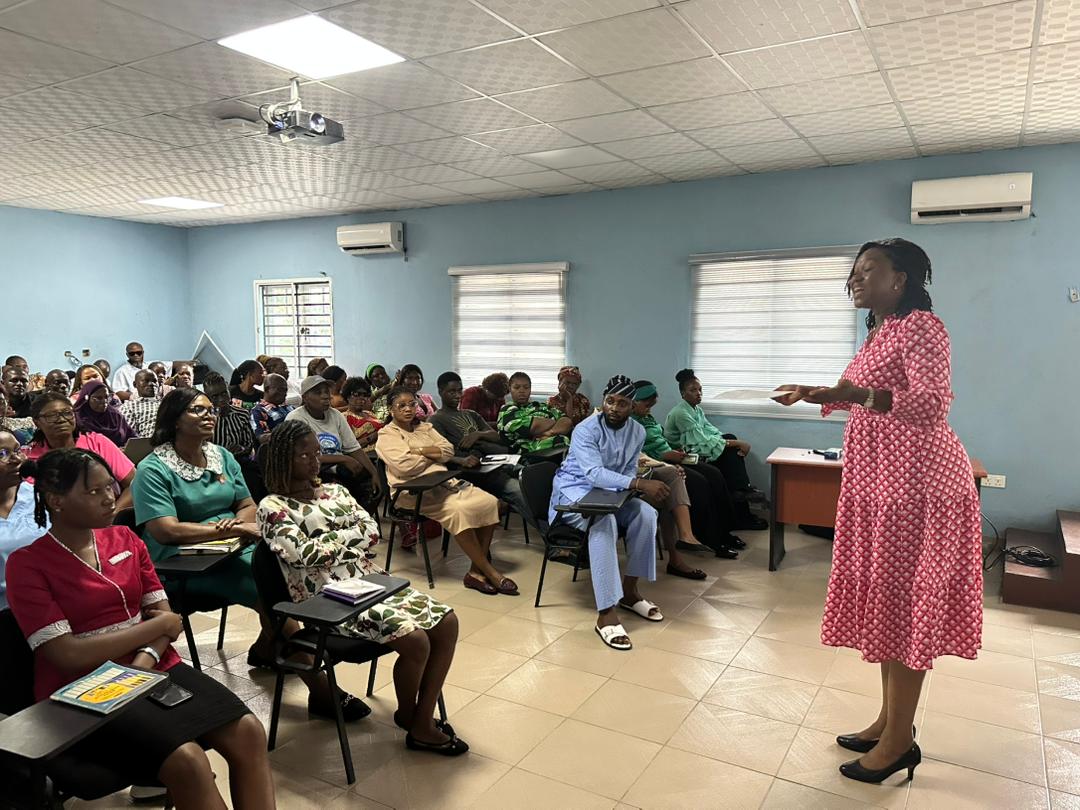
A researcher at the Lagos University Teaching Hospital, Dr Anire Chima-Oduko, has called for urgent improvements in reproductive health services for women living with HIV, warning that gaps in access, quality of care and contraceptive uptake are fuelling unintended pregnancies.
Chima-Oduko made the call in Lagos on Wednesday while presenting findings from a study on pregnancy intentions and contraceptive needs among women living with HIV.
According to her, current service limitations are contributing to the high rate of unintended pregnancies among women.
She said, “There is a need to strengthen reproductive health services for women living with HIV. Addressing gaps in access, quality and provider communication is critical to improving outcomes.”
The researcher said the study, co-conducted with Prof Mobolanle Balogun, found that awareness of contraception among respondents was high, with 97 per cent having heard of it and 94.6 per cent correctly identifying it as a method of preventing pregnancy.
She noted, however, that despite the high level of awareness, actual utilisation remained low.
The study, funded by an Early Career grant from the Royal Society of Tropical Medicine and Hygiene, found that while 63.3 per cent of respondents had used contraceptives at some point, only 26.8 per cent were current users.
“This gap highlights unmet contraceptive needs despite widespread awareness,” she said.
Chima-Oduko identified major factors influencing contraceptive use to include the number of children a woman has, her partner’s HIV status and access to family planning services.
She said, “Women who knew their partner’s HIV status and those with more children were significantly more likely to use contraception. Access to services and discussions with healthcare providers also play a major role.”
The researcher stressed that poor provider-client communication remained a major gap in service delivery.
According to her, women who did not receive adequate counselling were less likely to use contraceptives, reflecting missed opportunities during routine clinic visits.
She added that the findings revealed diverse fertility intentions among women living with HIV, with many still desiring children, while others preferred to limit childbearing.
“Women’s reproductive goals are not uniform. Yet, the high prevalence of unintended pregnancies shows a disconnect between intentions and effective contraceptive use,” she said.
Chima-Oduko further identified systemic challenges, including limited access to family planning services, misinformation and perceived inadequacy of care.
She said, “Even within tertiary facilities, access is not optimal, and quality of care varies. This suggests structural barriers and gaps in service delivery.”
The researcher recommended a multi-level response, including improved access to family planning, stronger routine counselling, enhanced service quality and efforts to tackle misinformation.
“We must adopt client-centred approaches that align services with women’s reproductive intentions.
“Improving communication and ensuring consistent access to quality services will increase contraceptive uptake,” she added.
Chima-Oduko also advocated the integration of reproductive health services into HIV care, alongside routine assessment of women’s fertility intentions.
According to her, strengthening reproductive health services is critical to reducing unintended pregnancies and improving health outcomes for women living with HIV.
