






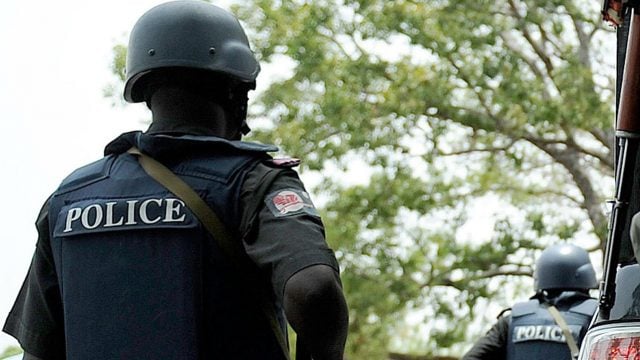


The Nigerian Police Force has questioned a report by Amnesty International, claiming that at least 1,100 persons were kidnapped across Nigeria within three months.
The police described the figure as unverified and not cross-checked with security agencies.
Reacting to the report on Sunday, the Force Public Relations Officer, Anthony Placid, challenged the source of the data, insisting that the organisation did not consult the police before publishing its findings.
“What is their source of information? They didn’t consult the police or cross-check with us.
“We have our records. And they didn’t check with us. If they didn’t consult us, then you should know better. Ask for the source of their report,” he said.
Amnesty International had, in a statement, called on the Federal Government to urgently tackle worsening insecurity, particularly in northern Nigeria, where it said mass abductions have become rampant.
The organisation stated that between January and April 2026, at least 1,100 people were abducted, mostly in rural communities and among internally displaced persons.
It added that victims are often subjected to abuses such as torture, starvation, rape, and forced participation in violent acts.
According to Amnesty’s Nigeria Director, Isa Sanusi, the scale of abductions is alarming and may even be underreported in some instances.
In a statement posted on its X handle on Sunday, the organisation said, “President Bola Tinubu and his government must urgently address the country’s horrifying spate of abductions targeting rural communities and internally displaced persons (IDPs) in the northern part of the country, as at least 1,100 people have been abducted in three months – from January to April 2026.”
It noted that victims are often subjected to severe abuses, including torture, starvation, rape and forced involvement in violent acts.
“Apart from killing people, gunmen are now on a rampage of abductions – largely for lucrative ransom. Some stay months at the mercy of gunmen in punishing situations.
“Estimates of the number of abductions by gunmen and armed groups across Nigeria vary, and some of the commonly cited figures vastly understate the scale of the problem,” said Sanusi.
The group cited several incidents across states, including a February 3 attack on Woro village in Kaiama Local Government Area of Kwara State, where 200 people were reportedly killed and 176 abducted.
It also referenced the abduction of 150 people in early April in Bukkuyum Local Government Area of Zamfara State, and the kidnapping of over 100 displaced persons by Boko Haram fighters in March near Mafa in Borno State.
According to Amnesty, more than 400 people were abducted in Ngoshe, Gwoza Local Government Area of Borno State, on March 3, while 57 people were kidnapped in Niger State in January.
“On March 30, 18 passengers in a commercial vehicle travelling from Abuja to Sokoto were abducted along Mayanci in a part of Zamfara State.
“On February 19, 2026, 92 people were abducted by an armed group in Zamfara State. A total of 42 people were abducted in Anka Local Government Area, and another 50 were separately abducted in Tsafe Local Government Area.
“On January 18, 2026, gunmen carried out a mass abduction by attacking three churches at Kurmin Wali village in Kajuru Local Government Area of Kaduna State during a morning worship service. At least 166 people were abducted. It was reported that they were released later,” it added.
The organisation also quoted a resident of Woro community in Kwara State who recounted the ordeal, saying, “They (attackers) didn’t just kill; they stole our life away.
“They abducted 176 people, including my second wife and my three daughters. One of them is only two years old. I have seen the video they posted on social media.
“I heard my wife’s voice. I saw my people. It has been almost two months now, and they are still in that forest.”
Amnesty International warned that the wave of abductions is forcing families into extreme hardship, with some selling all they have or resorting to community fundraising to pay ransom.
“In almost all cases of these abductions, people were also killed, homes and shops looted and razed.
“In some cases, families must dispose of everything they have to pay ransom, while villages often crowdsource to rescue their people.
“Those who could not pay are sometimes either killed, disappeared or tortured more.
“What we are witnessing right now in the northern part of Nigeria is a crisis of abduction that increasingly endangers lives,” Sanusi said.
Amnesty further noted that the fear of abduction is disrupting education in affected areas, with children withdrawn from school and underage girls pushed into early marriages to avoid being targeted.
The organisation also accused authorities of failing to meet their constitutional and international obligations to protect citizens.
However, the police maintained that any credible report on crime statistics must be verified with official records, underscoring the need for collaboration between civil society groups and security agencies.
The development comes amid renewed concerns over insecurity in parts of northern Nigeria, even as President Bola Tinubu recently reassured Nigerians of continued government support for the Armed Forces in the fight against insurgency and banditry.
Killings underreported – Olawepo-Hashim
A former presidential candidate, Dr Gbenga Olawepo-Hashim, has raised concern over what he described as the underreporting of mass killings across Nigeria, warning that growing global silence reflected a dangerous devaluation of human lives.
Hashim said the persistent attacks in several parts of the country pointed to a worsening security crisis, failing to attract the attention it deserves, both locally and internationally.
In a statement issued on Sunday and made available to The PUNCH, he lamented that the true scale of the killings was being “dangerously underreported and increasingly normalised.”
He cited recent attacks in Shanga Local Government Area of Kebbi State, where more than 40 persons were reportedly killed within the past week.
According to him, local sources indicate that the casualty figure may be higher as fresh bodies were discovered, with homes also being razed during the attacks.
He added that the same community had earlier suffered another assault that claimed at least seven lives, describing the situation as persistent and largely unchecked.
“What we are witnessing is a pattern of mass killings that fail to sustain national outrage or global attention,” Olawepo-Hashim said.
He also drew attention to similar attacks in Kwara State, particularly in Kaiama, Baruten and Ifelodun, where between 20 and 50 people were reportedly killed in recent weeks.
The politician who recently dumped the Peoples Democratic Party noted that the victims included five forest guards, adding that many of the incidents barely received coverage beyond local reporting channels.
Across the North-Central region, he said the scale of violence remained alarming, citing repeated killings in Benue State and Plateau State.
He disclosed that Benue recorded between 50 and 100 deaths within weeks, while Plateau witnessed coordinated night attacks that left between 30 and 80 persons dead.
Olawepo-Hashim further stated that Niger and Nasarawa states also recorded fatalities ranging from 20 to 50 and 10 to 20, respectively.
He said, in total, between 130 and 300 people may have been killed within a short period across the affected regions.
Describing the situation as alarming, he said the killings were being met with “selective attention and dangerous silence” by the global community.
Olawepo-Hashim criticised the muted response of institutions such as the United Nations and the African Union.
“There is a growing perception that Nigerian lives have been so devalued that even routine expressions of condolence are no longer made,” he said.


