

By James Abraham
The Plateau State Association USA Incorporated, in partnership with Saphira Global Centre for Social Development, has intensified trauma healing efforts for victims of attacks in Plateau State, with 38 households benefiting from a psychological trauma and resilience awareness training held in Jos, the state capital.
The one-day programme, themed “A Day of Healing and Hope,” was organised for survivors from communities affected by recent violence in Jos North and other areas on Saturday.
Speaking with journalists at the event, the National President of Plateau State Association USA Incorporated, Dr Barth Shepkong, said the intervention was designed to address a long-neglected aspect of crisis response.
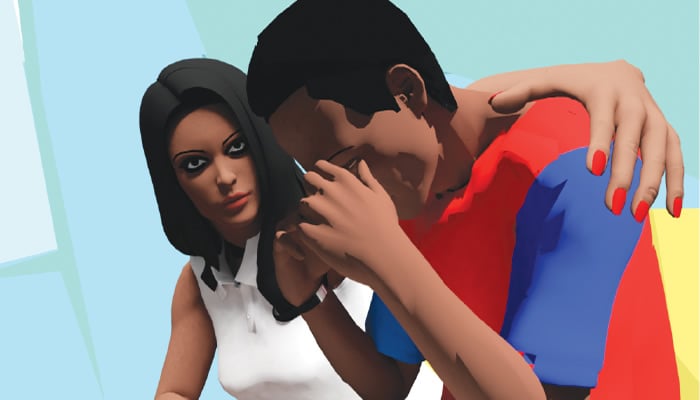
He said, “One of the things that we’ve noticed as an association, especially when there’s a crisis on the Plateau, is that the emotional and psychological aspect has been neglected. So that is why we’re here today to make sure that victims of the attacks have the opportunity to be spoken to and also, at the same time, give them a platform to let everything out, because just listening to them, they carry a lot of emotions.
“So basically, that’s a safe space for them, especially for women and children in those affected areas. That is what we are doing today, to see how we can create a safe space for them to learn more and also see how we can help psychologically and emotionally.”
Shepkong described the training as a pilot for a sustained intervention, stressing that it would continue.
“So this programme we are doing today is just a pilot. It’s going to be a continuous thing. We are using today to gauge what can be done in the future. But we are committed as an association to helping our people,” he said.
Shepkong added that palliative support would follow the trauma sessions.
“Let me also say that aside from the trauma healing, training and giving them a safe space, we are also coming up with palliatives to support them in terms of finances, food items and all of that,” he said.
Expressing frustration over recurring violence in the state, Shepkong said, “We are really, really sick and tired of what is going on in Plateau State. I think all these attacks and killings need to stop. I don’t care how those in charge of governance or security apparatus do it; it needs to stop because this has been going on for a very long time.
“We need to find a way to stop this barbarity from happening. It is very frustrating that it keeps happening again and again. We’ve been talking about this since around 2001, when it first started. It’s just like a cycle. It happens, curfew is imposed, people return to normal life, and before you know it, it happens again. We keep repeating the same thing over and over again.”
For her part, the Executive Director of Saphira Global Centre for Social Development, Mrs Yil Fomwul-Gonsum, said the partnership was driven by the need to address neglected psychosocial support for survivors.
She said, “We’re a non-governmental organisation, and this collaborative effort with PSA USA is timely. We felt the need to reach out. They’re over there and needed an implementing organisation, so there’s a process to it.
“The first reason why we jumped on this is because we understand the value of healing. I have worked for several years with IDPs and widows, so I have vulnerable groups that I’m working with in my organisation.
“Psychosocial support has been neglected. It is not regular and has been relegated to the background. I felt this is a very good opportunity for a special intervention.”
Fomwul-Gonsum noted that the intervention was designed for sustainability despite being a one-day programme.
“Even though it’s a one-day programme, we believe whatever intervention you give, no matter how big or small, should be assessed based on sustainability. We already have plans for continuation,” she said.
On beneficiary selection, Fomwul-Gonsum said 38 households were reached through community structures.
“We have a total of 38 households. We worked with youth leaders and community mobilisers in the affected areas. They had already collated data before our arrival.
“They reached out to households, explained what we were coming to do, and assisted in the selection process,” she explained.
Meanwhile, local leaders said Plateau communities have recorded multiple attacks in 2026, with hundreds killed and thousands displaced since January.
Copyright PUNCH
All rights reserved. This material, and other digital content on this website, may not be reproduced, published, broadcast, rewritten, or redistributed in whole or in part without prior express written permission from PUNCH.
Contact: [email protected]