

Iyanuoluwa Abiola
Experts in orthopaedic and burn care have called for stronger collaboration among healthcare professionals in the management of musculoskeletal conditions and burn injuries to improve patient outcomes.
They noted that effective communication, stronger teamwork, shared treatment goals and coordinated care, evidence-based practice, and sustained institutional support were essential to ensuring that patients received comprehensive treatment, rehabilitation and psychological support throughout their recovery.
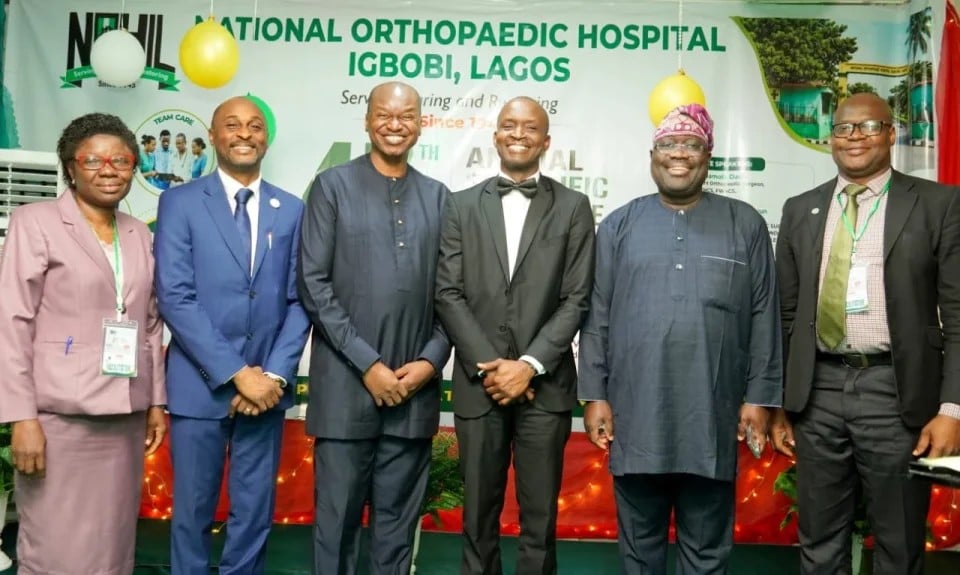
The experts spoke at the 47th Annual Scientific Conference of the National Orthopaedic Hospital, Igbobi, Lagos, with the theme, “Multidisciplinary Team Care in the Management of Musculoskeletal Disease,” and the sub-theme, “Burn Injury.”
In his remarks, the Medical Director of NOHIL, Dr Wakil Lawal, represented by the Head of Clinical Services, Dr Francis Nwachukwu, said the management of complex injuries now requires multidisciplinary care, stating that said the changing nature of healthcare made teamwork important.
“Back in the day, it was largely a one-man affair, where one individual would manage injuries from beginning to end. But over the years, things have changed. Today, no single individual can manage complex injuries alone.
“Even for simple injuries, outcomes are much better when you have a team of individuals caring for the patient,” he noted.
The MD urged healthcare professionals to strengthen professional interaction, share knowledge and build collaborations that would improve patient care.
The Chairman of the Local Organising Committee and Head of Training Schools, Education, Research and Statistics, Dr Ranti Babalola, said the annual scientific meeting provided an opportunity for healthcare professionals to examine current practices, share ideas and develop solutions to improve healthcare delivery.
“Our annual meeting is aimed at critical analysis, creative ideas and innovative solutions around quality healthcare in practice. It is also an opportunity for us to interact, foster collaborations and partnerships, and see how best practices can be implemented in our healthcare system,” Babalola explained.
She noted that the conference theme was chosen to highlight the importance of communication and collaboration among members of the healthcare team.
“When there is clear communication, shared treatment goals and coordinated efforts, the patient benefits from a more timely and comprehensive approach to care,” she stated.
The keynote speaker, a Consultant Orthopaedic Surgeon and Chief Executive Officer of Redeemer’s Health Village, Ogun State, Dr Adedamola Dada, in his lecture titled “Multidisciplinary Approach to the Management of Musculoskeletal Disease,” said successful treatment should not be measured solely by the technical outcome of surgery.
“Technical success is not the same thing as clinical success. You can fix the fracture, the X-ray can look perfect, and the bone can unite, but if that patient cannot return to his work, cannot support his family or has developed depression, then we have not achieved the full objective of treatment,” Dada stated.
He said patients should be placed at the centre of treatment, with all professionals relevant to their care involved from the beginning.
“The patient should be at the centre of the table, and all the professionals who are relevant to that patient’s care should be involved from the beginning. We should have a common goal, a common timeline and a common treatment plan,” Dada stressed.
The orthopaedic surgeon explained that musculoskeletal conditions affect the bones, joints, muscles, tendons, ligaments and related structures, with causes ranging from trauma and road traffic accidents to degenerative, inflammatory, metabolic and other conditions.
He noted that the global burden of musculoskeletal conditions was substantial, with about one in three people worldwide experiencing one or more such conditions during their lifetime.
He stated that the traditional “silo” approach, where surgeons, physiotherapists, nurses and other specialists work individually without a common treatment plan, can contribute to delayed diagnosis, poor surgical preparation, cancelled procedures, inadequate rehabilitation and other complications.
Dada said patients should instead be managed through a coordinated team involving relevant specialists, including orthopaedic surgeons, anaesthetists, physicians, nurses, physiotherapists, occupational therapists, neurologists, pharmacists, orthotists and prosthetists, psychologists, dietitians, social workers and case managers.
The former Medical Director and Chief Executive Officer of the Federal Medical Centre, Ebute-Metta, further stressed that coordinated care could support earlier rehabilitation, reduce complications and hospital stays, improve patient satisfaction and help patients return to work and daily activities.
Dada also empahsised the importance of communicating clearly with patients about treatment plans and financial implications, saying patients should be treated as human beings rather than simply as cases.
The leading trauma surgeon advocated regular multidisciplinary meetings, electronic medical records, standardised treatment pathways, strong clinical leadership and the use of digital tools to monitor patient outcomes.
Speaking on the conference’s sub theme, “Burn Injury,” a Consultant Plastic Surgeon at the University College Hospital, Ibadan, Dr Ayodele Iyun, said multidisciplinary care was also important in the management and rehabilitation of burn survivors.
He described burns as a major public health concern because of their potential to cause death, disability, scarring and long-term social and economic consequences.
The plastic surgeon further noted that children below five years carried a significant burden of burn injuries, with scalds common among children, while flame and fire injuries were more common among adults.
He stated that while the Nigerian Burn Injury Society was working towards establishing a national burn registry, there has been a noticeable change in the pattern of burn injuries, with domestic gas explosions increasingly replacing kerosene explosions as a major cause seen in hospitals.
Iyun said, “At UCH, we are seeing domestic gas explosions almost every week now. The pattern has changed from what we used to see with kerosene explosions, and this has become a major concern.”
The specialist also called for greater attention to prevention, particularly domestic gas-related injuries, through improved public education, safer handling of gas cylinders and stronger awareness of burn risks.
He added that severe burns required prompt assessment and treatment, while rehabilitation and follow-up remained important after the wounds had healed.
The plastic surgeon noted that rehabilitation should begin early and involve physiotherapists, occupational therapists, nurses, nutritionists, psychologists and other relevant professionals.
“Burn survivors may experience anxiety, depression, nightmares, social withdrawal, hypertrophic scars, itching and other long-term complications,” Iyun stated.
He said severe burns could also increase patients’ nutritional requirements, making early nutritional support an important part of recovery.
The plastic surgeon identified limited specialised burn centres, high out-of-pocket treatment costs, inadequate infrastructure and equipment, shortages of specialised personnel, limited access to advanced wound products, weak pre-hospital services and delayed presentation as major challenges to burn care in Nigeria.
Iyun advocated stronger multidisciplinary burn-care teams, improved prevention and early evidence-based treatment, as well as greater investment in specialised burn services, pre-hospital care and systems that can reduce the financial barriers to treatment.
Copyright PUNCH
All rights reserved. This material, and other digital content on this website, may not be reproduced, published, broadcast, rewritten or redistributed in whole or in part without prior express written permission from PUNCH.
Contact: health_wise@punchng.
