

By Tosin Oyediran
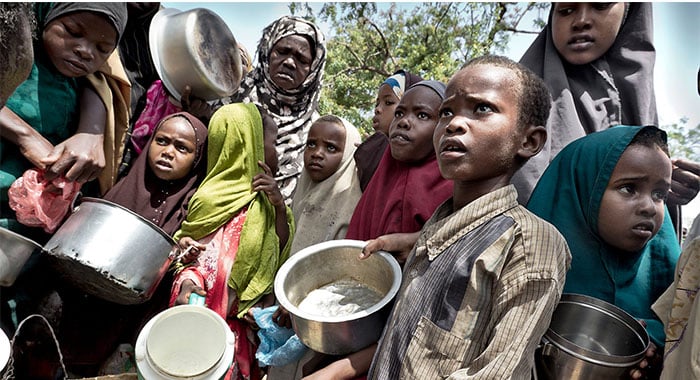
Nigeria and nine other conflict-hit countries now account for two-thirds of people facing acute food insecurity globally, a new international report has revealed, underscoring how violence is driving a deepening global hunger crisis.
The 2026 Global Report on Food Crises, released on Friday by an alliance of UN agencies, the European Union and partners, found that 266 million people across 47 countries experienced high levels of acute food insecurity in 2025 – nearly a quarter of the population analysed and almost double the share recorded in 2016.
The report paints a stark picture of a crisis that is no longer temporary but increasingly entrenched and concentrated in a handful of conflict-affected countries, our correspondent, who saw the detailed release on the UN website, noted.
“Acute food insecurity today is not just widespread – it is also persistent and recurring,” said Qu Dongyu, Director-General of the Food and Agriculture Organisation, warning that the crisis has become structural rather than temporary.
Earlier in January, the UN, through its Office for the Coordination of Humanitarian Affairs in Nigeria, disclosed that 35 million Nigerians are at risk of acute hunger this year.
Conflict the primary driver
Conflict remains the primary driver, accounting for more than half of all people facing severe hunger.
Ten countries – Afghanistan, Bangladesh, Democratic Republic of the Congo, Myanmar, Nigeria, Pakistan, South Sudan, Sudan, Syrian Arab Republic and Yemen – accounted for two-thirds of all people facing high levels of acute hunger.
At the most extreme end, famine was confirmed in 2025 in Gaza and parts of Sudan – the first time since the report began that two separate famines have been recorded in a single year.
“This report is a call to action,” António Guterres said in the foreword, “to summon the political will to rapidly scale up investment in lifesaving aid, and work to end the conflicts that inflict so much suffering on so many.”
The report also highlights a sharp rise in the severity of hunger. More than 39 million people in 32 countries faced emergency levels of food insecurity, while the number of people experiencing catastrophic hunger has increased ninefold since 2016.
Children bearing the brunt
Children are among the most affected. In 2025, 35.5 million children were acutely malnourished, including nearly 10 million suffering from severe acute malnutrition – a life-threatening condition that dramatically increases the risk of death.
“Children with severe wasting are too thin for their height. Their immune systems weakened to the extent that ordinary childhood illnesses can become fatal,” Ricardo Pires of the UNICEF warned.
In the worst-affected areas – including Gaza, Myanmar, South Sudan and Sudan – overlapping crises of conflict, disease and limited access to services are driving extreme levels of malnutrition and raising the risk of death.
Displacement
Forced displacement is compounding the crisis.
More than 85 million people were displaced across food-crisis contexts last year, with displaced populations consistently facing higher levels of hunger than host communities.
“Forced displacement and food insecurity are deeply interconnected, forming a vicious cycle,” said Barham Salih, warning that humanitarian aid alone is not enough to break the pattern.
Funding decline, bleak outlook
Despite the scale of the crisis, funding is declining.
Humanitarian and development financing for food and nutrition responses has fallen back to levels last seen nearly a decade ago, limiting the ability of governments and aid organisations to respond effectively.
At the same time, data gaps are widening, with fewer countries able to produce reliable food security assessments – suggesting the true scale of hunger may be even greater.
Looking ahead, the outlook for 2026 remains bleak, with ongoing conflicts, climate shocks and economic instability expected to keep food insecurity at critical levels.
The report also warns of new risks linked to global market disruptions, including those stemming from the ongoing crisis in the Middle East, which could further increase food prices and strain supply chains.
Aid agencies caution that without a shift in approach, the world risks being locked into a cycle of deepening crises.
“We must shift from reacting too late to acting early, and from relying solely on food assistance to protecting local food production – because that is how we reduce needs, save lives and build resilience over time,” Qu said.
Copyright PUNCH
All rights reserved. This material, and other digital content on this website, may not be reproduced, published, broadcast, rewritten or redistributed in whole or in part without prior express written permission from PUNCH.